Introduction
For more than 700 years, Newgate Prison stood on the edge of the City of London as one of Britain’s most feared gaols. Its name became synonymous with overcrowding, disease, corruption and public executions, earning it the chilling nickname “Hell on Earth”. From debtors and petty thieves to pirates, playwrights and political prisoners, thousands of men, women and children passed through its gates – many never emerging alive.
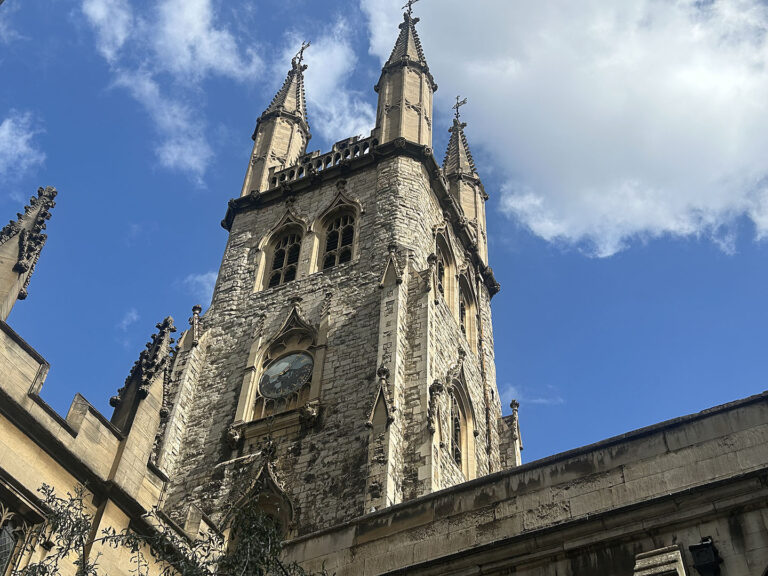
Although Newgate finally closed in 1902, the prison’s grim story still shapes how we understand crime and punishment in London. Today, visitors can explore surviving traces around the Old Bailey and St Sepulchre-without-Newgate Church, where echoes of Newgate’s past still linger in stone, iron and bell metal.
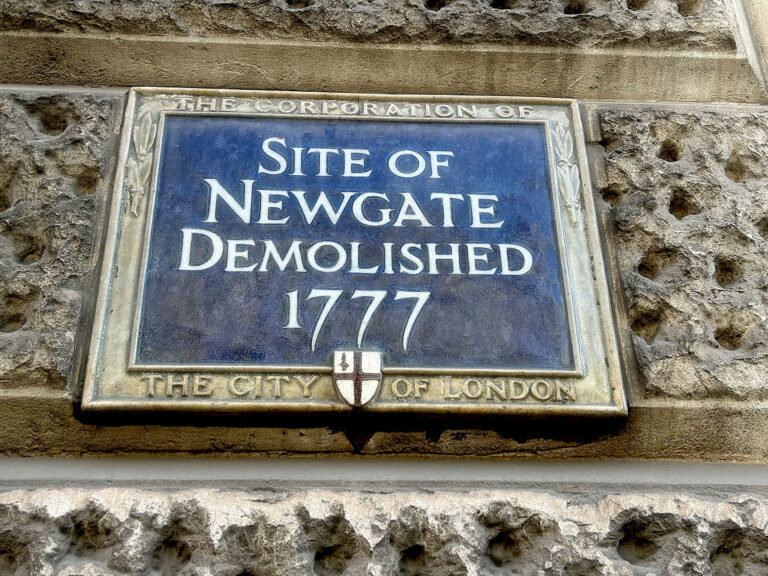
Medieval Origins: How Newgate Prison Began
In medieval London, there were only two official prisons: the Tower of London and the Fleet. Imprisonment was not yet a standard punishment; instead, people were held in castle dungeons briefly while they awaited trial or execution. This began to change in the 12th century, during the reign of King Henry II, whose legal reforms laid the foundations of English Common Law and the jury system.
Henry II recognised the need for a new gaol under the authority of the City of London, and land was acquired beside Newgate, close to where Newgate Street meets the Old Bailey today. The first Newgate Prison was probably built in timber, and even from its earliest years it reflected the social divisions of medieval society, with different conditions for rich and poor.
During the medieval period, London had only two official prisons: the Tower of London and the Fleet Prison. Before prisons became common, people accused of crimes were usually held temporarily in castle dungeons while awaiting trial, as imprisonment itself was not considered a punishment.
Even in its earliest years, the prison reflected the social divisions of medieval England.
- Masters’ quarters housed wealthy prisoners who could afford comfort.
- Commons held poorer inmates in overcrowded and unsanitary conditions.
Those imprisoned below suffered dreadful smells, while prisoners in the upper levels enjoyed cleaner air and considerably better treatment.
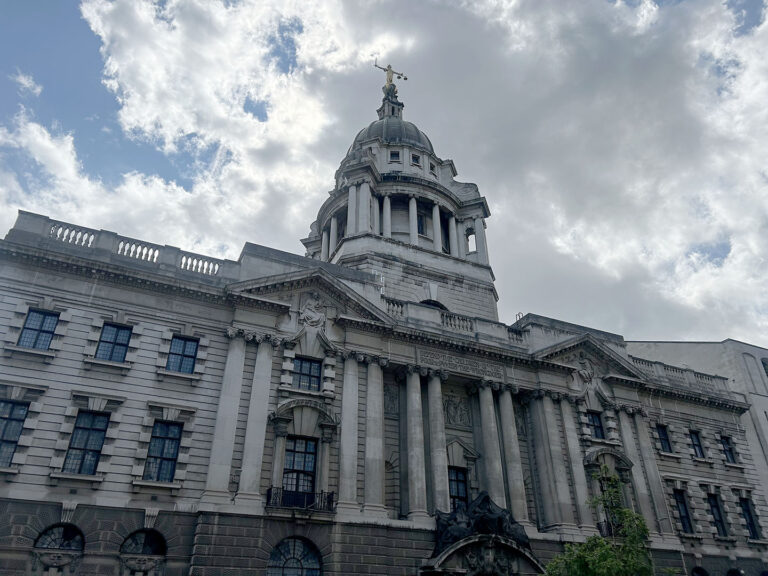
Inequality Behind Bars: Life Inside Newgate
Newgate operated largely as a money-making enterprise, which allowed corruption to flourish. Prison warders charged inmates for food, bedding, alcohol and every possible privilege, meaning those with money could effectively buy a more comfortable stay. Wealthier prisoners were housed in “Masters’ Quarters”, with better diet, private rooms and greater freedom to move within the prison.
Poorer inmates were forced into the “Commons”, where overcrowding, hunger, filth and disease made survival uncertain. On the lowest level, dark windowless dungeons held prisoners chained in complete darkness, sometimes left to starve in their own waste. Deadly “prison fever” – likely typhus and other infectious diseases – spread rapidly, making Newgate almost as lethal as the gallows themselves.
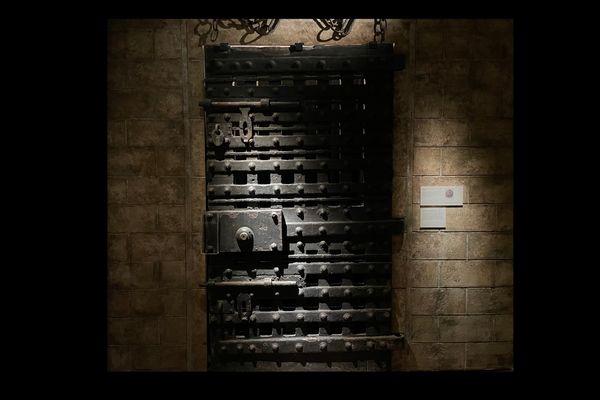
Fire, Riots and Rebuilding: Newgate’s Changing Architecture
The Great Fire of London in 1666 destroyed the original Newgate Prison. It was rebuilt under Sir Christopher Wren, better known for St Paul’s Cathedral and many of the City churches, giving Newgate a more substantial and imposing presence. Between 1767 and 1782, architect George Dance the Younger oversaw a major expansion, but this rebuilt prison was attacked and burned during the Gordon Riots of 1780, before work was fully completed.
When Newgate rose again, Dance deliberately designed an intimidating, fortress-like structure. Heavy chains and shackles were displayed above the Debtors’ Door, a visual warning to new arrivals of the fate that might await them. Later commentators described the building as massive, dark and solemn – a physical embodiment of state power and punishment in stone.
Heavy chains and shackles were displayed above the Debtors’ Door to remind new arrivals of the fate awaiting them.
Historian William Dixon later described the prison as:
“Massive, dark and solemn.”
Gaol or Prison? Understanding the Difference
Historically, Newgate was primarily a gaol rather than a prison.
The word gaol is simply the older English spelling of jail. Traditionally:
- A gaol held prisoners awaiting trial or execution.
- A prison housed people serving longer sentences after conviction.
Although Newgate functioned mainly as a holding gaol, many prisoners remained there for months or even years awaiting trial.
Throughout its existence, numerous attempts were made to improve conditions, but overcrowding, corruption and neglect remained constant problems.
Even prison inspectors often avoided visiting because they feared catching disease.
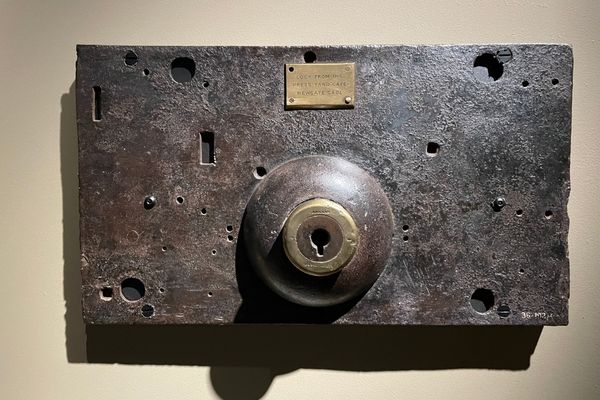
Crime and Punishment in Georgian and Victorian Britain
For centuries, imprisonment was not viewed as punishment in itself.
Instead, convicted offenders faced severe physical punishments including:
- Hanging
- Beheading
- Burning
- Hanging, drawing and quartering
- Branding
- Flogging
- Mutilation
Stealing one of the King’s deer could cost a person their thumb or bow finger.
Army deserters were branded with the letter “D”.
Children as young as twelve could be executed for theft.
Public humiliation also played an important role. Offenders were placed in:
- The pillory
- The stocks
- The thew (used specifically for women)
Positioned in busy marketplaces, these punishments allowed members of the public to insult, throw objects and shame offenders.
The Bloody Code: When Death Became Routine
Between 1688 and the early 19th century, Britain entered the era known as the Bloody Code, one of the darkest chapters in its legal history. Over this period, the number of offences punishable by death increased dramatically from around fifty to more than two hundred. Capital crimes ranged from forgery and arson to clipping coins, damaging property, stealing from shipwrecks or rabbit warrens, and even impersonating a Chelsea Pensioner.
Many of these offences seem astonishingly minor by modern standards, but the Bloody Code insisted on mandatory death sentences. Faced with such extremity, juries frequently undervalued stolen goods to avoid condemning defendants to execution, quietly sabotaging the full ferocity of the law. Newgate became a key holding point for those caught up in this system, awaiting either the rope or rare mercy.
Daring Escapes: Jack Sheppard and Others
Despite its grim reputation and heavy security, Newgate was not escape-proof. The most celebrated escapee was Jack Sheppard, a carpenter turned burglar who became a folk hero and one of London’s earliest “celebrity criminals”. Already famous for breaking out of two previous prisons, Sheppard managed to escape from Newgate twice, even while under close guard.
Eventually he was recaptured and publicly hanged at Tyburn in November 1724 before an enormous sympathetic crowd. His exploits inspired a stream of pamphlets, plays and ballads, cementing his legend long after his death and linking his name forever with Newgate’s history.
Famous Prisoners: From Robin Hood’s Shadow to Oscar Wilde
Over the centuries, Newgate’s cells held a remarkable range of prisoners. Among the most notable were Roger Godberd, sometimes suggested as a possible inspiration for the Robin Hood stories, and Ben Jonson, the playwright and contemporary of Shakespeare, who was imprisoned after killing a man in a duel. The infamous pirate Captain William Kidd was also held there.
Newgate’s walls confined Daniel Defoe, author of Robinson Crusoe, for his political writings, and later briefly held Oscar Wilde while he awaited trial. Giacomo Casanova, famed across Europe for his romantic adventures and colourful life, also spent time in Newgate following fraud-related offences committed in London. Together, these figures show how Newgate touched every level of society, from radical writers to high-profile criminals.
Inside Newgate: Masters’ Quarters, Commons and Condemned Cells
The internal layout of Newgate reinforced its hierarchy of wealth and status. In the Masters’ Quarters, prisoners with money could buy relative comfort: better food, alcohol, private accommodation and greater freedom to move around within the prison. In stark contrast, those confined to the Commons contended with severe overcrowding, poor sanitation, limited food and constant risk of disease.
High-profile prisoners such as traitors and heretics were kept in the Press Room, a section associated with the brutal practice of peine forte et dure. Prisoners who refused to enter a plea could be pressed under increasing weights on the chest until they either spoke or died; this gruesome punishment was finally abandoned in the 18th century. Below, in the dungeons, inmates were chained in windowless cells in total darkness, and many perished there before ever reaching trial.
By the early 18th century, Newgate contained fifteen condemned cells reserved for those awaiting execution. Prisoners sentenced to death wore heavy iron belts and leg irons designed to force them to walk bent over, physically marking them out as condemned.
Executions at Tyburn and Outside Newgate
For centuries, those condemned at Newgate were taken to Tyburn for execution, creating huge public spectacles that drew crowds from across London. As attitudes toward public punishment began to shift, the site of executions moved closer, to a scaffold immediately outside the prison itself. Hanging remained a major public attraction until 1868, when it was finally decided that executions should take place inside prison walls, out of general view.
Although the Bloody Code formally demanded many executions, in practice a significant number of death sentences were commuted or reduced. Newgate therefore became a place of uncertainty as well as terror, where prisoners awaited not only the gallows but the possibility of reprieve.
The Bell of St Sepulchre: Newgate’s Haunting Echo
One of the most evocative survivals of Newgate’s execution rituals stands not in the prison – now demolished – but opposite its former site. Inside St Sepulchre-without-Newgate Church hangs the Execution Bell, closely associated with those condemned at Newgate. On the night before an execution, the church bellman would walk through the condemned cells ringing the bell and speaking a solemn warning: “Prepare you, for tomorrow you shall die.”
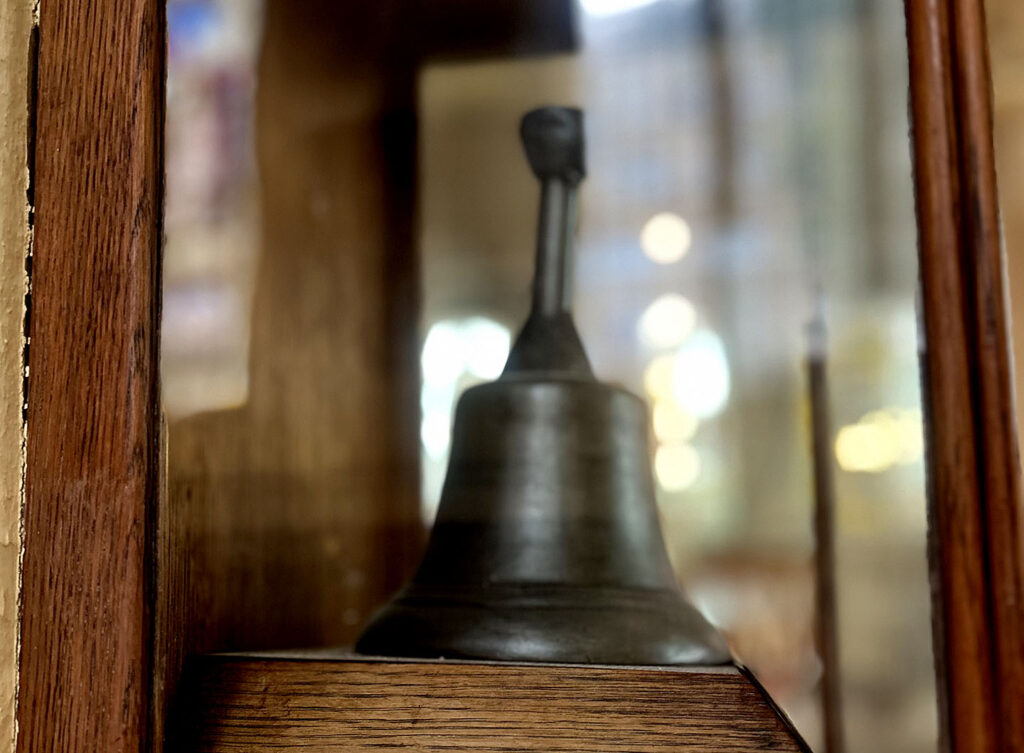
On the following morning, the bells rang again as prisoners began their final journey to the gallows at Tyburn. The Execution Bell can still be seen in St Sepulchre today, providing a powerful, tangible link to the emotional experience of those who faced death under the Bloody Code.
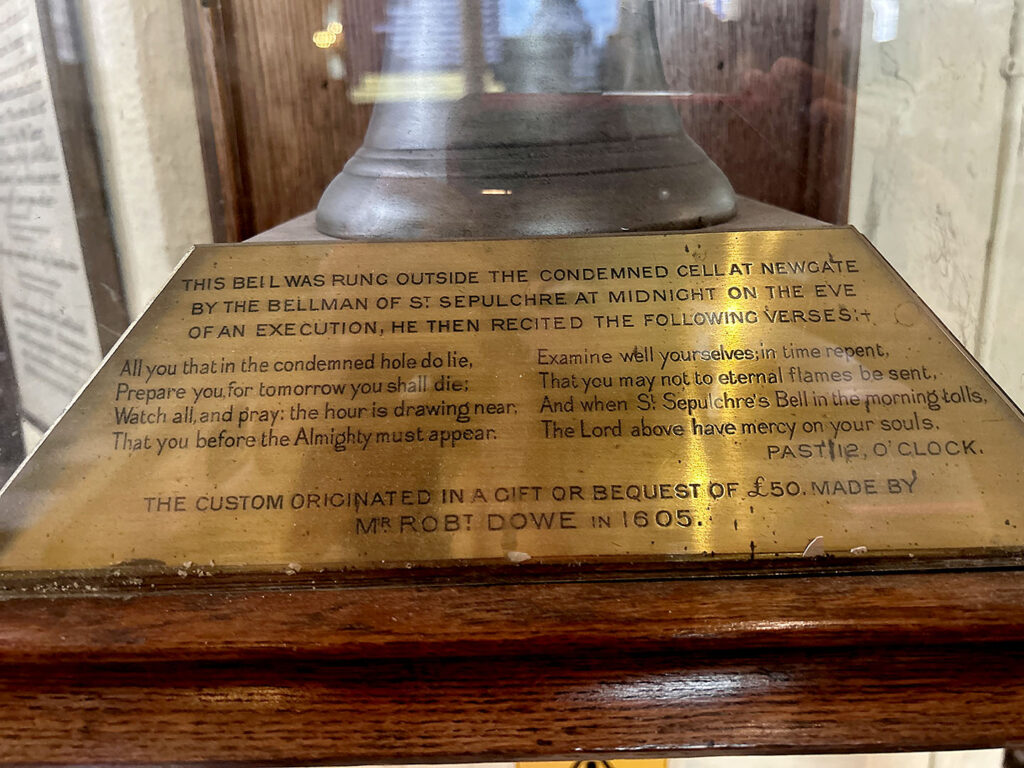
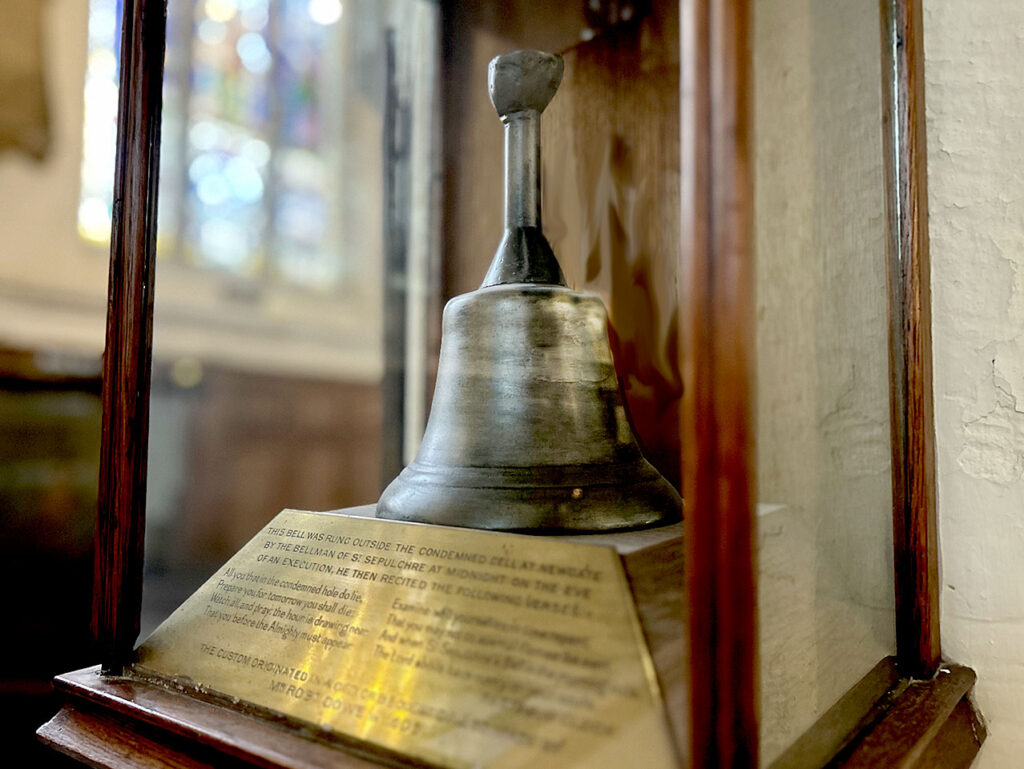
Close-up of the historic execution bell at St Sepulchre Church | Photo by Flora Pereira
What Remains of Newgate Prison Today?
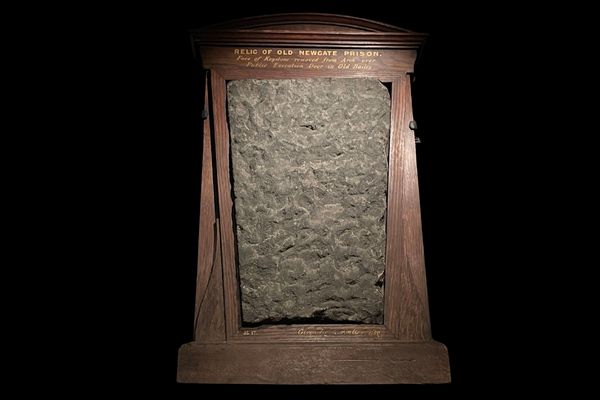
Newgate Prison closed in 1902 and was subsequently demolished, but several important fragments of its story survive in London. At the Museum of London, visitors can see the enormous iron entrance doors that once sealed prisoners inside the gaol. The Execution Bell continues to hang in St Sepulchre-without-Newgate Church, just across the road.
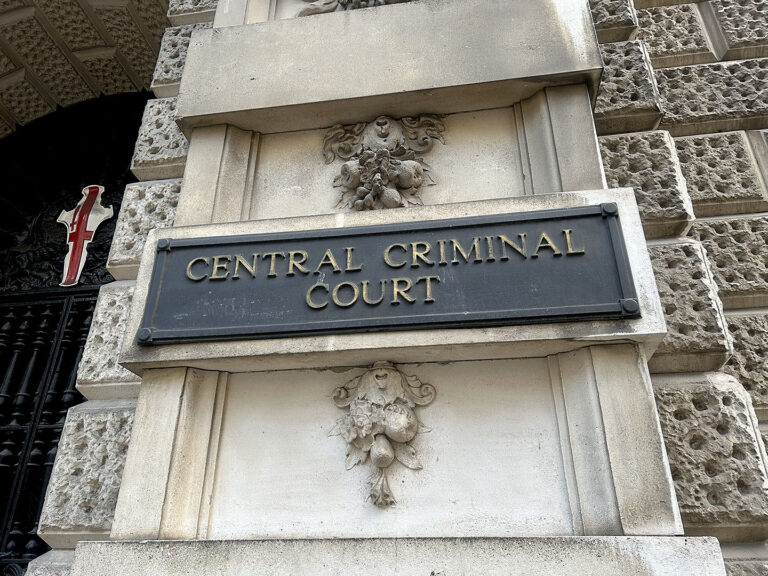
Behind the Old Bailey, in Amen Court, a section of the original prison wall still stands, hinting at Newgate’s former bulk. The site itself is now occupied by the Central Criminal Court, – better known as the Old Bailey – which continues the long tradition of criminal justice on the same ground.
Conclusion: Newgate Prison’s Lasting Legacy
For over seven centuries, Newgate Prison symbolised the extremes of Britain’s justice system. It witnessed legal reform under Henry II, the terrifying expansion of capital punishment under the Bloody Code, and the slow shift from public spectacle to more regulated, enclosed punishment. Within its walls, corruption, disease and human suffering left deep marks on London’s social memory.
Stories of famous prisoners such as Jack Sheppard, Daniel Defoe and Oscar Wilde ensure that Newgate’s name lives on in literature, legend and legal history. Although the building has vanished, its legacy survives around the Old Bailey in surviving walls, ironwork and rituals, and in the wider history of how London has confronted crime, punishment and mercy.
Discover London's Dark History with London Guided Walks
If the history of Newgate Prison, the Old Bailey and London’s criminal past fascinates you, why not experience these stories where they happened?
Join Flora Pereira on our Heretics and Horror walk or Heretics and Horror private tour and explore the streets where prisoners once awaited trial, famous criminals met their fate, and centuries of justice unfolded.
🎧Related Podcast Episodes: