

Introduction
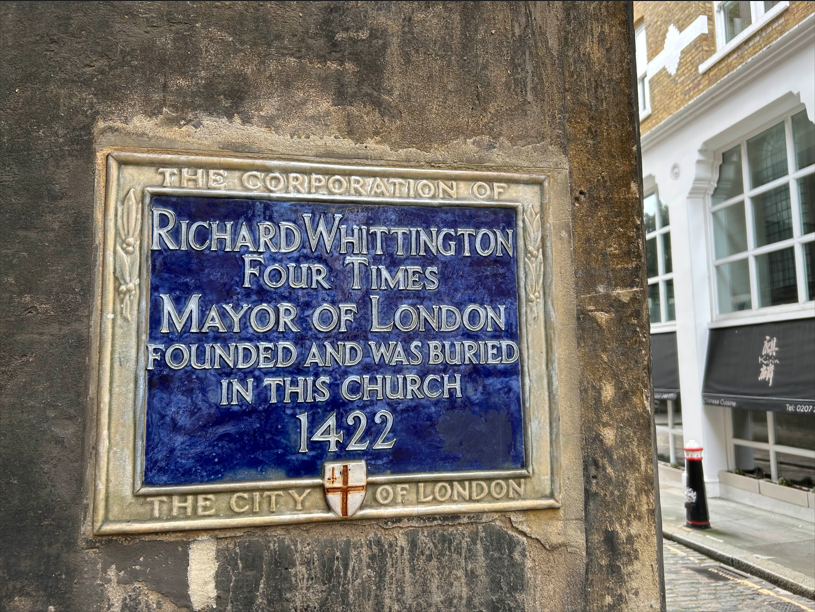
Hidden in the heart of the City of London, St Michael Paternoster Royal is a remarkable church with strong links to one of London’s most famous medieval figures, Richard Whittington. Rebuilt by Sir Christopher Wren after the Great Fire of London, the church stands as a lasting reminder of Whittington’s extraordinary wealth, charitable legacy, and influence on medieval London.
A Wren Church Rebuilt After the Great Fire
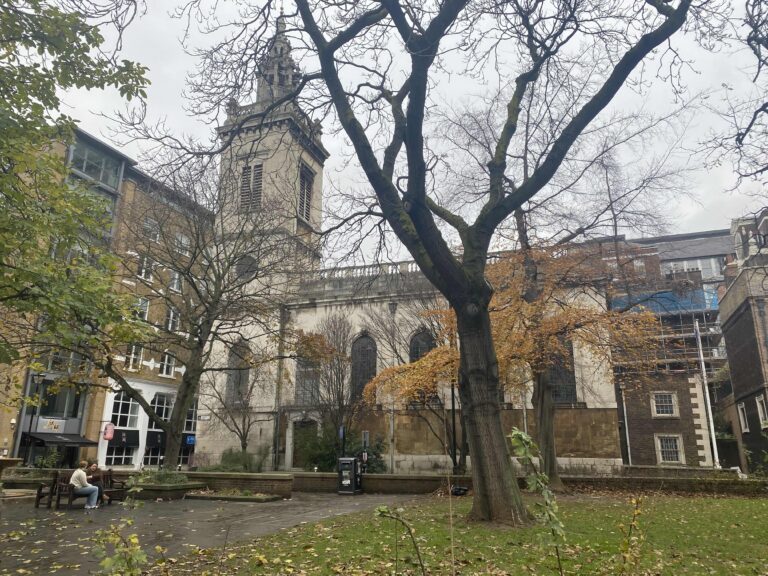
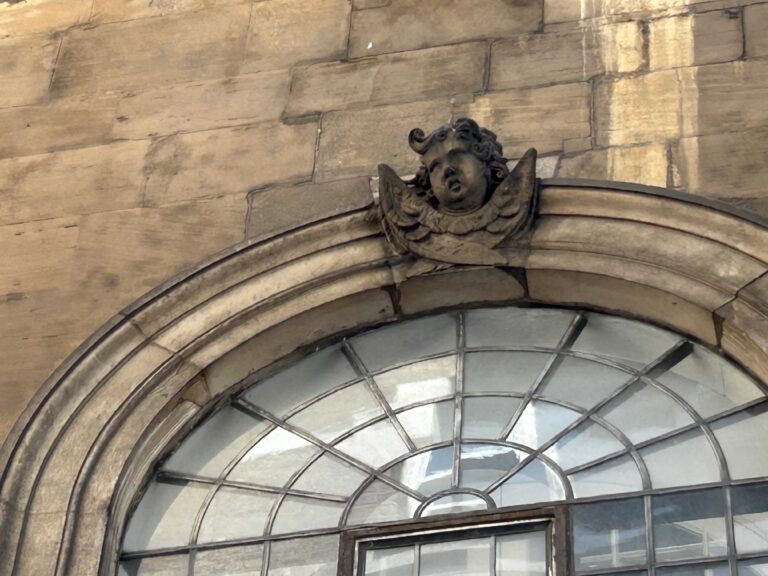
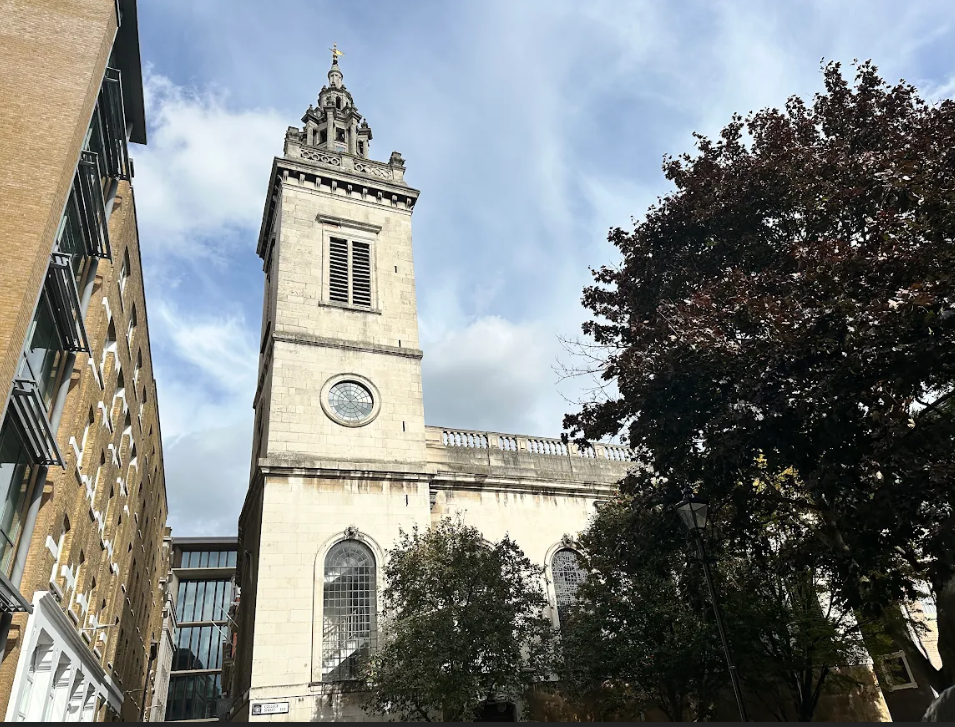
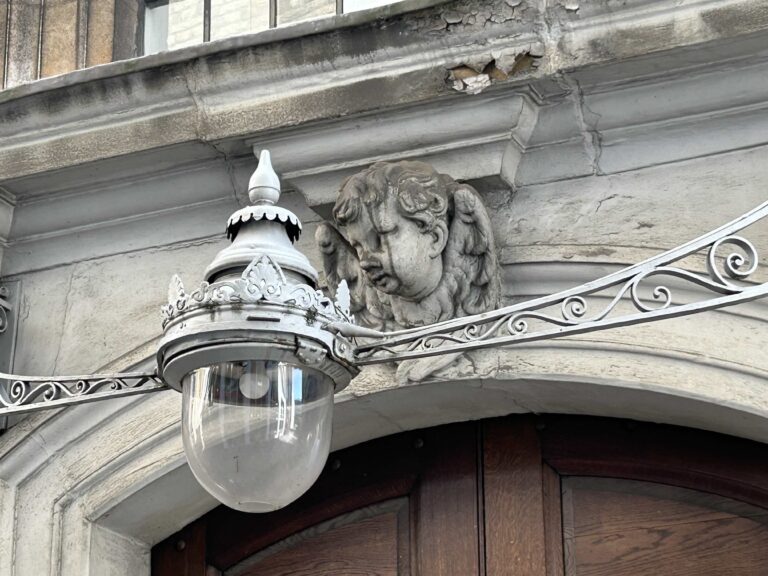
The present-day St Michael Paternoster Royal was designed by Sir Christopher Wren after the medieval church was destroyed in the Great Fire of London in 1666. The building is a simple rectangular structure, distinguished by Wren’s elegant arched windows topped with carved cherubs.
During the Second World War, the church suffered significant bomb damage, and much of the surrounding area to the south was destroyed. Following the war, the site was transformed into Whittington Gardens, creating an open space that offers excellent views of Wren’s architecture.
Richard Whittington and St Michael Paternoster Royal
A church on this site was first recorded in the early twelfth century. In 1409, it was rebuilt at the expense of Richard Whittington, one of London’s wealthiest merchants and one of its most celebrated Lord Mayors.
Originally a mercer, Whittington greatly increased his fortune by lending money to leading nobles and later to Kings Richard II and Henry IV. His success led to him serving as Lord Mayor of London on four occasions, securing his place among the City’s most influential figures.
Whittington's Enduring Legacy
Following Richard Whittington’s death, his executors founded both an almshouse and a college of priests attached to the church, together known as Whittington’s College. The almshouse continues to exist today, although it is now based in East Grinstead.
The site of Whittington’s former home is marked by a plaque on nearby College Hill, providing another reminder of his connection to this part of the City.
Whittington was buried within St Michael Paternoster Royal. According to the Elizabethan historian John Stow, his tomb was disturbed during the reign of Edward IV by a rector searching for treasure believed to have been buried alongside the famous Lord Mayor. The body was later reinterred with a new lead covering under the orders of Queen Mary, with the monument restored at the parish’s expense.
Whether motivated by greed or changing religious attitudes, the story reflects Whittington’s legendary reputation for wealth. His rebuilding of the church and generous charitable foundations stand as lasting evidence of his genuine prosperity and generosity.
Richard Whittington's Charitable Works
Richard Whittington’s legacy extended well beyond St Michael Paternoster Royal. His charitable endowments included:
- A women’s prison at Newgate
- A ward for unmarried mothers at St Thomas’s Hospital
- Whittington’s College
- His famous Long House, a large public lavatory built over the River Thames
These projects demonstrated his commitment to improving life for London’s citizens and helped shape the medieval city.
Why Is It Called St Michael Paternoster Royal?
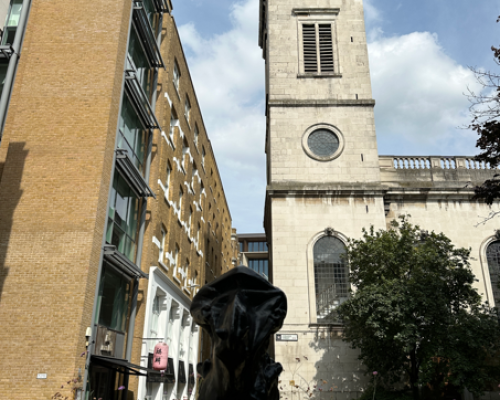
St Michael Paternoster Royal | Photo by Hazel Baker
The church’s unusual name reflects the area’s medieval history.
The word Paternoster refers to the rosary beads once sold nearby by craftsmen and merchants.
The word Royal is believed to be a corruption of Reole, a town near Bordeaux. It became associated with the nearby street where merchants importing wine from Gascony lived and traded.
This district formed part of the historic Vintry, one of medieval London’s busiest commercial areas. The nearby riverside was lined with wharves where imported goods were unloaded, stored in warehouses, and distributed throughout the City. The flourishing wine trade made Vintry one of London’s most valuable commercial districts.
Discover the Story Behind St Michael Paternoster Royal
Today, St Michael Paternoster Royal remains an important reminder of medieval London’s prosperity, its thriving merchant community, and the remarkable legacy of Richard Whittington. From its rebuilding after the Great Fire to its connection with one of London’s greatest Lord Mayors, the church offers a fascinating glimpse into the City’s rich past.
Book Your Medieval London Walking Tour
Want to discover more about Richard Whittington, London’s medieval churches, and the people who shaped the City?
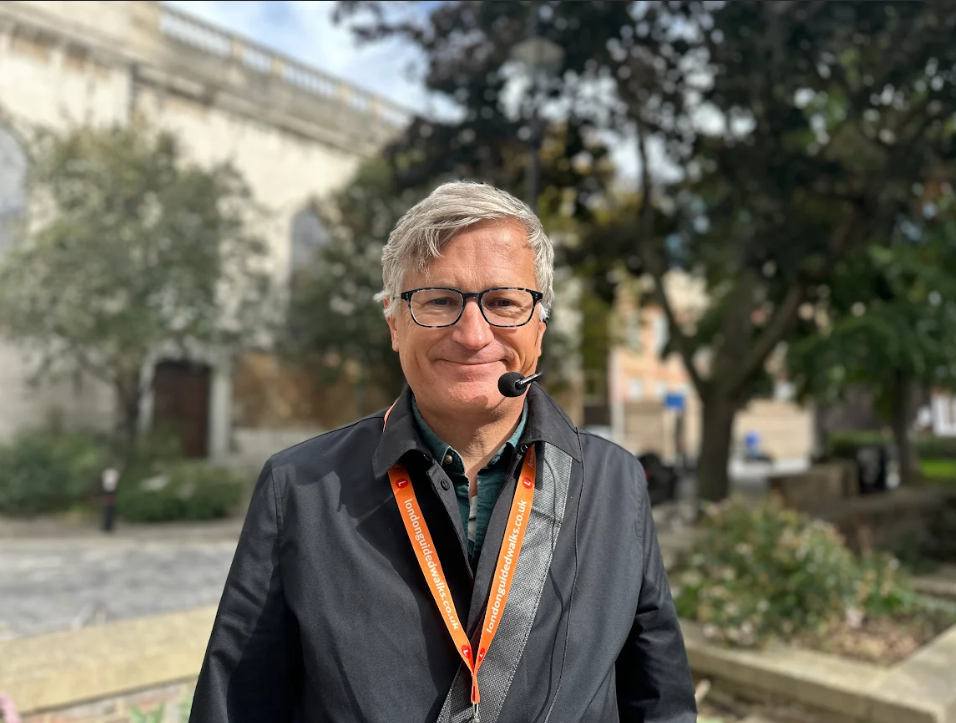
Join our Medieval London Walking Tour, where Ian McDiarmid, a qualified City of London guide brings centuries of history to life. You’ll explore historic streets, uncover hidden landmarks, and hear the fascinating stories behind London’s Lord Mayors, merchants, churches, and medieval institutions.