The Three Lives of the Tivoli: London’s Lost Hub of Entertainment on the Strand
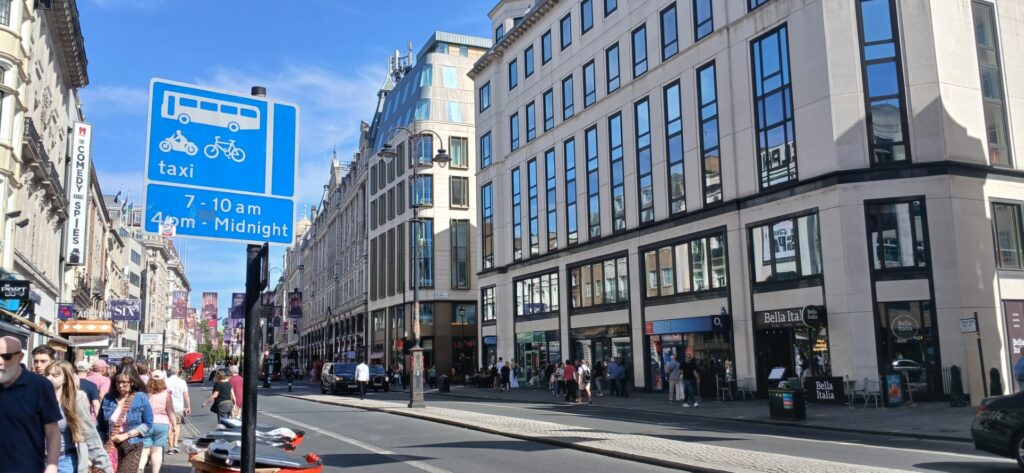
The nondescript office buildings above a row of shops and branded restaurants which today occupy the Strand’s street numbers 65 to 73 and 73–75 anonymously conceal the secrets of a former glorious 80-year period when this was the location of three distinctly different hubs of leisure, cuisine, and entertainment.
Between the 1870s and the 1950s, each of these iterations bore the famous name ‘Tivoli’. Let’s dive into the three incredible lives of this lost London landmark.
The Tivoli Beer Garden and Restaurant (1876 – mid-1880s)
The original Tivoli Beer Garden and Restaurant first opened on the Strand in 1876. Named after the famous Tivoli Gardens founded in Copenhagen in 1848 as an amusement and pleasure park, its real inspiration was the German beer gardens which had become immensely popular during the same period.
Despite the word ‘garden’ in its title, it was entirely an indoor affair:
- Potted plants and flowers were placed throughout.
- Shrubs and greenery were simply painted onto its walls.
- Victorian travel guides described it as serving authentic German fayre, alongside good German wines, and lager beers.
The Expansion and Rivalry
The venue was a modest success until it was taken over in 1883 by Messrs. H. Hunter & Sons. The Hunters engaged the architect Henry Ough to expand the restaurant upwards into a multi-tier leisure destination, allowing patrons to transition from an afternoon in the beer garden to an evening of music hall entertainment in an upstairs performance space, adding saloon bars and a billiard room for good measure.
Their success put them in direct competition with the Swiss-Italian Gatti family, who owned:
- A huge restaurant on the opposite side of the Strand.
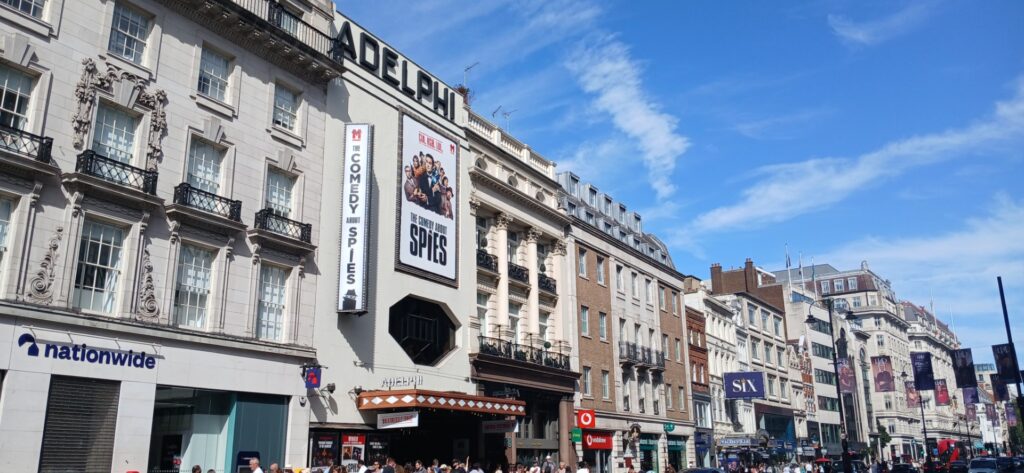
- The Adelphi and Vaudeville Theatres.
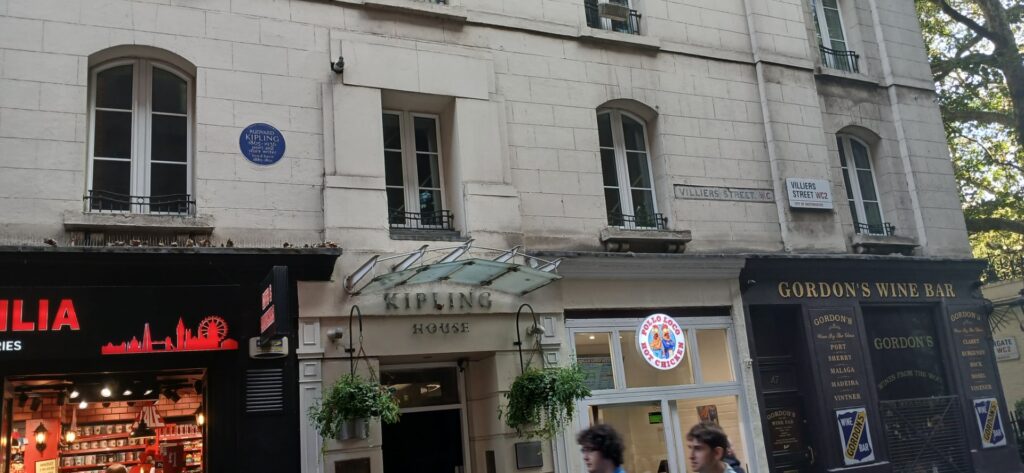
- The famous Gatti Music Hall on Villiers Street (where Rudyard Kipling famously claimed to have survived on Gatti’s beer and sausages while living nearby).
The Battle Over Ice
The rivalry between these competing family enterprises lasted only a decade. The razor-thin profit margins of the Tivoli proved no match for the Gattis’ far superior operation.
The deciding factor? Ice.
To keep beers cool, a steady supply of ice was vital. The Gatti family had established a massive ice import empire, giving them direct access to a cheap, plentiful supply. The Tivoli, on the other hand, had to pay large commercial sums to obtain ice on the open market. This financial strain drove the Beer Garden into liquidation in the mid-1880s, and in 1888, the entire structure was demolished.
The Tivoli Theatre of Varieties (1890 – 1916)
It wasn’t long before a private consortium of investors, led by prominent Victorian actor-manager Edward O’Connor Terry, raised £300,000 to build the Tivoli Theatre of Varieties on the vacant lot.
Designed by Charles Phipps, the theatre featured:
- An initial 1,500-seat capacity (later upgraded to 2,000).
- Accompanying bars, lounges, and an elegant restaurant
On its opening night on May 24, 1890, a galaxy of celebrated music hall stars graced the stage, including Dan Leno, Marie Lloyd, Little Tich, the acrobatic Cragg Family, the “Prime Minister of Mirth” George Robey, and Leo Dryden (future father of Charlie Chaplin’s estranged half-brother, Wheeler Dryden).
The Music Hall Strike of 1907
The Tivoli was soon giving the Gatti family empire another run for its money. However, things were not all plain sailing. In 1907, the Tivoli became a central battleground in a wave of historic strike actions organized by the Variety Artistes’ Federation (VAF), the National Association of Theatrical Employees (NATE), and the Amalgamated Musicians’ Union (AMU).
- The Cause: Music hall syndicates were accused of sharp practices, such as forcing artists to perform in matinees for free and imposing heavy fines for illness.
- The Protest: Stars like Marie Lloyd and Little Tich protested on the pavements outside instead of performing. The novelty of celebrity picket lines drew massive crowds and won public sympathy.
- The Resolution: After two weeks of failed negotiations, an arbitration championed by author W. Somerset Maugham produced a settlement with significantly improved terms and conditions.
A Municipal Demolition
Although the building survived First World War Zeppelin raids that damaged other buildings on the Strand, it could not survive municipal planning. The Theatre of Varieties was subject to a compulsory purchase order by the London County Council and was demolished in 1916 for a road-widening project.
The Tivoli Picture Theatre (1923 – 1957)
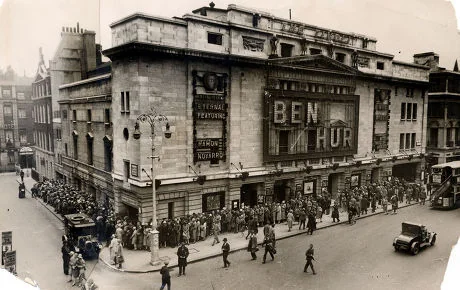
Amazingly, the Tivoli rose from the rubble a third time—this time as a luxury cinema opening in September 1923. Built from white Portland stone, the plush Tivoli Picture Theatre boasted over 2,000 velvet-upholstered seats in its stalls and tiered balconies.
A buffet-style restaurant adjacent to the cinema served high-end ice creams, trifles, jellies, and chocolates alongside a light savoury menu.
The Home of Hollywood Classics
The cinema opened with Metro Pictures’ South Seas epic Where the Pavement Ends. Shortly after, following the merger that created Metro-Goldwyn-Mayer (MGM) Studios, the Tivoli was chosen as the London showcase for early silent classics:
- The Big Parade (1925): Ran for an incredible 24 weeks.
- Ben-Hur (1925): Played twice daily for 49 straight weeks, attracting an estimated 1.25 million viewers.
- Universal Monsters (1930s): London audiences first thrilled to Boris Karloff’s iconic performance in Frankenstein here. For the premiere of The Invisible Man (1933) starring Claude Rains, a massive marquee was built, and actors in bandages and dark glasses handed out fliers.
The Final Curtain
The Tivoli survived the WWII Blitz unscathed despite heavy bombing in the area. However, the rise of modern cinemas in Piccadilly and Leicester Square, combined with the growing popularity of television, brought the era to a close.
The final show ran on September 29, 1956, and the building was demolished in 1957.
A Forgotten Legacy
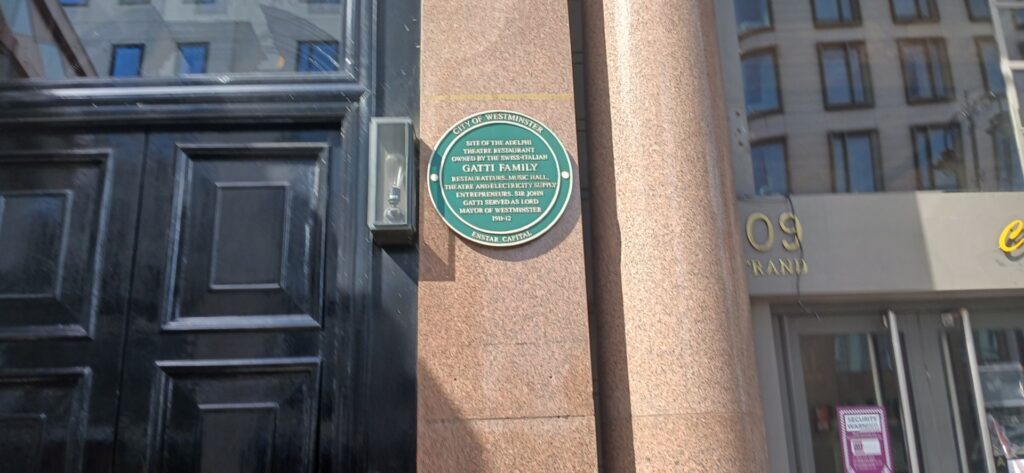
While Gatti’s Restaurant (later the Adelphi Theatre Restaurant) outlasted its rival by remaining open until 1981, and today features a commemorative plaque, there is no physical marker dedicated to the incredible triple history of the Tivoli.
Experience London’s Rich Culinary & Cultural History Firsthand!
Are you fascinated by the stories of historic London restaurants, theatres, and lost landmarks? Join us on an unforgettable journey.
Book your History of Food and Drink in Covent Garden guided walk or private tour today!