

From Pleasure Gardens to Music Halls: Entertainment Evolution

Introduction: Lambeth’s Entertainment History

South London has long been a place where Londoners came to be entertained. From the bear-baiting arenas and brothels of Shakespearean Bankside to the elegant promenades of Vauxhall Pleasure Gardens, the first modern circus, Victorian music halls and the theatre of the Old Vic, Lambeth developed a remarkable reputation for leisure, performance and popular culture.

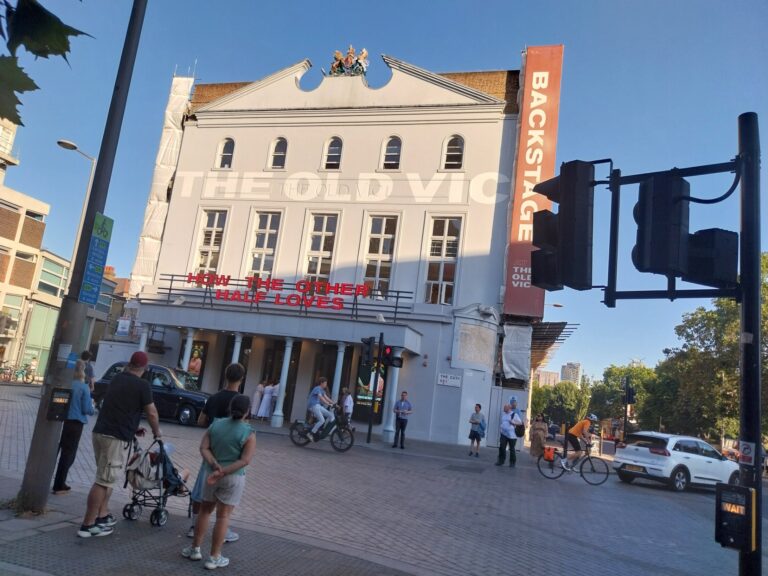
The Old Vic Theatre | London Guided Walks | Photo by Barbara Wright

Today, a walk through Lambeth, Waterloo, Vauxhall, Kennington, Brixton and Streatham reveals layers of this history. The theatres, schools, music halls and pleasure gardens have mostly vanished or changed beyond recognition, but their stories still shape the character of south London.

Lambeth’s pleasure gardens and outdoor entertainment

In Shakespeare’s London, the south bank of the Thames was famously associated with entertainment that was restricted or disapproved of within the City of London. On Bankside, east of what is now Waterloo, visitors could find theatres, bear-baiting, taverns and brothels. The area’s riverside position made it easily accessible by boat while placing it beyond the stricter control of the City authorities.


This appetite for recreation continued westwards into Lambeth during the 17th and 18th centuries. Much of the riverside was low-lying ground, difficult to develop for housing but well suited to open-air leisure. Londoners crossed the Thames to stroll in gardens, hear musicians and enjoy food, drink, dancing and performances.


Several gardens became fashionable destinations, including:

  • Vauxhall Pleasure Gardens, the most celebrated and influential of all London’s pleasure gardens
  • The Bowling Green
  • Cuper’s Gardens
  • Smaller gardens and entertainment spaces around Lambeth Marsh, Lambeth Walk and the roads leading towards Kennington

Vauxhall Gardens developed from the earlier New Spring Gardens and were transformed after Jonathan Tyers took over the site in 1729. They became an internationally famous open-air resort, combining walks, supper boxes, music, art, fireworks and spectacle.

Handel’s Music for the Royal Fireworks was first performed there in 1749. The gardens finally closed in July 1859, after more than two centuries of history.


The fields around Lambeth and Kennington were also used for races, running matches and other outdoor sports. Before the dense streets and railway lines of the Victorian era, this part of south London had far more open ground than it does today.

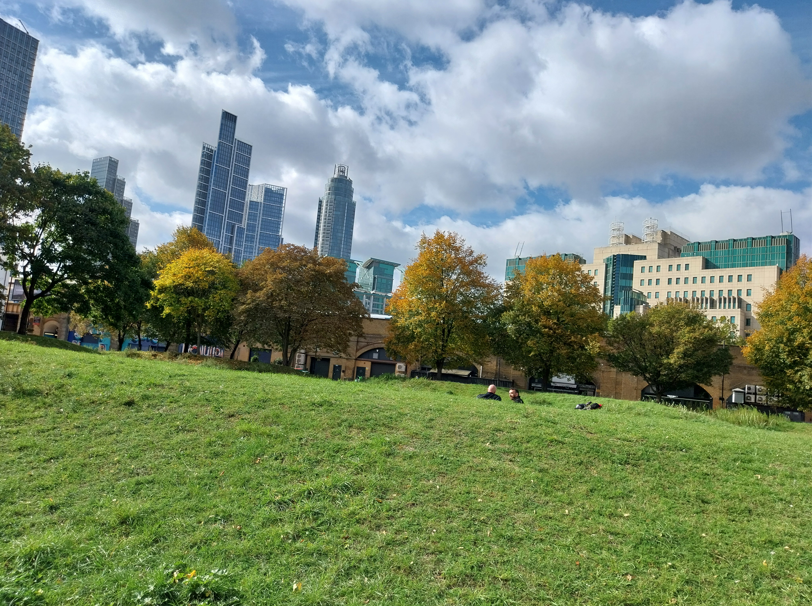
View over Vauxhall Pleasure gardens -now a modern park | London Guided Walks | Photo by Barbara Wright

Astley’s Amphitheatre and the birth of modern circus

One of Lambeth’s greatest contributions to world entertainment was the modern circus. In 1768, Philip Astley began staging equestrian trick-riding displays at Ha’penny Hatch Field in Lambeth Marsh, close to Westminster Bridge. Astley and his wife, Patty Jones, developed performances that combined skilled horsemanship with rope acts, tumbling, juggling and clowning.


Astley’s Amphitheatre, established near the Lambeth end of Westminster Bridge Road around 1769–70, is widely recognised as the first permanent circus venue and a key origin point for the British and European circus tradition. Although Astley did not necessarily use the word “circus” for his own amphitheatre, the format he pioneered became enormously influential.


The venue stood on Westminster Bridge Road, on or near the site later occupied by St Thomas’ Hospital. It survived fires, rebuilding and changing fashions for more than a century before closing in 1893.


For anyone exploring Lambeth’s history, Astley’s is an important reminder that the area was not merely a recipient of London entertainment: it helped invent a form of performance that travelled around the world.

Music halls, theatre and Charlie Chaplin

By the 19th century, Lambeth had become increasingly built up, industrial and densely populated. Factories, workshops, wharves and railway infrastructure transformed the riverside from Vauxhall towards Waterloo. Chimneys lined the Thames, and pollution from industry became a defining feature of the area.


Yet Lambeth also remained a centre for working-class entertainment. Music halls offered affordable evenings of songs, comic turns, variety acts and popular performances.

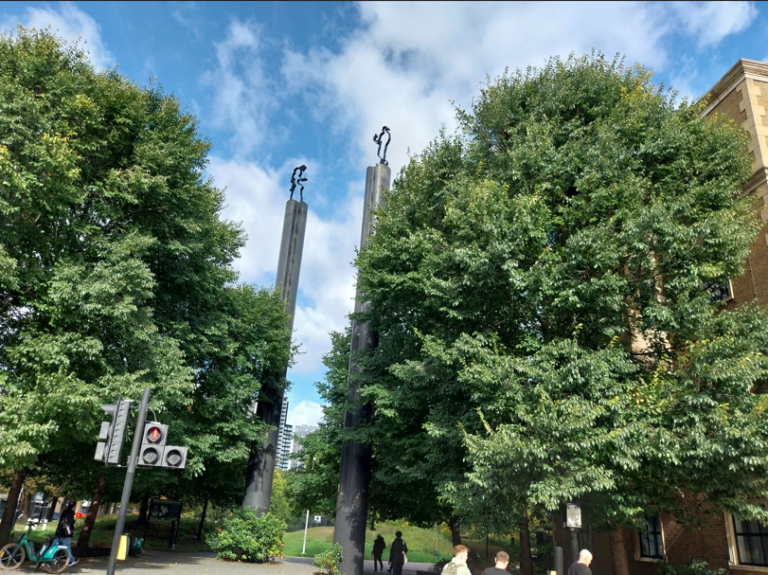
Entrance to Vauxhall Pleasure Gardens in modern times - note the entrance way harking back to the hey day | London Guided Walks | Photo by Barbara Wright

The Canterbury Hall was one of the best-known venues in the wider Lambeth area, while Bower’s Saloon near St Thomas’ Hospital provided another local place of amusement. On Westminster Bridge Road, the Gatti family opened a premises at 214–216 Westminster Bridge Road in 1862. It later incorporated a music hall and became known as Gatti’s-in-the-Road or Gatti’s-over-the-Water, distinguishing it from Gatti’s venue near Charing Cross.


Gatti’s became an important music-hall venue, with performers including comic-song stars and, later, figures such as Dan Leno, Marie Lloyd, George Leybourne, Little Tich and Harry Lauder. It was rebuilt as Gatti’s Palace of Varieties in 1883, converted to cinema use in the 1920s, badly damaged during the Blitz and demolished in 1950.


Further south, Brixton and Loughborough Junction became associated with Fred Karno, one of the great impresarios of British music hall. Karno ran a “fun factory” where routines and comic material could be tested before performers took them on tour. One young performer associated with Karno’s world was Charlie Chaplin, who had deep connections with Kennington and Lambeth. Lambeth Archives records that Chaplin was admitted to Lambeth Workhouse as a child in 1896.


Chaplin’s south London background mattered to his later work. The physical comedy, hard-edged humour and social observation of music hall helped shape the character and style he took to the world.

Streatham Hill and south London’s theatres

South London’s entertainment history did not end with the Victorian music hall. In the 20th century, Streatham became home to many performers and theatre workers, helped by its connections to central London and the presence of major venues.


The Streatham Hill Theatre, designed by theatre architect W. G. R. Sprague, opened in the 1920s and regularly hosted productions before their West End runs. Sprague also designed Wyndham’s Theatre in the West End, among many other major theatre buildings.


Nearby, the Locarno dance hall opened in the 1920s and was associated with the bandleader Billy Cotton. Together, these venues show how south London continued to offer entertainment on a grand scale: theatre, dance, live music and variety performance for local audiences and visitors alike.

Emma Cons, the Old Vic and education in Lambeth

Lambeth’s cultural history is not only about pleasure and spectacle. It is also about reform, education and the belief that theatre and learning should be available to people of modest means.


In 1879, the Coffee Palace Association took over the Royal Victoria Theatre near Waterloo. With the support of social reformer Emma Cons, the building was transformed and reopened in 1880 as the Royal Victoria Coffee Music Hall. It was intended to provide “cheap and decent” entertainment under temperance principles: no alcohol, but lectures, concerts, variety entertainment and eventually Shakespeare, opera and classical drama.


Emma Cons believed that working people in Lambeth deserved access to culture as well as amusement. Her niece, Lilian Baylis, continued that work after Cons’s death and became one of the most important theatre managers of the 20th century. Baylis later relaunched the Royal Coburg Theatre as the Old Vic in 1912 and became closely associated with Sadler’s Wells.

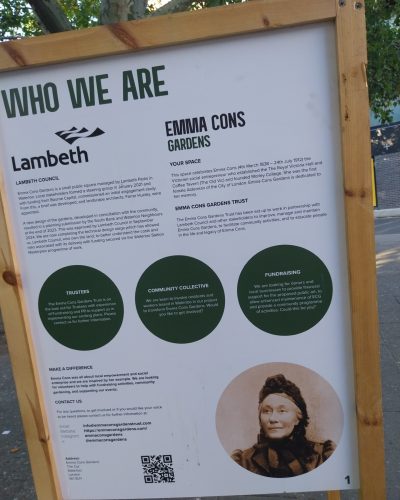
Sign board for Emma Cons square outside the Old Vic | London Guided Walks | Photo by Barbara Wright

Morley College grew from the educational lectures held in connection with the Old Vic. Supported by the businessman and philanthropist Samuel Morley, it developed into a lasting institution for adult education, still associated with Lambeth North and Waterloo today.

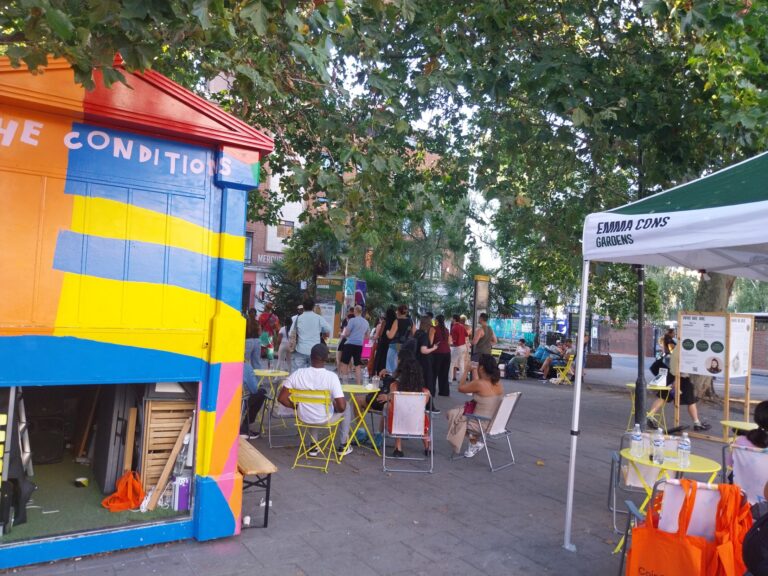
Emma Cons Gardens | London Guided Walks | Photo by Barbara Wright

The story of education and self-improvement also appears further south in Kennington and Vauxhall. In 1854, the Reverend Robert Gregory began a night school that eventually developed into the City and Guilds School of Art. The aim was practical: to give local people skills that could lead to better work in the arts and industry.

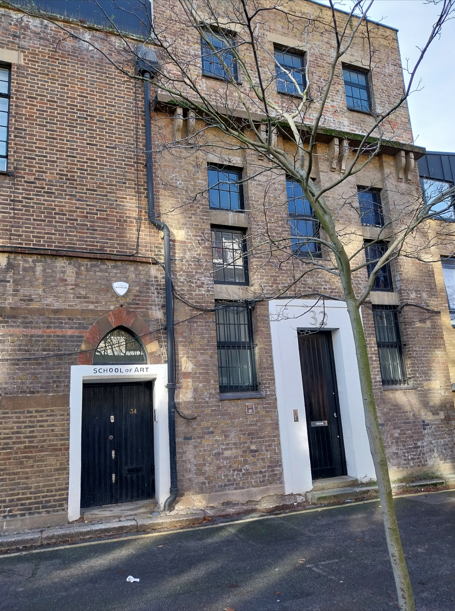
Original building for the school of art which eventually moved to Kennington - near Vauxhall station | London Guided Walks | Photo by Barbara Wright

Its students included George Tinworth, Hannah Barlow and George Frampton. Tinworth and Barlow went on to work for the nearby Doulton pottery works, as did Hannah’s sister, Florence Barlow. Their careers link Lambeth’s educational institutions with the area’s industrial and artistic heritage.


The Beaufoy family also played a significant role in local social reform. The family, whose wealth was connected with distilling, vinegar and cordials, established the Lambeth Ragged School in Newport Street in 1851 to educate children excluded from mainstream schooling.


When railway development affected the original site, the school’s work was continued in the Beaufoy Institute in Black Prince Road. Built in the early 20th century, the Grade II-listed building includes decorative features thought to be associated with the nearby Doulton firm.

Explore Lambeth’s hidden cultural history

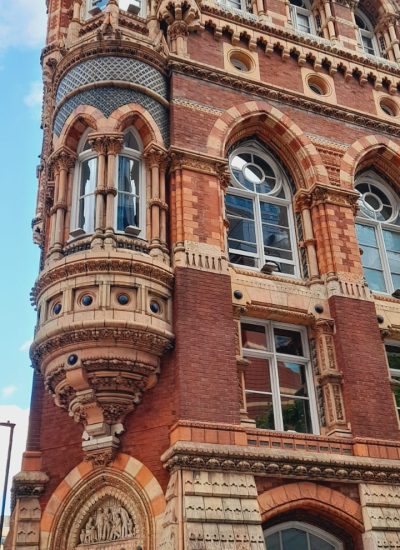
The Doulton building Black Prince Road  | London Guided Walks | Photo by Barbara Wright
The Doulton building Black Prince Road | London Guided Walks | Photo by Barbara Wright

Lambeth’s history is often told through industry, poverty, railways and social change. Those themes are essential, but so is its extraordinary history of enjoyment, performance and imagination.


From Vauxhall Gardens and Astley’s Amphitheatre to Gatti’s music hall, Fred Karno’s comedy workshop, the Old Vic and the Beaufoy Institute, south London offered Londoners pleasure, culture and opportunity in many forms.


So, when you are deciding where to wander in London, consider crossing the Thames. Follow the routes taken by generations of pleasure-seekers, theatre-goers, performers, students and reformers, and discover how Lambeth helped make London one of the world’s great entertainment cities.

Facebook
Twitter
LinkedIn

Related Posts

Scroll to Top