Introduction
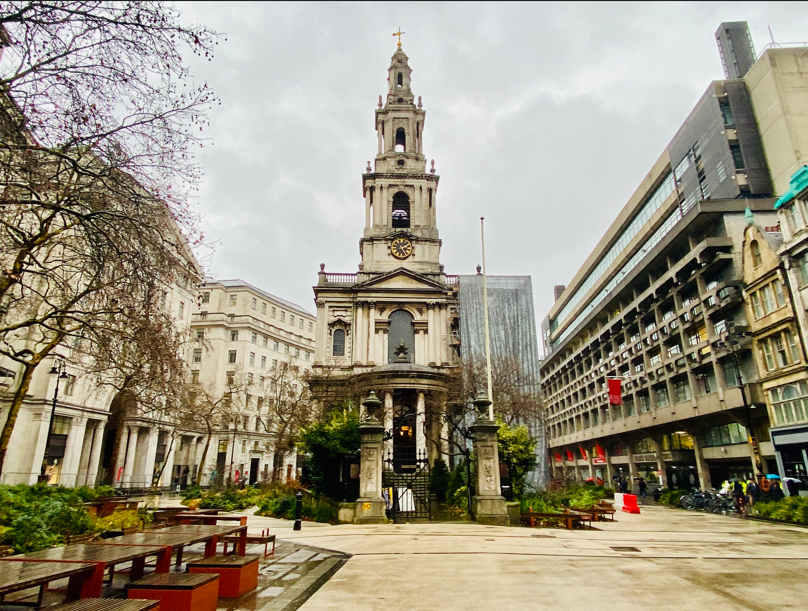
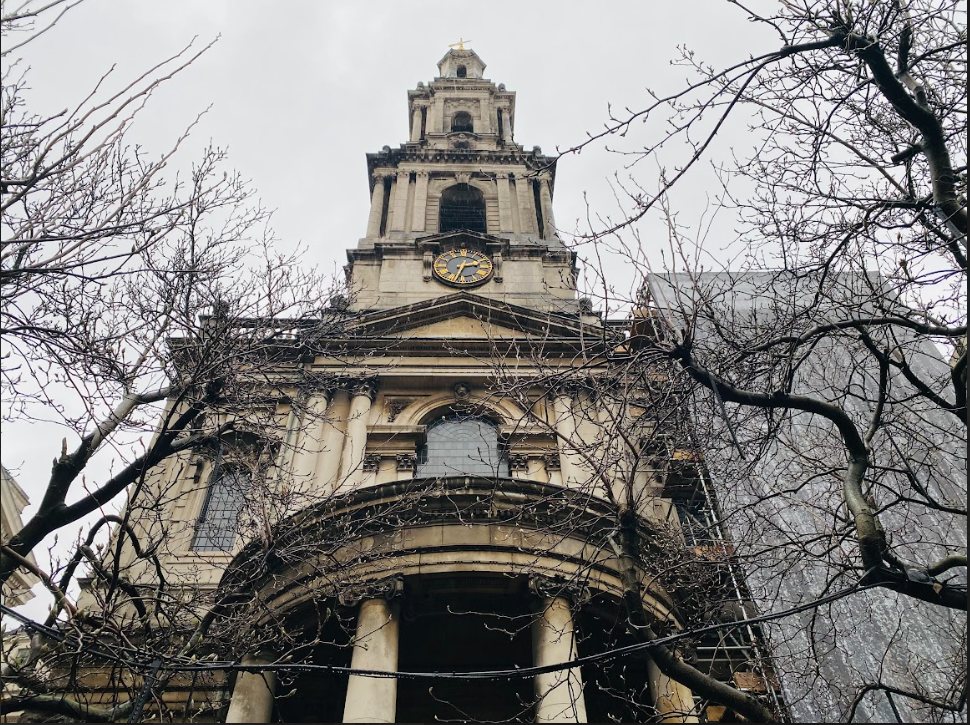
St Mary le Strand stands as one of London’s most exquisite Baroque churches, a Grade I listed architectural gem designed by James Gibbs and completed in 1723. Located on the Strand between Somerset House and King’s College London, this Georgian masterpiece has witnessed centuries of London history—from its construction as part of Queen Anne’s ambitious church-building programme to its starring role in the Oscar-winning film Chariots of Fire.
Once marooned on a traffic island, recent pedestrianisation has transformed the church’s setting, making it far more accessible to visitors exploring Westminster and the West End. With a £4.6 million Heritage Lottery restoration underway, St Mary le Strand is experiencing a renaissance befitting its status as the “Jewel of the Strand.”
St Mary le Strand in Chariots of Fire
The opening scene of the 1981 Oscar-winning film Chariots of Fire features St Mary le Strand’s distinctive exterior. The film depicts a memorial service in 1978 for Olympic champion Harold Abrahams, where an aged Lord Andrew Lindsay—played by Nigel Havers—reflects on the 1924 Paris Olympics.
The character of Lord Andrew Lindsay was loosely based on David Cecil, Marquess of Exeter (Lord Burghley), who competed in the 1924 Olympics and later became a Conservative MP and member of the International Olympic Committee. Lord Burghley famously presented medals at the 1968 Mexico City Olympics during the iconic Black Power salute by Tommie Smith and John Carlos.
While St Mary le Strand’s exterior appears in the film, interior scenes were actually filmed at St Mary-le-Bow on Cheapside, whose larger interior better suited production requirements.
The film connection has brought renewed attention to this often-overlooked London church, introducing it to audiences worldwide.
📚Related reading: St Mary le Bow: Discover Its Architectural Beauty
The Queen Anne Churches Programme
St Mary le Strand was commissioned under the Fifty New Churches Act of 1711, an ambitious scheme to build fifty new Anglican churches across London and Westminster. Often called the Queen Anne Churches, only twelve were ever completed due to budget constraints and changing political priorities.
Notable Queen Anne Churches include:
- St Mary le Strand (1714-1723)
- St George’s Hanover Square, Mayfair (1721-1724)
- St John’s Smith Square, Westminster (1713-1728)
- Christ Church Spitalfields (1714-1729)
- St Paul’s Deptford (1712-1730)
- St Alfege Greenwich (1712-1718)
The programme aimed to provide adequate church facilities for London’s rapidly growing population in the early 18th century, particularly in newly developed areas lacking established parish churches.
James Gibbs: Architect of Baroque London
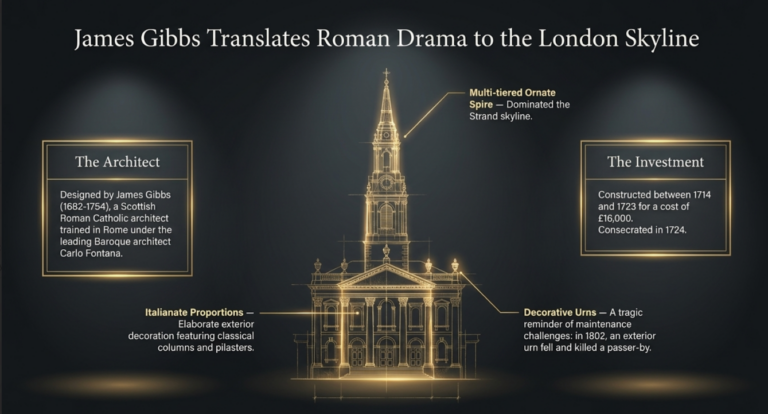
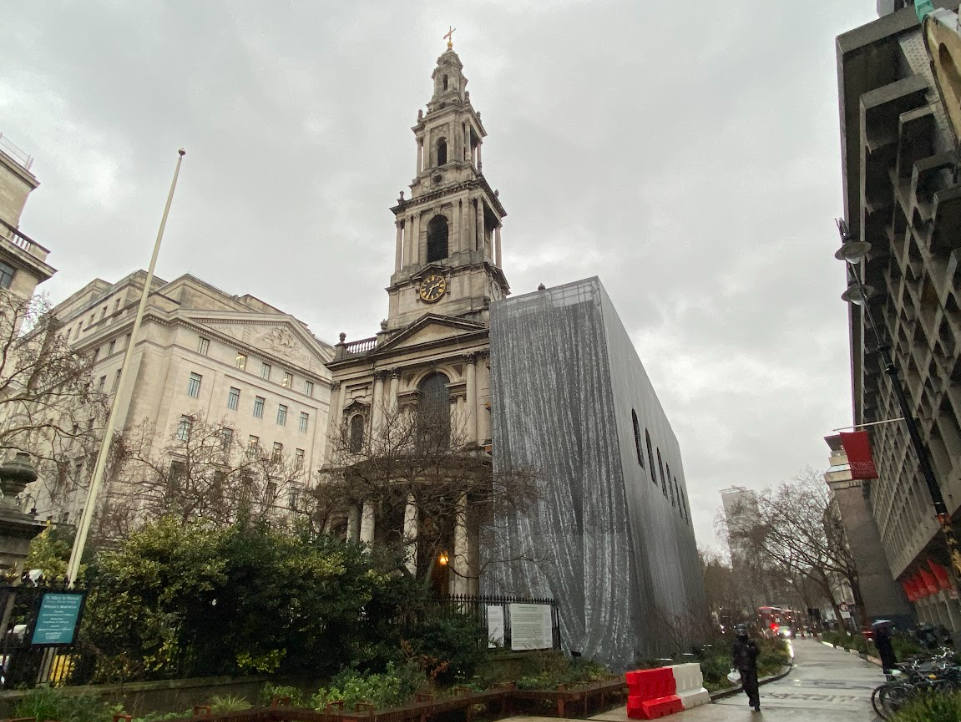
St Mary le Strand was designed by James Gibbs (1682-1754), a Scottish Roman Catholic architect who had studied in Rome under Carlo Fontana, a leading Baroque architect. This Italian training profoundly influenced Gibbs’ work, making St Mary le Strand one of Britain’s finest examples of Italianate Baroque architecture.
Built between 1714 and 1723, the church cost £16,000 to construct and was consecrated in 1724. Gibbs incorporated distinctive Baroque features including:
- A multi-tiered ornate spire rising above the Strand
- Elaborate exterior decoration with columns, pilasters, and urns
- Italian-influenced proportions and detailing
- A compact interior designed to minimise street noise
The intricate spire once dominated the Strand skyline. In a notable incident in 1802, one of the decorative urns fell from the exterior, killing a passer-by—a reminder of the maintenance challenges facing historic buildings.
James Gibbs went on to design other London landmarks including St Martin-in-the-Fields in Trafalgar Square and the Radcliffe Camera in Oxford.
The Strand: From Royal Route to Modern Thoroughfare
The name “Strand” derives from Old English strond, meaning shore or riverbank. Before the Victoria Embankment was constructed in the 1860s, the Strand ran much closer to the River Thames, with the southern side lined by grand aristocratic mansions with river frontages.
Historical significance:
The Strand served as the main route connecting the City of London with the Palace of Westminster and Westminster Abbey. Grand riverside palaces once included:
- Somerset House (rebuilt 1776-1796)
- The Savoy Palace (destroyed 1381)
- York House (demolished 1672)
- Durham House (demolished 1660s)
St Mary le Strand replaced an earlier medieval church on the same site, demolished in 1549 to make way for the Duke of Somerset’s palace (the original Somerset House). The medieval church had served the parish since at least the 12th century.
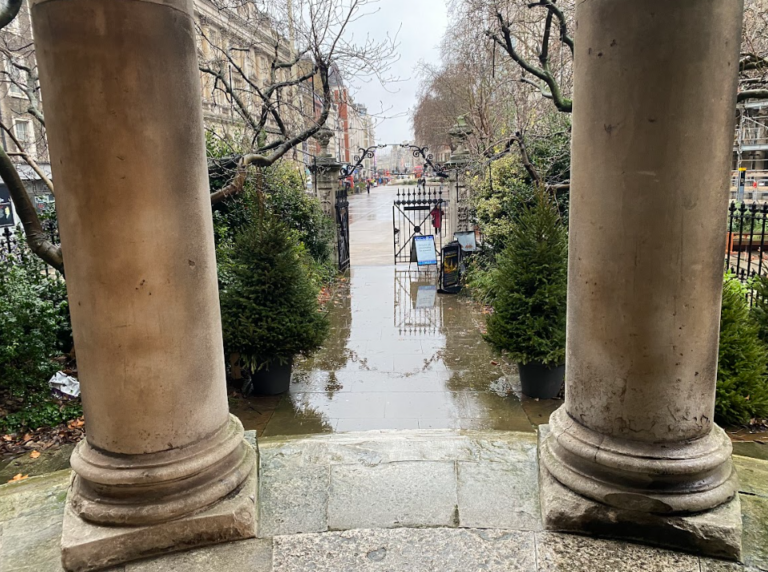
For centuries, the church stood surrounded by busy traffic, making it difficult to appreciate or access. The recent pedestrianisation of much of the Strand has created a more pleasant environment, allowing visitors to properly enjoy the building’s architectural details.
Explore more: Private Westminster Tours
Interior Design and Acoustic Innovation
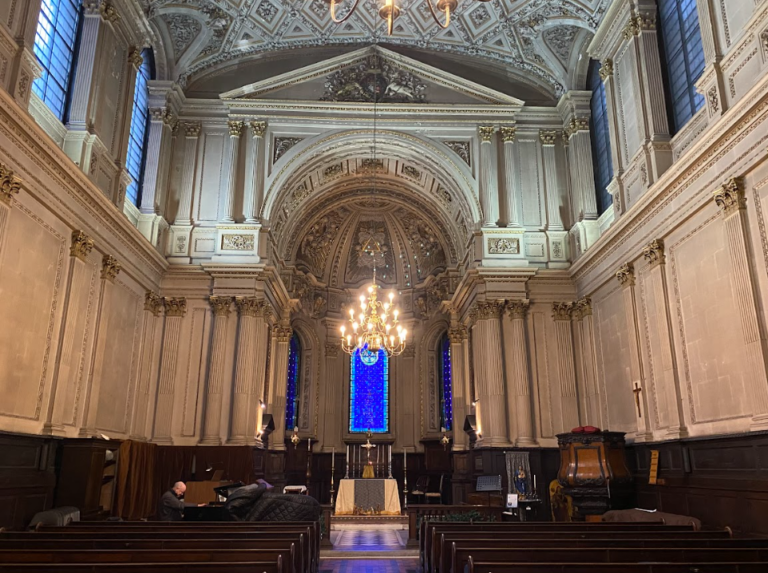
The interior of St Mary le Strand is relatively compact, with one particularly unusual feature: the absence of ground-floor windows. This was a deliberate design choice by James Gibbs to reduce street noise from the constantly busy Strand—a problem even three centuries ago.
Natural light enters through clerestory windows positioned higher up, creating a bright yet acoustically controlled space ideal for worship and music.
Worship and Music
St Mary le Strand serves as:
- The official church of the Women’s Royal Naval Service (WRNS)
- A venue for regular Anglican services
- A concert hall for classical music performances, including free lunchtime concerts
- A heritage site welcoming visitors year-round
The church has strong literary connections: the parents of Charles Dickens were married here in June 1809, shortly before the novelist’s birth.
Listen now: Episode 40: Charles Dickens in Greenwich
Survival and Modern Challenges
St Mary le Strand survived the Blitz during World War II with relatively minor damage, unlike many London churches destroyed by bombing. However, centuries of exposure to pollution, weather, and urban vibrations have taken their toll on the fabric of the building.
By the 2020s, significant structural repairs were urgently needed to prevent deterioration of this Grade I listed building.
The Jewel of the Strand Restoration Project
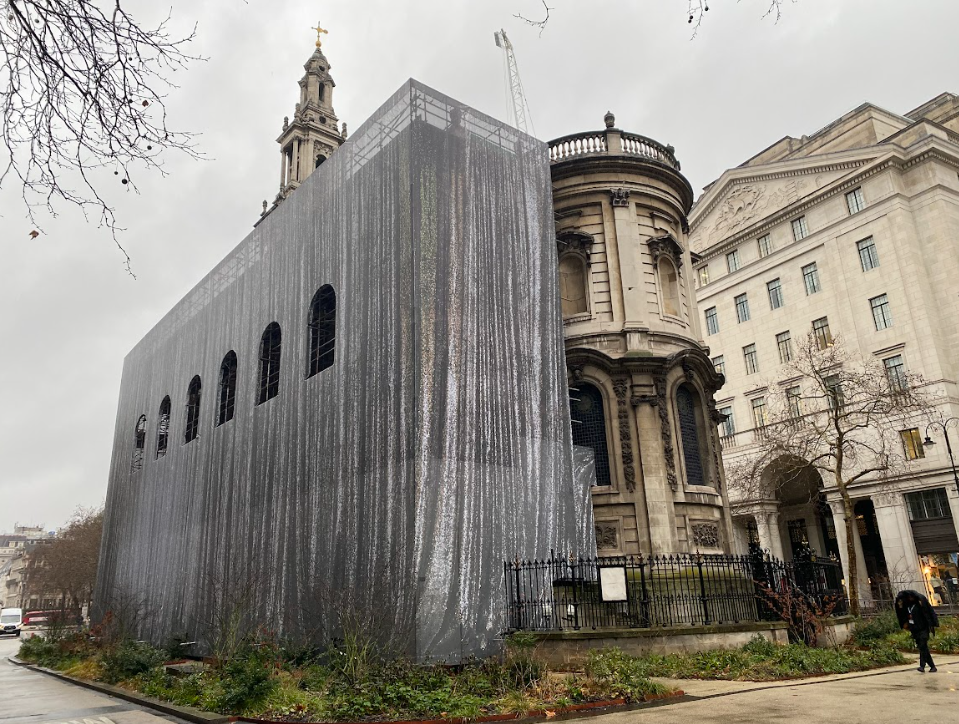
In late 2025, the National Lottery Heritage Fund awarded £4.6 million to St Mary le Strand for comprehensive restoration work through the Jewel of the Strand Project.
Restoration priorities include:
- Structural repairs to the spire and exterior stonework
- Conservation of Baroque architectural details and decorative elements
- Interior restoration and conservation
- Improved accessibility and visitor facilities
- Enhanced interpretation and educational programming
- Community engagement initiatives
The project ensures this architectural jewel remains accessible and structurally sound for future generations while preserving James Gibbs’ Baroque masterpiece.
Contemporary Art: Decades by Louise Giovanelli
In recent years, St Mary le Strand has embraced contemporary art alongside its Georgian heritage. The installation Decades by artist Louise Giovanelli draped the south side of the church in a shimmering illuminated curtain, transforming the building after dark.
This intersection of 18th-century architecture and 21st-century art demonstrates how historic churches continue to evolve as cultural spaces, attracting new audiences while honouring their heritage.
Visiting St Mary le Strand
Location: Strand, London WC2R 1ES
Nearest stations:
- Temple (Circle and District lines) – 3 minutes’ walk
- Charing Cross (Bakerloo and Northern lines) – 5 minutes’ walk
- Covent Garden (Piccadilly line) – 8 minutes’ walk
Opening hours: Generally open for services and concerts; check the church website for current visiting hours
Services: Regular Anglican worship, WRNS services, concerts, and special events
Admission: Free (donations welcomed)
Accessibility: The pedestrianised Strand makes the church far easier to access than when it was surrounded by traffic
What to See Near St Mary le Strand
- Somerset House – Georgian palace housing art galleries and courtyard events
- King’s College London – Historic university buildings on the Strand
- Covent Garden – 10 minutes’ walk, shopping and entertainment district
- Royal Courts of Justice – Victorian Gothic law courts
- St Clement Danes – RAF church designed by Christopher Wren
- The Savoy Hotel and Chapel – Historic luxury hotel and private chapel
🚶Related tours:
FAQs About St Mary le Strand
Who designed St Mary le Strand?
The church was designed by James Gibbs, a Scottish architect who studied Baroque architecture in Rome. It was built between 1714 and 1723.
Why is St Mary le Strand called the Jewel of the Strand?
The nickname refers to its exquisite Baroque architecture and recent £4.6 million restoration project, which aims to preserve this architectural gem for future generations.
Was St Mary le Strand in Chariots of Fire?
Yes, the exterior appears in the opening scene of the 1981 Oscar-winning film. Interior scenes were filmed at St Mary-le-Bow on Cheapside.
Is St Mary le Strand part of the Queen Anne Churches?
Yes, it was one of twelve churches completed under the Fifty New Churches Act of 1711, designed to provide Anglican worship spaces for London’s growing population.
Can you visit St Mary le Strand?
Yes, the church welcomes visitors and hosts regular services, concerts, and events. Check their website for current opening hours.
Why doesn’t St Mary le Strand have ground-floor windows?
James Gibbs deliberately omitted ground-floor windows to reduce street noise from the busy Strand, an innovative acoustic design feature.
Discover London's Georgian Churches
St Mary le Strand exemplifies how London’s historic churches connect architecture, film, literature, and urban history. Once isolated by traffic, it now sits within a welcoming pedestrianised space—a testament to London’s continual reinvention.
Book a private walking tour with Philip Scott to explore St Mary le Strand, the Strand’s layered history, and other architectural treasures of Georgian London.