
Introduction
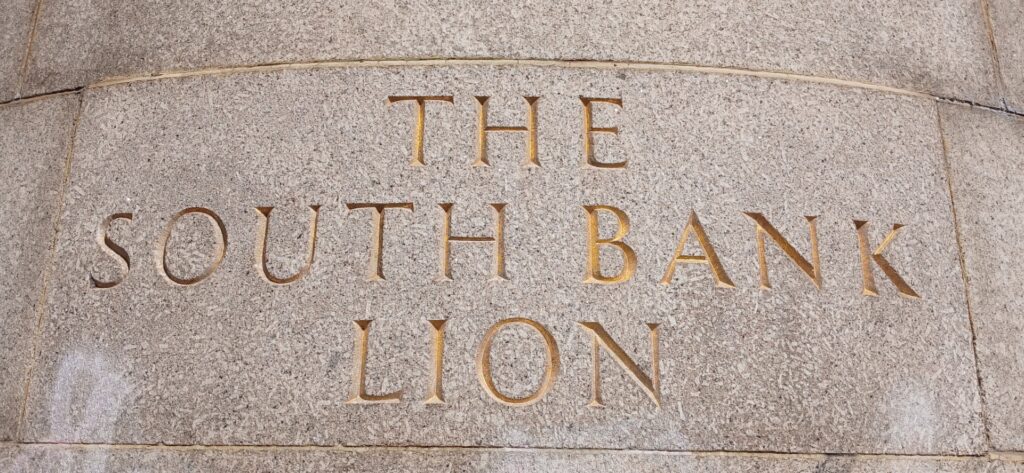
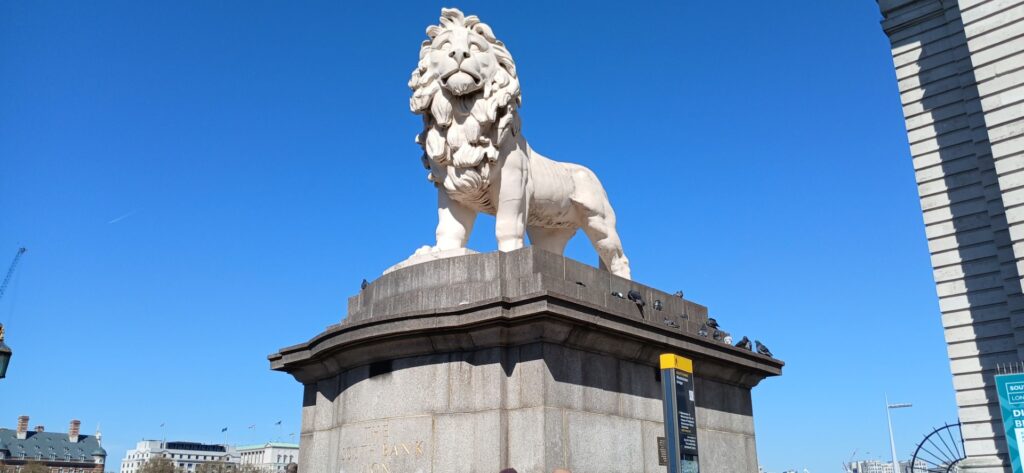
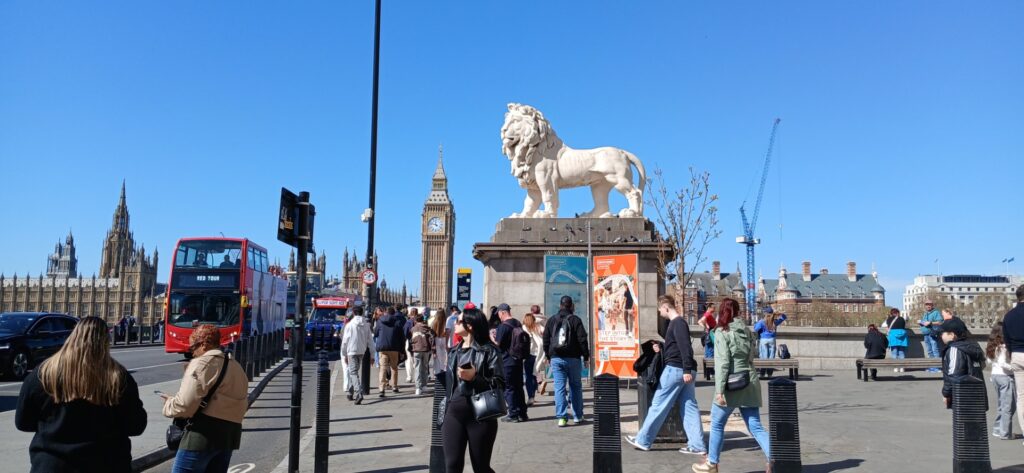
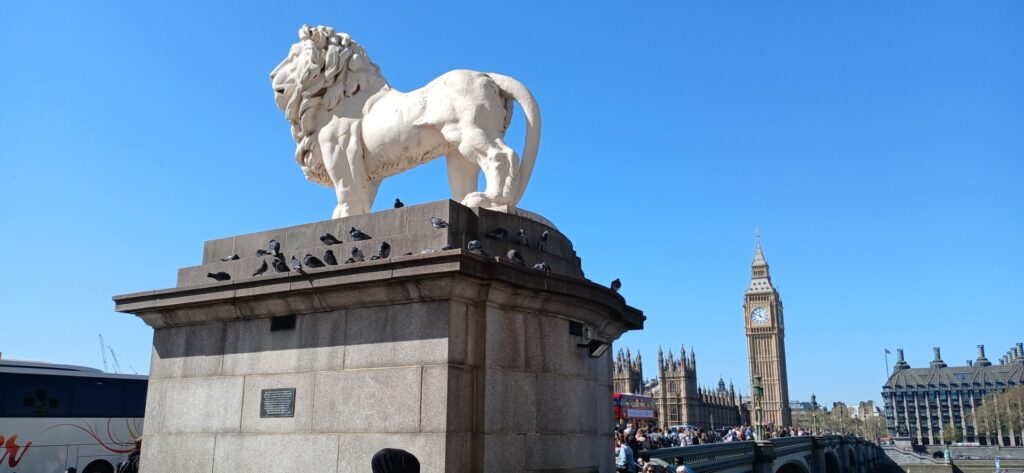
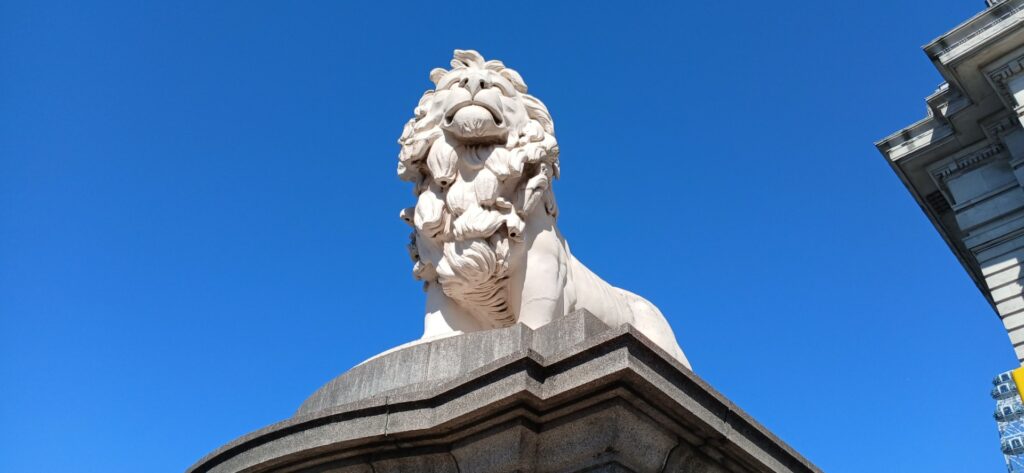
The iconic lion statue known as the Southbank Lion sits on its granite plinth at the top of the steps leading from Westminster Bridge to the Queen Elizabeth Walk, calmly watching the Thames and the London Eye.
This much-loved South Bank lion statue marks its 60th year in this spot this April, but its story stretches back almost two centuries.
If you clambered up to examine the inscription carved into one of its front paws, you’d find its “birth date”: 24 May 1837 – the day the soon‑to‑be Queen Victoria celebrated her 18th birthday.
Remarkably, the Southbank Lion is in excellent condition for a sculpture that has wandered around Waterloo for 188 years.
A Remarkable Material: Coadestone
The lion’s resilience is due in no small part to being cast in an exceptionally durable artificial stone known as Coade stone (often written as “Coadestone”).
Originally called Lithodipyra – “stone fired twice” – the material takes its name from
Eleanor Coade, a Georgian businesswoman and inventor who defied expectations in an age when women were rarely seen as industrial leaders.
Using a closely guarded formula of crushed ceramics and Dorset clay, she created a weather‑resistant, virtually indestructible stone that was used on prestigious buildings and garden sculptures across Britain.
Her Coade stone manufactory stood on Belvedere Road, close to where the Southbank Lion now stands, and her showroom was located just off Westminster Bridge Road – keeping this lion very much on home turf.
The Lion Brewery Origins
The story of the Wandering Lion of Waterloo begins with the neighbouring Lion Brewery. Founded in 1836 by James Goding, the brewery commissioned architect Francis Edwards to design a vast five‑storey building that would dominate the riverside.
Lion on the rooftop of the Lion Brewery in Waterloo | Photo by David Turnbull
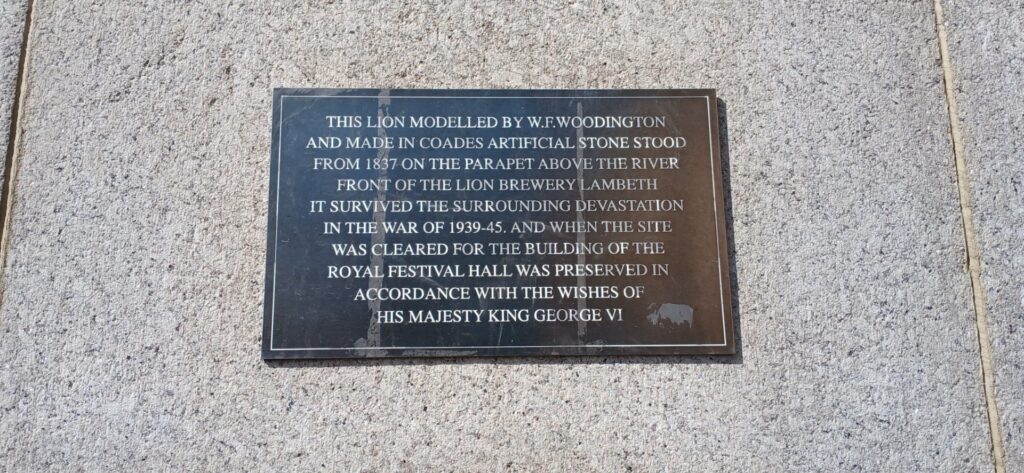
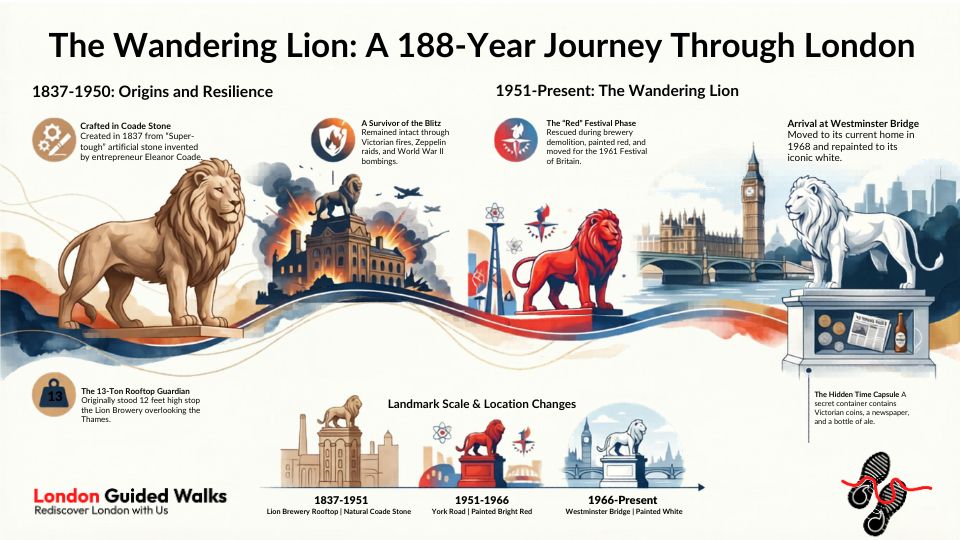
Sculptor William Frederick Woodington created the lion, which was then hoisted onto the brewery roof. At 12 feet high, 13 feet long and weighing around 13 tonnes, raising this Coade stone lion into place was a remarkable feat of Victorian engineering.
From this lofty position above the Thames, the South Bank lion statue surveyed London for more than a century, becoming a familiar part of the Waterloo skyline.
The lion, designed by William Frederick Woodington, was placed atop the building. At 12 feet high, 13 feet long, and weighing 13 tonnes, raising it to the rooftop would have been a considerable feat of engineering.
From this vantage point, it overlooked the Thames for more than a century, becoming part of the riverside skyline.
A Witness to London Life and History
The Lion Brewery became famous for its India Pale Ale, which was exported throughout the British Empire. The lion itself was so well known that Émile Zola, while staying at the Savoy Hotel, remarked on the curious sight of the lion appearing to float in the fog above the river.
Over time, the lion witnessed:
- Zeppelin raids during the First World War
- A major fire at the brewery in the 1930s
- The Blitz and V2 rocket attacks of the Second World War
Rescue and the Festival of Britain
By the early 1950s, plans were underway to sweep away much of the old riverside industry to make space for a new Festival of Britain, site on the South Bank. The Lion Brewery was demolished to make way for the Royal Festival Hall, but the lion himself was spared – reportedly at the request of King George VI.
During removal, workers discovered a time capsule inside the lion, containing coins, a newspaper, a trade card and a bottle of the brewery’s ale – a snapshot of Victorian London sealed inside a Georgian‑era sculpture.
The lion was then relocated to York Road, repainted in British Rail red, and became a welcoming sight for visitors arriving at the Festival of Britain and Waterloo.
For more on this post‑war transformation, explore our Festival of Britain walk and related Festival of Britain blog and podcast episodes including An Introduction to The Festival of Britain and the Soundscape of the Festival of Britain.
A Wandering Landmark
For 15 years, the Wandering Lion of Waterloo stood on York Road, watching the redevelopment of the South Bank and the growth of modern London. It later overlooked the British European Airways terminal and new riverside buildings that reshaped this part of the Thames.
In 1966, the lion moved again – this time to its current home beside Westminster Bridge. Before installation, the red paint was stripped away and replaced with the now familiar white coating, which highlights the muscular modelling and fine detail of the Coade stone Southbank Lion.
When the lion was resettled on its granite plinth, new items were added to the time capsule, linking 19th‑century London with the late 20th century.
Cultural Appearances and Later Additions
The lion’s story didn’t end with its move to Westminster. In 1988, politician Tony Banks added a letter describing life in contemporary London to the time capsule, further updating this hidden archive.
The Southbank Lion has also enjoyed a second career in popular culture. It has appeared in films including Alfie and the James Bond film Die Another Day, where it stood above a secret MI6 base imagined beneath the Thames. It has even featured in episodes of Doctor Who.
A smaller counterpart of the original Lion Brewery sculptures now stands at Twickenham Stadium, neatly tying the lion’s heritage to England’s sporting history.
Visiting the Southbank Lion Today
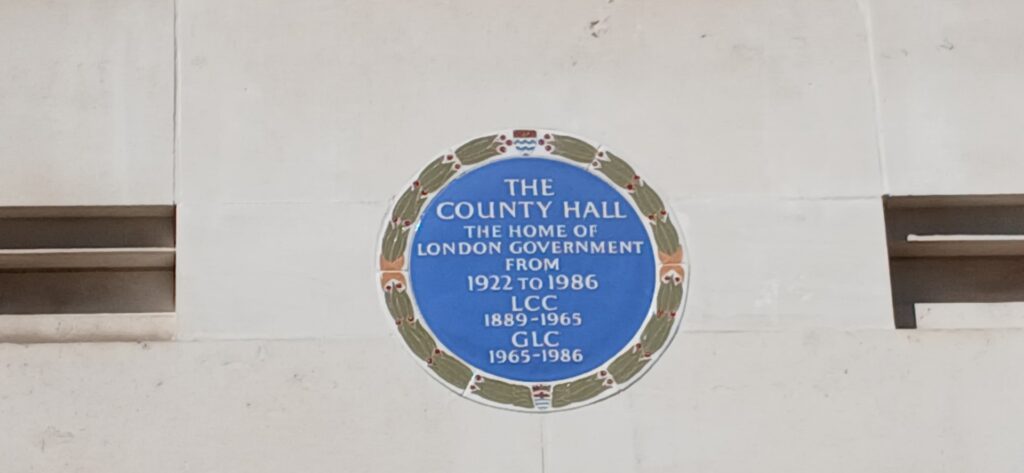
Today, the Southbank Lion remains a much‑loved feature of the Thames riverside, keeping watch over Westminster Bridge, County Hall and the London Eye.
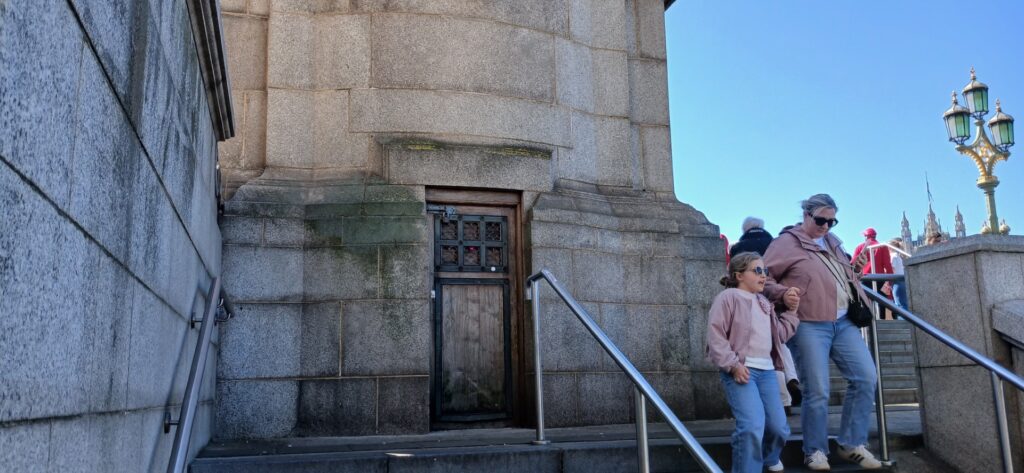
Pause for a moment at the top of the steps and you’ll see why this London lion statue has captured imaginations for nearly two centuries. If you look closely, you may even spot a small door at the back of its plinth – a detail that adds an extra touch of mystery to this already fascinating landmark.
Explore with Us
Step into the story of post-war London and discover the legacy of the Festival of Britain for yourself.
Book your place on our Festival of Britain 75th Anniversary walk or book a private tour today with David Turnbull
Explore the South Bank with an expert guide and experience the history behind landmarks like the Southbank Lion brought vividly to life.