Eleanor Coade: The Georgian Businesswoman Behind Coade Stone
Eleanor Coade was one of the most successful entrepreneurs in Georgian London, transforming the ceramics industry with her invention of Coade stone. Born in Exeter in 1733, she built a manufacturing empire whose architectural sculptures still survive across Britain today.
At a time when few women led industrial businesses, Eleanor Coade combined innovation, branding and commercial strategy to create one of the most durable and recognisable materials of the 18th century.
Family Legacy and Early Influence
Eleanor Coade’s business instincts were shaped by a powerful family legacy. Her grandmother, Sarah Enmarch, was a formidable textile manufacturer in Tiverton who ran a workforce of over 200 people after being widowed in 1735.
Enmarch ensured her daughters remained financially independent, specifying that their inheritance could not be controlled by husbands. She also left Eleanor £500, a crucial sum that later helped fund her business ventures.
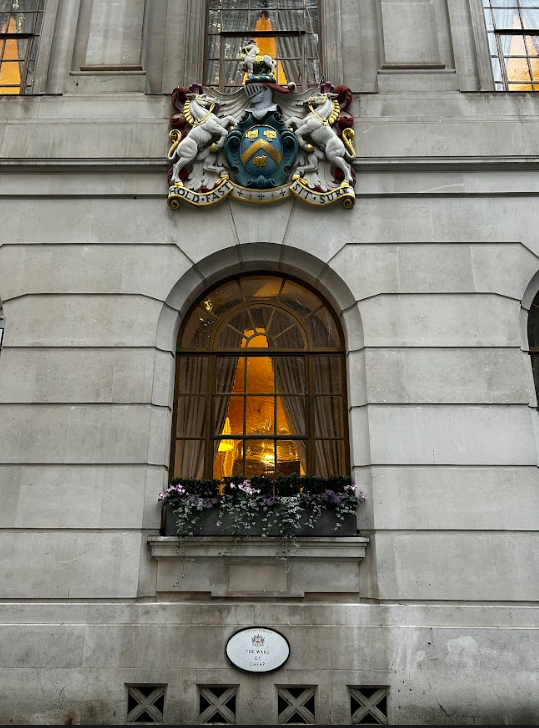
After her father’s bankruptcy in 1760, the family moved to London. Eleanor established a draper’s shop near Cannon Street in the City of London, marking her first step into business.
Eleanor Coade’s Lambeth Factory
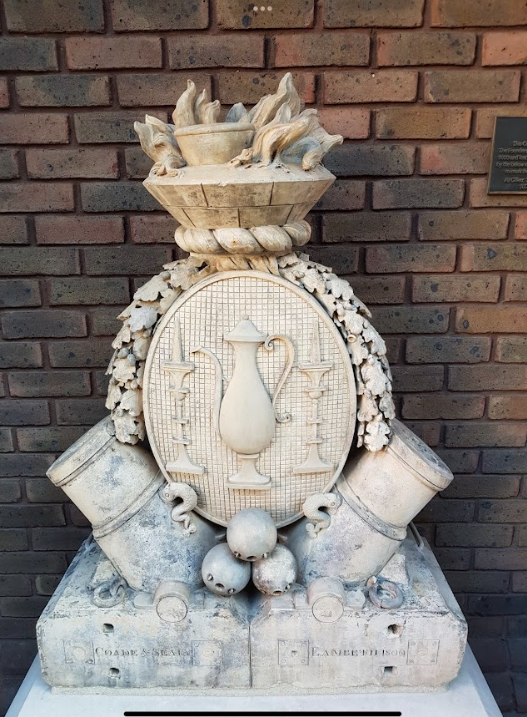
In 1769, Eleanor Coade purchased an artificial stone factory in Lambeth, now near the Southbank and Royal Festival Hall. The site would become the centre of her industrial success.
At the time, builders were searching for a durable alternative to natural stone, which often cracked in frost or deteriorated in polluted city air. Many artificial stone products failed—but Eleanor Coade’s did not.
Her business quickly became the leading producer of high-quality architectural stone in Britain.
What Is Coade Stone?
Despite its name, Coade stone is not stone but a high-fired ceramic made from clay, silica, and ground glass.
Its key advantages included:
- Exceptional durability in harsh weather
- Resistance to pollution and acid rain
- Ability to retain fine decorative detail
- Consistent quality through controlled production
Fired for several days at extremely high temperatures, Coade stone proved far more reliable than natural stone in urban environments like Georgian London.
(Example: Many original Coade stone features on buildings such as Buckingham Palace and the Brighton Pavilion remain intact today, while surrounding natural stone has weathered.)
Innovation, Branding and Business Strategy
Eleanor Coade’s success was not just technical—it was commercial.
In 1771, she publicly asserted herself as the sole owner of the business after discovering her manager, Daniel Pincot, had claimed ownership. This bold move reinforced her authority in a male-dominated industry.
She then rebranded the company as Coade’s Artificial Stone Factory, creating one of the earliest examples of consistent product branding. Every piece was stamped “COADE”, guaranteeing quality and building trust with architects and clients.
Her innovations included:
- Use of moulds for scalable production
- A public showroom where visitors could view and order designs
- Printed catalogues to market her products
- Strong partnerships with leading architects and designers
This combination of manufacturing efficiency and marketing foresight made her business highly profitable for over 50 years.
Coade Stone in London and Beyond
Eleanor Coade’s work can still be seen across London and internationally.
Notable locations include:
- Buckingham Palace
- Brighton Pavilion
- Georgian terraces across London
- National Trust properties throughout the UK
- Sites in Europe, Russia, South Africa and Brazil
Her work became so widespread that she rivalled major industrialists such as Josiah Wedgwood.
Legacy of Eleanor Coade
Eleanor Coade died in 1821 and was buried at Bunhill Fields in London. Her secret formula was never recorded and died with her.
However, her legacy remains significant:
- One of the first women to build a national manufacturing brand
- A pioneer in combining design, production and marketing
- A key figure in the architectural history of Georgian Britain
She also supported women financially, continuing her family’s tradition of protecting women’s independence.
Her success was so significant that even contemporaries such as Josiah Wedgwood reportedly viewed her as a commercial competitor.
Despite her public success, little is known about her private life. She never married, though she used the title “Mrs” for professional respectability. She was also a philanthropist, supporting women in financial difficulty and ensuring, like her grandmother, that women’s funds were protected from male control.
FAQs About Eleanor Coade
Who was Eleanor Coade?
Eleanor Coade was an 18th-century British entrepreneur who developed Coade stone and ran a successful artificial stone factory in Lambeth.
What is Coade stone made of?
It is a high-fired ceramic made from clay, silica, and glass, designed to mimic stone while being more durable.
Why is Coade stone important?
It revolutionised architectural decoration by providing a long-lasting, weather-resistant material widely used in Georgian Britain.
Where can you see Coade stone in London?
Examples can be found at Buckingham Palace, the Southbank area, and many Georgian buildings across the city.
Discover Eleanor Coade’s London
Discover more stories of London’s pioneering women and historic industries on a guided walk.
Join Jenny Funnell on the Women in the City: Power, Profit or Progress Walk or explore London’s historic past on a City Highlights Tour.