Introduction:
Continuing our exploration of the “myths that some guides propagate”, today we revisit a story that is as enchanting as it is false.
British dry humour and level-headedness are famous around the world, and admired just as universally. As a non-native Brit who has lived in more than one country, I can say from experience that the British spirit – whatever that consists of for each person – is often considered rather charming abroad. Admiring a country and culture you were not born into is not vanity; it is a kind of acquired patriotism.
And, let’s be honest, regardless of how you feel about the Royals, everyone loves a royal anecdote.
Who can resist the story of Queen Elizabeth II taking Saudi Prince Abdullah for a rather bumpy drive around the grounds of Balmoral, at a time when women in Saudi Arabia still had more than a decade to wait before they were allowed to drive? Or the story of King George III supposedly having a long conversation with an oak tree because he believed it was the King of Prussia?
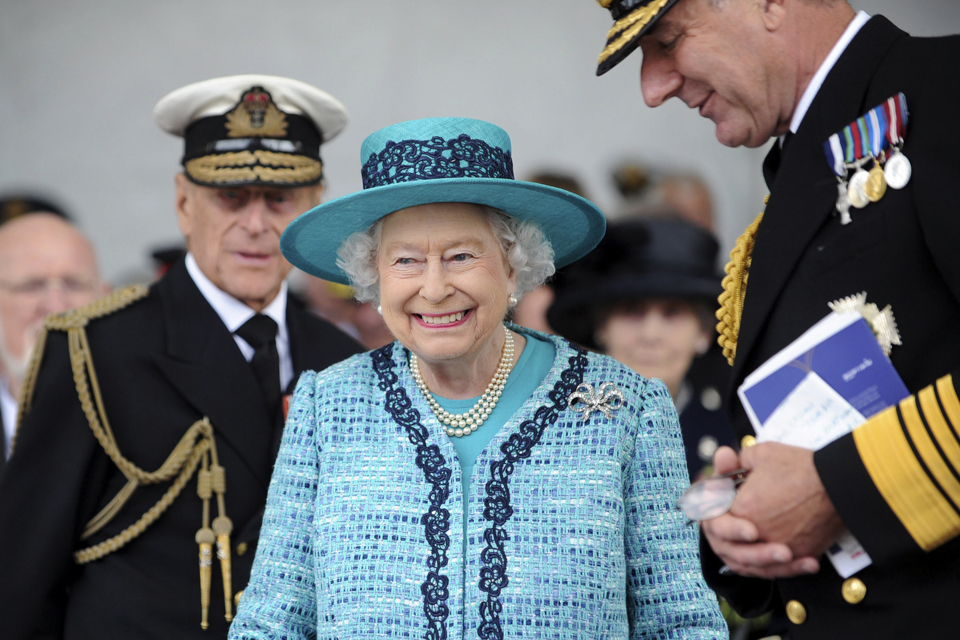
Whether these stories make us laugh, cringe or wonder, indifference is rarely the reaction. We have all enjoyed sharing – or at least listening to – a good royal anecdote.
If Georgian history interests you, explore more on our Georgian London Walk. And if royal stories are your cup of tea, our Royal London Walk brings many more fascinating royal stories to life – and, importantly, separates fact from fiction.
The problem is that sometimes a story is so good that we want it to be true.
That brings us to the story of Queen Elizabeth II and Michael Fagan.
Who Was Michael Fagan?
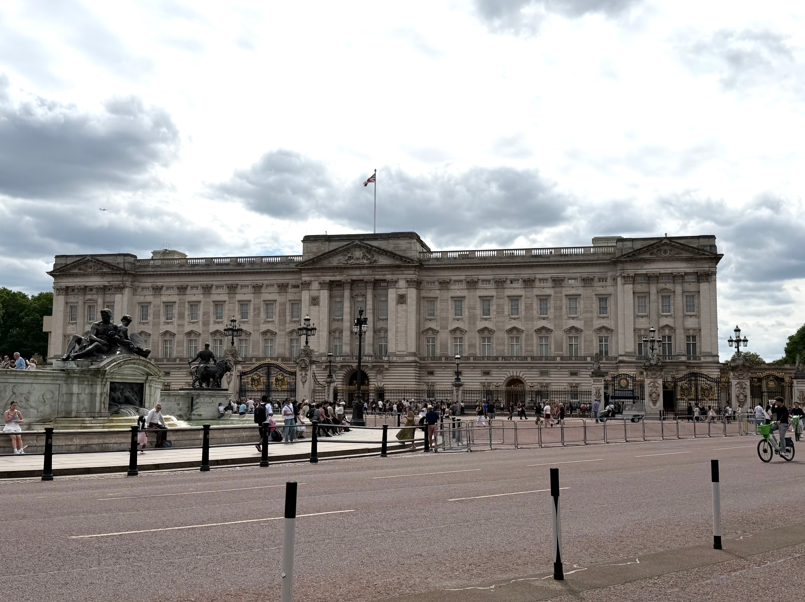
In 1982, 32-year-old Michael Fagan, an inebriated British man, broke into Buckingham Palace.
Not once.
Twice.
Eventually, during his second intrusion, he made his way into the bedroom of Queen Elizabeth II.
That much is true.
But over the years, the story of what happened between Michael Fagan and Queen Elizabeth II has developed a life of its own.
Almost every time the story is retold, it seems to acquire another detail – usually one that makes the Queen appear remarkably calm and Fagan unusually polite.
And this is where the myth begins.
The Famous Story of Queen Elizabeth II and the Intruder
I once heard this version of the story on a guided walk in London.
I was happily nodding along until the guide began describing a perfectly constructed conversation between Queen Elizabeth II and Michael Fagan.
According to the popular version, the Queen woke to find an intruder sitting on her bed. Rather than panicking, she calmly began talking to him.
After around ten minutes of conversation, Fagan supposedly asked the Queen if she could give him a cigarette.
The Queen then allegedly picked up the telephone and asked palace staff to bring her an ashtray and a cigarette for the drunk man sitting on her bed.
It is a wonderfully British story.
The Queen remains calm. The intruder is subdued by her regal presence. The punchline is perfectly timed.
It sounds almost too good to be true.
That is because it is.
What Really Happened When Michael Fagan Broke Into Buckingham Palace?

The real story of Michael Fagan’s Buckingham Palace intrusion is considerably less romantic – although arguably even more extraordinary.
Fagan entered Buckingham Palace twice, apparently without elaborate planning or sophisticated preparation.
During his first break-in, he climbed a drainpipe and entered through a window. Once inside, he reportedly wandered around, looked at some of the artwork and helped himself to a bottle of wine.
Eventually, he became bored and left.
According to his own account, he was even frustrated by the apparent lack of security.
His second intrusion took place during the early hours of 9 July 1982.
Again, he entered the palace using a drainpipe and a different window.
This time, however, he made it all the way to the royal bedroom.
Michael Fagan and Queen Elizabeth II: What Happened in the Bedroom?
Fagan opened the curtains around the bed and sat down.
In doing so, he woke Queen Elizabeth II.
Imagine that for a moment.
It was the early hours of the morning, and the Queen of the United Kingdom had just discovered an unknown man sitting on her bed.
Fagan was reportedly intoxicated after drinking several glasses of whisky and, by his own account, was initially dumbstruck.
Contrary to the popular story, there was no lengthy, heart-warming conversation between the Queen and her unexpected visitor.
Queen Elizabeth II pressed a panic button and called for assistance twice.
When help did not immediately arrive, she eventually left the bedroom.
Fagan himself later recalled details of what the Queen was wearing that night.
Staff eventually arrived, detained Fagan and waited for the police.
And, in a detail that sounds almost too bizarre to be true, one palace employee reportedly offered Fagan another glass of whisky while they waited.
Sometimes the real story does not need embellishment.
The Myth of the Queen’s Famous Response
So where did the famous story about the Queen calmly asking for an ashtray and a cigarette come from?
This is precisely the problem with historical anecdotes.
A story can be repeated so many times that it begins to feel like established fact. A memorable punchline makes it even more likely to survive.
The imagined encounter between Queen Elizabeth II and Michael Fagan fits perfectly with the popular image of British understatement: an unexpected crisis met with impeccable composure and a perfectly timed quip.
It is an irresistible story.
But history is not always as neat as an anecdote.
The documented account is much stranger in its own way. A man managed to enter Buckingham Palace twice and, on his second attempt, reached the Queen’s bedroom.
That raises a far more serious question than whether the Queen had a witty response.
What Did the Michael Fagan Incident Reveal About Buckingham Palace Security?
The incident exposed significant questions about security at Buckingham Palace in 1982.
Fagan had already demonstrated that it was possible to enter the palace without being detected. On his second attempt, he managed to reach one of the most sensitive locations imaginable: the bedroom of the reigning monarch.
The story therefore goes beyond a bizarre royal anecdote.
It raises questions about security, vulnerability and the reality behind the public image of royal life.
Perhaps there is another lesson here, too.
Even the most heavily guarded and famous residences in Britain are ultimately buildings operated by people. Systems can fail. Mistakes can happen. Assumptions can prove dangerously wrong.
Why Do We Love Royal Myths?
There is something particularly appealing about stories involving the Royal Family.
They offer us a glimpse behind the formal ceremonies, palaces and public appearances and into moments that feel unexpectedly human.
The story of Queen Elizabeth II and Michael Fagan is especially compelling because it seems to capture the British character we so often like to imagine: calm, understated and capable of finding humour in almost any situation.
The problem is that history does not exist to give us the ending we would prefer.
Sometimes the truth is stranger than the myth.
And sometimes it is simply less tidy.
For anyone interested in London history, that is precisely what makes separating fact from fiction so worthwhile.
Explore London’s Political History
The Michael Fagan incident also opens the door to a wider question about Britain’s royal and political institutions.
What does royal security tell us about the country at the time? How does the monarchy fit into the wider structure of the British government? And where can you see the institutions that have shaped Britain’s political history?
If these questions interest you, there is plenty more to discover beyond Buckingham Palace.
Discover the Stories Behind Whitehall
Ready to explore the places where Britain’s political history unfolded?
Join our Wonders of Whitehall walking tour and discover the heart of London’s political world, including the key institutions, headquarters and historic locations that have shaped the UK.
Explore the history of Whitehall and the British government while seeing some of London’s most important political landmarks.