Introduction
London is often pictured as a city of steel and glass – gleaming towers, busy stations and crowded streets. Look a little closer, though, and you’ll find a second London: one of lakes, lawns and ancient trees stretching across royal parks, wild commons and neighbourhood gardens.
Despite its skyscrapers, London is frequently cited as one of the greenest major cities in Europe, with around 47% of its area classed as “green” or “blue” space – parks, gardens, woodlands, rivers and reservoirs.¹ This mosaic of greenery means that even in the most built‑up districts, you are rarely more than a short walk from a patch of grass or a stand of trees.
In August, these green spaces are at their most inviting, turning every stroll into a mini escape from the city’s hard edges. They are not just pretty backdrops; they act as London’s lungs, cooling the air, softening the skyline and giving Londoners places to breathe, think and connect. Modern air‑quality measures have their roots in historic interventions like the 1956 Clean Air Act, which began the long process of phasing out coal fires and infamous “pea‑souper” smogs and pushed London towards a cleaner, greener future.
For walkers with a love of history, these spaces are also living archives of Regency elegance, Victorian ambition and post‑war planning. In this guide to London’s August garden walks, we’ll explore St James’s Park, Regent’s Park, Hampstead Heath and Victoria Park, and show how each landscape reflects a distinct chapter in the city’s story – and why these parks matter just as much as the towers that surround them.
St James’s Park: Regency spectacle and royal power
St James’s Park is often described as London’s prettiest royal park, and in August its lakeside paths, flower beds and views of Buckingham Palace are particularly irresistible. Beneath the swans and selfies lies a history of royal display and political power, played out in a landscape designed to impress.
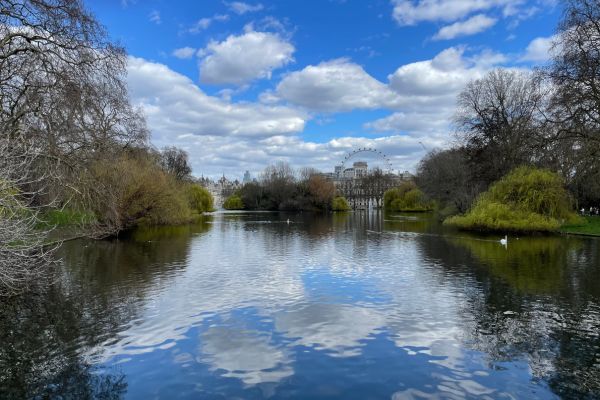
Originally a marshy area used for hunting, St James’s Park evolved over centuries into a carefully staged royal setting for ceremony, diplomacy and leisure. In the early 19th century it was reshaped in a more “romantic” style, with sinuous paths, curving lake edges and picturesque bridges replacing formal lines. That Regency taste for artful naturalism still defines the way we experience the park today, offering a soft, green counterpoint to nearby government offices and palaces – a reminder that even the political heart of the capital has room for trees, water and birdsong.
🎟️Book your Secrets of St James’s Private Tour today.
Regent’s Park: Planned perfection and polite society
Regent’s Park is one of the best places to experience Regency planning on a grand scale. In August, avenue trees provide shade and the famous rose borders linger into late summer, while the park’s broad vistas echo the ambitions of its early 19th‑century designers.
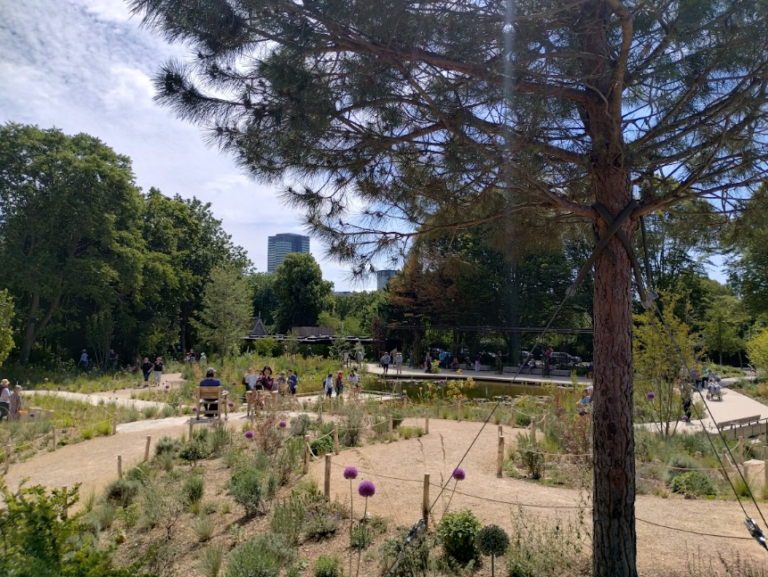
The park was laid out as part of a wider scheme to create elegant new residential districts for the fashionable classes. The terraces around the park, with their classical facades, were designed as showpieces of order and taste. Within the park, ornamental gardens and carefully managed views allowed London’s middle and upper classes to promenade, be seen, and enjoy the outdoors in a respectable way.
Today, those same lawns and avenues offer welcome relief from traffic and construction, proving that planned landscapes can make a city feel calmer as well as grander – another example of London’s lungs at work. Regent’s Park forms part of London’s wider green network, which includes thousands of hectares of public parkland and helps reduce urban heat and filter pollutants, particularly during the kind of warm spells London often sees in late summer.

📚Related Blog Post:
Victoria Park: Victorian civic pride and working‑class leisure
Victoria Park in the East End offers a different story: one of Victorian civic pride, public health and working‑class leisure. In August, families, runners and festival‑goers fill its avenues, but the layout still speaks of its 19th‑century origins.
Built in the mid‑19th century, Victoria Park was intended to provide green space and fresh air for the densely populated East End. It reflects a growing Victorian belief that parks could improve public health, reduce social tensions and offer respectable leisure. The park’s ornamental lakes, statues and formal walks were not purely decorative; they were meant to encourage ordered recreation, patriotic feeling and civic identity, bringing elements of grand West End design into a working‑class district.
Walking from the commercial districts of glass and steel into Victoria Park makes the contrast clear. The cityscape hardens, then suddenly softens into trees, water and open sky. These parks are not decorative extras; they are structural parts of London, shaping how the city feels and functions, especially during the heat of August.
The Old City of London
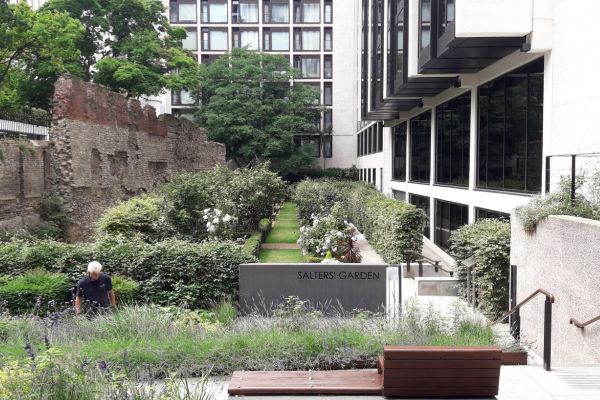
It’s easy to think of the City of London as a tight knot of banks, glass towers and busy pavements, but even here the lungs of the city are quietly at work. Hidden among offices and alleyways are over 200 gardens, churchyards and small plazas, many created on bomb sites or former burial grounds and now maintained as public green spaces.

Places like Christchurch Greyfriars Garden and the churchyard of St John Zachary show how layers of destruction and rebuilding have left pockets of greenery where you might least expect them. Step through a gate or down a narrow passage and you can find climbing roses, mature trees and quiet benches just metres away from Cannon Street or Gresham Street. These tiny oases may be small compared with Hampstead Heath or Regent’s Park, but together they help keep the historic core of the city breathable, softening its hardest edges and offering office workers and visitors a moment of calm.
🎟️Join our Secret Spaces in the City Walk
Mint Street Park, Southwark
Just across the river in Southwark, Mint Street Park adds another layer to this story. Today it’s a much‑needed patch of play space and greenery in a densely built‑up neighbourhood, but it sits on the former site of Suffolk Place and the Tudor Southwark mint – once a centre of coin production during Henry VIII’s era of debasement. After the mint closed and the area became a liberty, Mint Street developed a reputation as a haven for debtors and those avoiding arrest. Walking through the park now, with children playing and locals cutting through on their way to work, you are literally standing where Tudor money was made and where centuries of legal and social history shaped one of London’s most intriguing corners.
Post‑war planning and modern London park life
Together, these landscapes reveal shifting attitudes towards planning and preservation in the 20th century. After the destruction and disruption of the Second World War, London’s green spaces took on new roles as symbols of resilience and community life.
Post‑war additions such as playgrounds, sports facilities and memorials reflect changing ideas about who parks are for and what they should provide. Preservation campaigns and planning decisions since the mid‑20th century have helped protect views, habitats and historic layouts, even as pressures for development and new infrastructure continue. The result is a network of green spaces that help regulate temperature, support biodiversity and offer everyday refuge from the built environment – a practical expression of London’s “lungs” as well as a poetic one.
When you walk through these parks in August, you’re not only moving through decades of debates about access, heritage and design; you’re also participating in a continuing story about how a modern city chooses to breathe.
Planning your own August garden walk
When you choose a garden walk rather than another day among offices and shopping centres, you experience London’s “other half”: the one that breathes through plane trees, rose gardens, secret churchyards and open commons.
London’s August garden walks offer more than flowers and shade. They invite you to discover London beyond steel and glass – a city whose history, identity and health are rooted in its green spaces, and whose parks and pocket gardens still act as the lungs that keep it alive.
If you’d like company – and deeper stories along the way – you can join our Secrets Spaces in the City walk to uncover hidden gardens and churchyards tucked between offices in the historic Square Mile, or book Jill’s private Regent’s Park tour for a closer look at Regency planning, rose‑filled borders and the park’s elegant terraces. Both experiences turn a simple summer stroll into a layered exploration of design, social history and everyday London life.