Explore Regent’s Park London: A Beautiful Royal Park
London is officially classified as an urban forest, with around eight million trees – roughly one for every resident – many of them in the city’s Royal Parks. Hyde Park, St James’s Park and Green Park are well known to many visitors, but just north of the West End lies one of London’s finest green spaces.
Stretching between Marylebone, Primrose Hill and Camden, Regent’s Park London covers about 410 acres across the City of Westminster and the London Borough of Camden, offering sweeping views over north‑west London. Many people know it for London Zoo, yet there is far more to discover beyond that famous attraction. From tranquil canals and award‑winning gardens to open‑air theatre and peaceful walking routes, Regent’s Park is one of the most rewarding Royal Parks to explore on foot.
The park is easy to reach from Baker Street, Regent’s Park and Great Portland Street Underground stations, making it an ideal green escape from central London for both visitors and Londoners.
Discover Regent’s Canal: A Historic London Waterway
Running along the northern edge of Regent’s Park is Regent’s Canal, constructed between 1812 and 1820 to transport goods from London’s docks at Limehouse to Paddington, where it joins the Grand Union Canal. This vital waterway once linked the capital with the industrial cities of the Midlands and North‑West England, carrying coal, building materials and other cargo.
Today, the Regent’s Canal towpath provides one of London’s most enjoyable traffic‑free walks, connecting Little Venice, Regent’s Park, Camden, King’s Cross and beyond. Whether you are walking, cycling or simply enjoying the scenery, the canal offers a wonderfully peaceful escape from the bustle of the city, with narrowboats, waterside cafés and glimpses of local wildlife along the route.
📚 Related blog posts:
Enjoy the Regent’s Park Open Air Theatre
At the heart of the park lies the Inner Circle, home to several of Regent’s Park’s most popular attractions. Among them is the Regent’s Park Open Air Theatre, one of London’s most atmospheric summer venues.
Each year, audiences gather to enjoy everything from Shakespeare and classic plays to musicals and family‑friendly productions, all set against a backdrop of mature trees and night sky. Watching a performance outdoors, as daylight fades and the sounds of the park surround you, creates a truly memorable London theatre experience – quite different from a traditional West End auditorium.
The Open Air Theatre is just a short walk from Baker Street and Regent’s Park stations, making it easy to combine an evening performance with a leisurely stroll through the park.

Explore Queen Mary’s Garden in Regent’s Park
Also within the Inner Circle is Queen Mary’s Garden in Regent’s Park, home to the largest collection of rose bushes in London. This celebrated formal garden is known for its carefully laid‑out beds, pergolas and seasonal displays.
During late spring and early summer, Queen Mary’s Garden bursts into colour and fragrance, with thousands of roses in bloom across a huge range of varieties. It is the perfect place to pause on a walk, admire the planting and enjoy one of London’s most photographed formal gardens, whether you’re visiting with friends, family or on your own.

Visit the Queen Elizabeth II Garden in Regent’s Park
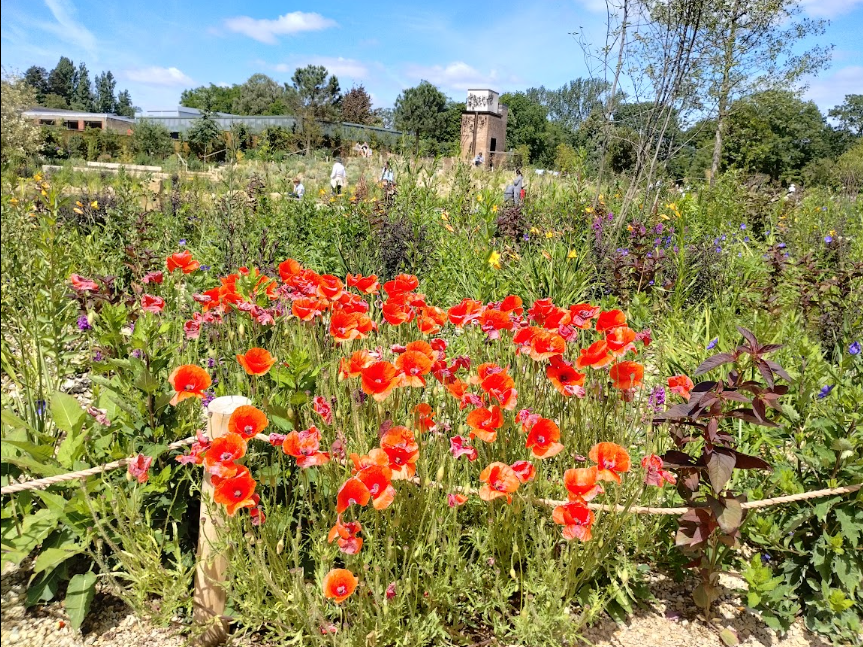
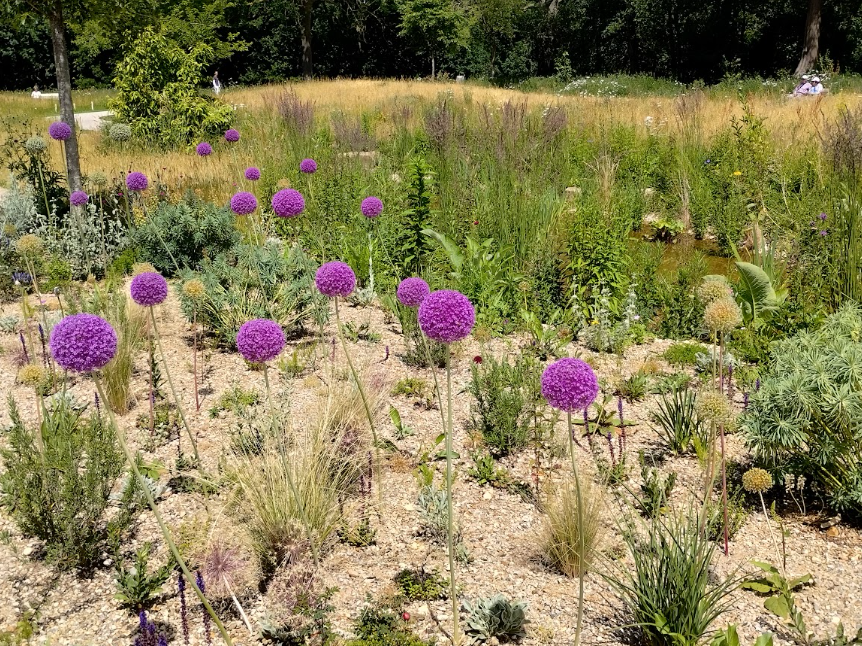
One of the newest additions to Regent’s Park London is the beautiful Queen Elizabeth II Garden, created on the site of former nursery gardens in honour of the late Queen. This peaceful two‑acre space offers a more contemporary feel than some of the park’s older formal gardens, with winding paths, ponds, wildflower lawns and carefully chosen planting.
Many of the plants have been selected because of their personal connection to Queen Elizabeth II. Lily of the valley appeared in her Coronation bouquet, while myrtle featured in her wedding bouquet. Other plants represent countries across the Commonwealth, reflecting her lifelong commitment to the organisation.
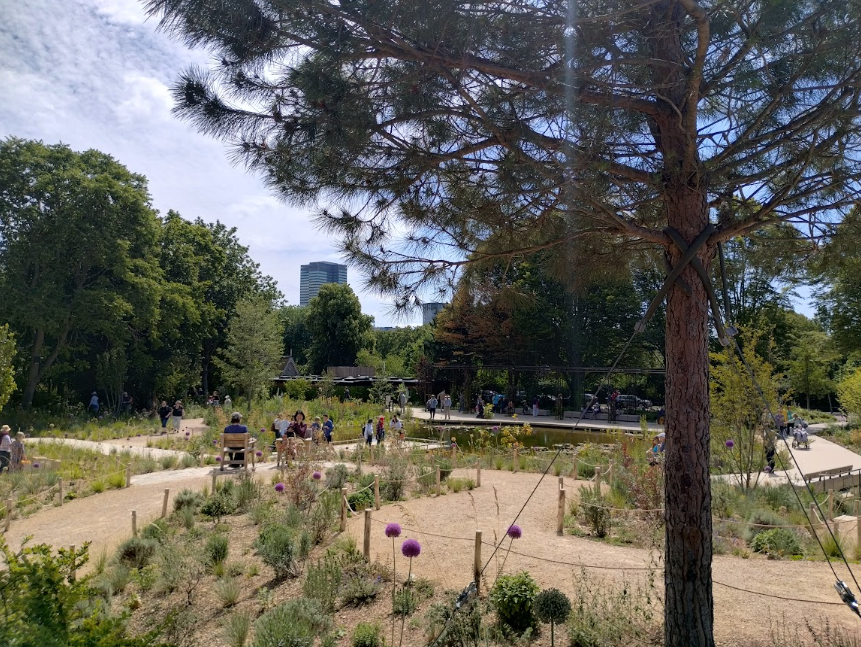
A former water tower has been transformed into an elegant folly, complete with bat boxes and nesting spaces for swifts. At dawn and dusk, recordings of swift calls are played to encourage these remarkable birds to make the structure their home. The garden has also been created with accessibility in mind, with paths and seating designed to welcome visitors of all ages and abilities.
As the planting matures in the coming years, the Queen Elizabeth II Garden promises to become an even more beautiful destination in every season, adding to the range of gardens in Regent’s Park that are worth exploring.
Why Visit Regent’s Park London?
Whether you are looking for peaceful walks, beautiful gardens, fascinating local history or outdoor entertainment, Regent’s Park London has something to offer throughout the year. In spring and summer, the gardens are at their best, while in autumn the trees bring striking colour to the landscape; winter visits reveal long views and quieter paths.
Compared with some of London’s busier Royal Parks, Regent’s Park often feels calmer, combining natural beauty, heritage and culture in one remarkable setting. From the Regent’s Canal towpath to the Inner Circle and nearby Primrose Hill, it remains one of the capital’s most rewarding places to explore.
Discover Regent’s Park with London Guided Walks
If you would like to experience Regent’s Park with a qualified guide, a walking tour is an excellent way to uncover stories you might otherwise miss. London Guided Walks offers private Regent’s Canal and Regent’s Park tours, led by knowledgeable guides such as Jill Dalton, who know the park, its landscapes and surrounding neighbourhoods in depth.
Book a private Regents Canal tour and discover how this once‑industrial route became one of London’s most loved leisure walks, with insight into the architecture, social history and hidden corners along the way or book a private Regent’s Park tour with Jill. Our guides bring London’s history to life, helping you see far more than you would on your own and making the most of your time in this beautiful part of north‑west London.
FAQs about visiting Regent’s Park London
- How do I get to Regent’s Park London?
Regent’s Park is in north-west central London, between Marylebone, Camden and Primrose Hill, and is easy to reach by public transport. The nearest Underground stations are Regent’s Park (Bakerloo line), Baker Street (Bakerloo, Jubilee, Metropolitan, Circle and Hammersmith & City lines) and Great Portland Street (Circle, Hammersmith & City and Metropolitan lines). Several bus routes also serve the park, and it is a pleasant walk from the West End and Marylebone High Street.
- Is Regent’s Park accessible for visitors with mobility needs?
Much of Regent’s Park is level, with surfaced paths suitable for wheelchairs and buggies, and there is step‑free access at various gates around the park. The Queen Elizabeth II Garden has been designed with accessibility in mind, offering inclusive seating and gently graded paths so visitors of different ages and abilities can enjoy this tranquil space.
- What are the best things to do in Regent’s Park London?
Highlights include walking the Regent’s Canal towpath, visiting Queen Mary’s Garden to see London’s largest collection of roses, and exploring the newer Queen Elizabeth II Garden. In summer, the Regent’s Park Open Air Theatre offers outdoor performances in a unique setting, and nearby Primrose Hill provides one of the city’s best viewpoints over central London.
- Can I visit Regent’s Park with a guided walking tour?
Yes, guided walking tours are a great way to explore Regent’s Park and the surrounding areas in more depth. London Guided Walks offers private tours of Regent’s Park, led by qualified guides such as Jill Dalton, who share the park’s history, architecture and hidden stories while you walk.