Introduction: The Gothic Legacy of the Lyceum Theatre
The Lyceum Theatre in London’s Strand is widely recognised today as the home of major productions such as Disney’s The Lion King. However, its earlier history reveals a far darker and more fascinating legacy.
Key Highlights: The Lyceum's Gothic Legacy
- Venue Transformation: Originally an 18th-century art exhibition space, the Lyceum became a premier site for early theatrical horror and macabre spectacle.
- Pioneering Performances: Hosted landmark gothic acts, including the first stage adaptation of Frankenstein featuring T.P. Cooke and Philip Astley’s demonic Harlequinades.
- Phantasmagoria & Wax: In 1801, Paul de Philipsthal introduced Phantasmagoria (early projection horror) and collaborated with Madame Tussaud to showcase historical macabre wax figures.
- Cultural Impact: Established foundational elements of horror theatre in London, long before modern musicals took to the stage.
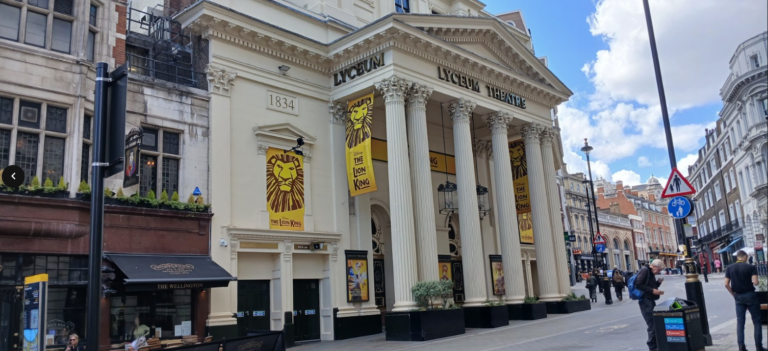
Long before modern musicals, the Lyceum Theatre history was deeply intertwined with gothic storytelling, early horror performance, and theatrical experimentation. From Dracula and Frankenstein adaptations to eerie illusions and macabre exhibitions, the theatre played a pivotal role in shaping the origins of horror theatre in London.
Originally designed in the 1770s by architect James Paine, the building began life as an exhibition space for the Society of Artists of Great Britain. When that venture failed, the venue was repurposed for public entertainment—marking the beginning of its transformation into one of London’s most atmospheric performance spaces.
From Exhibition Hall to Entertainment Venue on the Strand
After the collapse of the Society of Artists, the building was acquired by an enterprising tailor, Mr Lingham, who recognised its commercial potential. The space quickly evolved into a multi-purpose venue for performances, exhibitions, and public spectacles.
One of its earliest and most influential tenants was circus pioneer Philip Astley, who required a temporary home after his amphitheatre burned down in 1794. Although the building was not designed for equestrian performances, Astley adapted, focusing instead on acrobats, clowns, and dramatic spectacle.
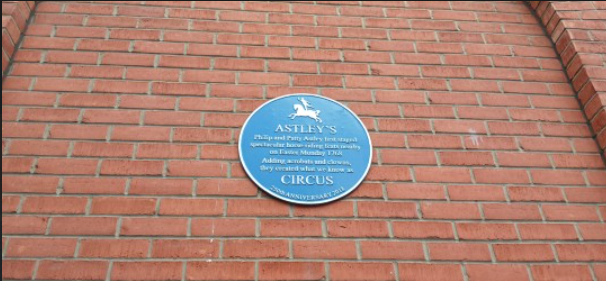
This shift marked a crucial turning point in early Georgian theatre entertainment, laying the foundations for a growing appetite for visual drama and theatrical innovation.
Harlequinades and Early Gothic Spectacle
One of the most significant early productions at the venue was The Magic World; or, Harlequin in the Regions of Fancy. This Harlequinade performance introduced audiences to a darker, more supernatural form of pantomime.
Set within eerie underworld landscapes filled with demons, imps, and distorted imagery, the production blended acrobatics with gothic storytelling. Its famous transformation scene—where Harlequin used a slapstick to magically shift the set from a cavernous underworld to a London street—became a defining moment in early theatrical illusion.
These performances are now recognised as key influences in Harlequinade theatre history and the development of visual spectacle in London stagecraft.
Frankenstein and the Rise of Theatrical Horror
Two decades later, the Lyceum Theatre continued its association with early horror theatre history. Actor T.P. Cooke made theatrical history by becoming the first performer to portray Frankenstein’s monster on stage in an adaptation of Mary Shelley’s novel.
This production marked a significant shift in London theatre, moving from pantomime and spectacle towards literary gothic drama—an evolution that would define the Lyceum’s cultural identity for generations.
Phantasmagoria: The Birth of Horror Illusion
A defining moment in Lyceum Theatre history came in 1801 with the arrival of Paul de Philipsthal, also known as Phildor. A German showman and inventor, he introduced audiences to Phantasmagoria—one of the earliest forms of theatrical horror illusion.
Using a device he called the fantascope, Philipsthal projected moving images of skeletons, ghosts, and witches onto near-invisible screens. These projections created the illusion of supernatural figures appearing and growing before the audience.
Phantasmagoria shows lasted around ninety minutes and became hugely popular, establishing London as a centre for early horror theatre innovation.
Madame Tussaud and the Chamber of Horrors
To expand his audience, Philipsthal later collaborated with wax sculptor Madame Tussaud, bringing her wax exhibitions to London.
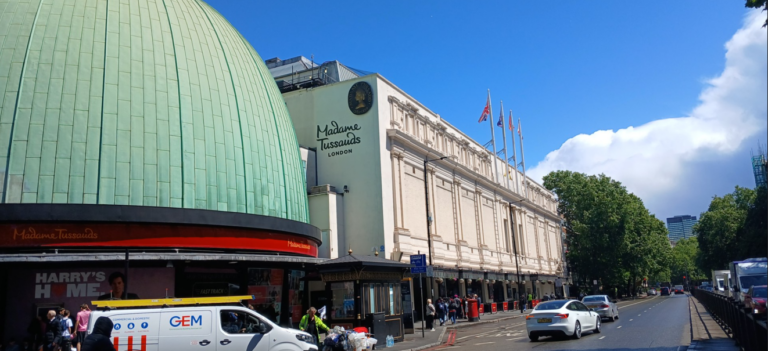
Her displays included highly realistic recreations of historical violence and revolutionary figures, including guillotined heads of Louis XVI, Marie Antoinette, and Robespierre. The infamous Chamber of Horrors became one of the most talked-about attractions in London entertainment history.
This partnership between Phantasmagoria and wax exhibitions reflects the growing popularity of macabre entertainment in Georgian London, combining spectacle, history, and shock value.
Touring, Rivalry and the End of an Era
The collaboration between Philipsthal and Madame Tussaud eventually collapsed over revenue disputes. Tussaud went on to tour her wax exhibitions across Britain before establishing a permanent home in London in 1825.
Philipsthal continued touring his Phantasmagoria shows until his death in Leeds in 1829, while preparing for another engagement.
Meanwhile, the Lyceum Theatre received its official theatrical licence in 1809, signalling the beginning of a new chapter in its long association with London theatre history and gothic performance.
The Lyceum’s Place in Horror Theatre History
The early history of the Lyceum Theatre reveals a remarkable evolution from art exhibition hall to pioneering centre of gothic theatre, illusion, and early horror performance.
From Harlequinades and Phantasmagoria to Frankenstein and wax exhibitions, the venue helped shape the foundations of horror entertainment in London.
Its legacy continues to influence how audiences experience storytelling, spectacle, and fear on stage today.
Explore London’s History of Horror
Step into the shadows of London’s theatrical past and uncover the stories behind its most chilling performances.
👉 Book a History of Horror walking tour or a Dr Jekyll and Mr Hyde guided walk or book private tour today with David Turnbull and explore the real origins of gothic theatre, Phantasmagoria, and the city’s most infamous stage traditions.
About the Author
David Turnbull is a professional London guide specialising in the city’s gothic history, theatrical heritage, and hidden narratives. Discover more about his work through his expertly curated guided walking tours.
Frequently Asked Questions
- What is the Lyceum Theatre’s connection to horror?
- Answer: The Lyceum was a pioneer in early 19th-century theatrical horror, hosting the first stage adaptation of Frankenstein and popularising Phantasmagoria.
- What was Phantasmagoria?
- Answer: Phantasmagoria was an early form of horror theatre involving projections of ghosts, skeletons, and supernatural figures using a device called a “fantascope,” introduced to London by Paul de Philipsthal.
- Did Madame Tussaud exhibit at the Lyceum?
- Answer: Yes, Madame Tussaud partnered with Philipsthal in the early 19th century to display her waxworks, including scenes of historical violence, at the Lyceum.
🎧Listen to related podcasts: