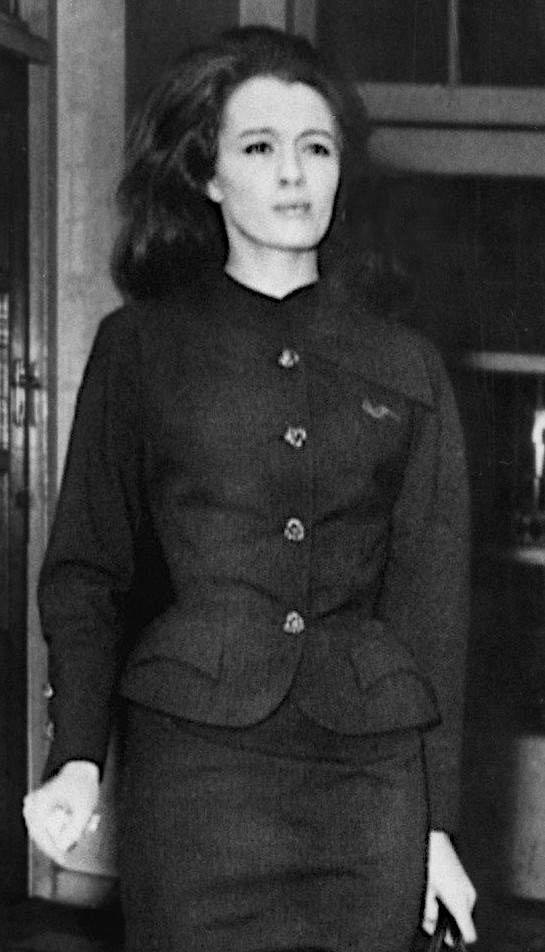
The Profumo Affair 1963: Soho Scandal, Cold War Spies & Political Fallout

Introduction

Profumo Affair of 1963 remains one of the most explosive political scandals in British history—combining sex, espionage, and power at the height of the Cold War.

For those who lived through it, names like Christine Keeler and Mandy Rice-Davies became instantly infamous. For others, the scandal offers a fascinating glimpse into a moment when politics, media, and Soho’s social scene collided.


At its centre was John Profumo, Secretary of State for War, whose affair with 19-year-old model Christine Keeler—and his subsequent lie to Parliament—triggered a crisis that would shake Harold Macmillan’s government and redefine public trust in politicians.

Christine_Keeler_(cropped_and_adjusted)
Christine Keeler (cropped and adjusted) | Photo by Hugo van Gelderen / Anefo, CC0, via Wikimedia Commons

The Affair and Political Fallout

The scandal broke in March 1963 when Profumo denied his relationship with Keeler in the House of Commons—only to later admit he had lied. This deception, rather than the affair itself, proved politically fatal.

John_Profumo
John Profumo | Photo by Bassano Ltd, Public domain, via Wikimedia Commons

The fallout was swift:

  • Profumo resigned in disgrace.
  • Public confidence in the Conservative government collapsed.
  • Prime Minister Harold Macmillan stepped down later that year.

The affair unfolded during a tense Cold War climate already marked by high-profile espionage cases such as the Portland Spy Ring and double agent George Blake. Against this backdrop, the scandal carried serious national security implications.

Key Figures and Their Roles

  • Christine Keeler: A model and showgirl working at Murray’s Club in Beak Street, Soho. Her relationships placed her at the centre of both political and espionage intrigue.
  • Mandy Rice-Davies: A sharp-witted figure who became emblematic of the scandal, remembered for the line, “Well, he would, wouldn’t he?”
  • Lord Astor: Owner of Cliveden, whose social circle became entangled in the scandal and subsequent media frenzy.
  • Stephen Ward: Osteopath and social fixer who introduced Keeler to Profumo at Cliveden.  Ward’s home in Wimpole Mews and his use of Clevedon’s riverside cottage were central meeting points. Though later accused of living off immoral earnings, Ward was largely scapegoated by the establishment and tragically took his own life before sentencing.


Peter_Cook_Beyond_the_Fringe_1962
Peter Cook Beyond the Fringe 1962 | Photo by Photographer-Friedman-Abeles, New York, Public domain, via Wikimedia Commons

Espionage and Cold War Fears

What elevated the Profumo Affair beyond a typical sex scandal was its connection to Soviet intelligence.


Christine Keeler was also involved with Captain Yevgeny Ivanov, a Soviet naval attaché suspected of espionage. This overlap raised fears that sensitive government information could have been leaked.


MI5 had already been monitoring Ivanov and had even used Stephen Ward as an informal intermediary during Cold War tensions, including the Cuban Missile Crisis. The possibility of compromised security made the scandal deeply alarming to the British establishment.

Media, Culture and Soho

Soho played a central role in the story—both as a physical setting and a cultural symbol.

Clubs like Murray’s and The Establishment Club in Greek Street were hubs where politicians, performers, and socialites mixed freely. These spaces blurred class boundaries and reflected a changing Britain.

The media response was equally transformative:

  • Satirical publications like Private Eye gained prominence.
  • Traditional press coverage became more aggressive and investigative.
  • The scandal helped fuel a new era of scepticism toward authority.

The famous image of Christine Keeler posed on a chair—taken at The Establishment Club—became an enduring symbol of 1960s Britain: provocative, modern, and disruptive.

2aedb9c4-ba57-43eb-8cb6-b94d684a6087
18 Greek Street site of Establishment Club | Photo by Barbara Wright
75dd39e0-b0c5-4fd1-968a-6c4da1b9d03a
Establishment club Greek Street site of | Photo by Barbara Wright

The affair also marked a cultural shift: challenging the untouchability of the upper class, demonstrating female independence, and paving the way for satirical and subversive media such as Monty Python’s Flying Circus.

Consequences and Legacy

  • The Profumo Affair left a lasting imprint on British politics and culture.

    • It exposed vulnerabilities within the political establishment. The Macmillan government’s credibility suffered, ultimately leading to political change.
    • It accelerated the decline of deference toward authority. Ward’s prosecution illustrated the harsh treatment of those seen as outsiders.
    • It highlighted the growing power of the press. The case revealed the vulnerability of the establishment to public scrutiny and the role of Soho as a site of social and cultural experimentation.
    • It reshaped attitudes toward class, gender, and sexuality in 1960s Britain. The women involved demonstrated agency and independence, challenging societal expectations in 1960s Britain.


For Soho, the scandal cemented its reputation as a space of freedom, experimentation, and cultural change—where the boundaries of British society were constantly being tested.

Book Your Soho Walking Tour

Experience history for yourself on our A Nosey Around Soho Walk or book a private tour with Barbara Wright.

Facebook
Twitter
LinkedIn

Related Posts

Scroll to Top