Join us as we explore Amelia Earhart’s visits to London in the 1920s and 1930s, from her social work inspirations at Toynbee Hall to the glamour of Selfridges, where her plane went on display. Discover how tea with the Prime Minister, appearances at Wimbledon and Ascot, and encounters with figures like Winston Churchill and Lady Astor shaped her public image and revealed the scale of her fame. Perfect for history enthusiasts, aviation fans, and anyone curious about the making of a modern icon.
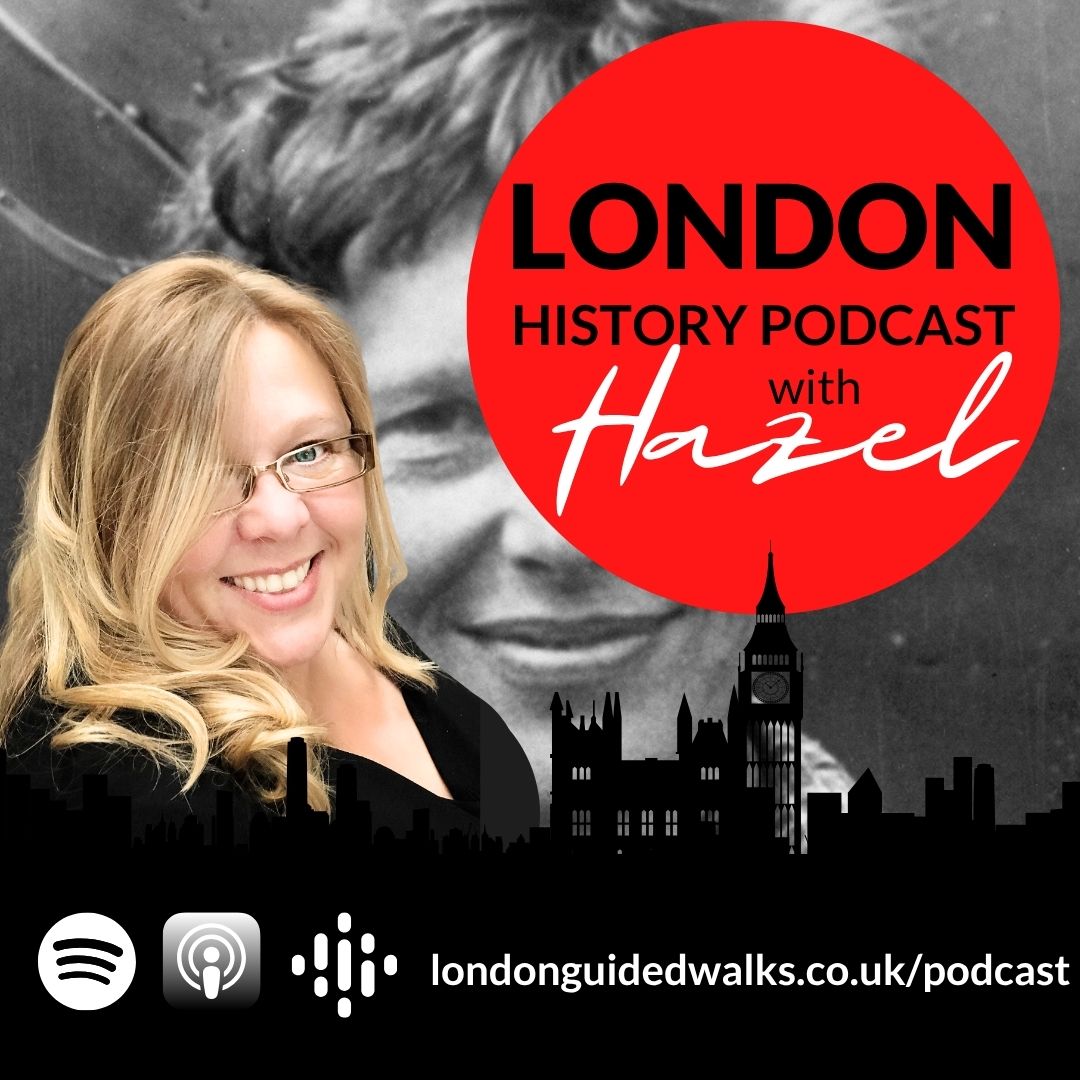

Host: Hazel Baker
Hazel is an active Londoner, a keen theatre-goer and qualified CIGA London tour guide.
She has won awards for tour guiding and is proud to be involved with some great organisations. She is a freeman of the Worshipful Company of Marketors and am an honorary member of The Leaders Council.
Channel 5’s Walking Wartime Britain(Episode 3) and Yesterday Channel’s The Architecture the Railways Built (Series 3, Episode 7). Het Rampjaar 1672, Afl. 2: Vijand Engeland and Arte.fr Invitation au Voyage, À Chelsea, une femme qui trompe énormément.
 Guest: Rachel Hartigan
Rachel Hartigan is a journalist and author of Lost: Amelia Earhart’s Three Mysterious Deaths and One Extraordinary Life. Her work explores both Earhart’s remarkable aviation career and the enduring mysteries surrounding her final flight.
Rachel’s research focuses on Earhart’s visits to London after her record-breaking transatlantic flights in 1928 and 1932, examining how the city both shaped and reflected her rising fame. She delves into Earhart’s interactions with prominent figures, London society, and the media, bringing to life the experiences that transformed her into a global icon.
When not researching or writing, Rachel enjoys uncovering stories of historical figures, blending cultural insight with narrative to illuminate the past for modern audiences.
Hazel Baker: Hi, I’m Hazel Baker, podcast host and London tour guide at londonguidedwalks.co.uk, and you’re listening to the London History Podcast.
Today, I’m joined by journalist and author Rachel Hartigan. Her new book, Lost: Amelia Earhart’s Three Mysterious Deaths and One Extraordinary Life, dives into both Amelia Earhart’s incredible career and the enduring mysteries surrounding her final flight.

Cover of Lost Book | Photo by Rachel Hartigan
In this episode, we’ll be looking at Amelia’s time in London—from Toynbee Hall in the East End, which inspired her social work, to the glamour of Selfridges, where her plane went on display and she even had to borrow clothes after crossing the Atlantic with nothing spare. We’ll explore how tea with the Prime Minister, appearances at Wimbledon and Ascot, and sharing platforms with figures like Winston Churchill and Lady Astor turned her London visits into a trial by fire, showing both the world—and Amelia herself—just how famous she had become.
We’ll also discuss what those days in London reveal about celebrity, gender, and the making of a modern icon.
Transcript:
Hazel [00:00:00]: Amelia Earhart is one of the most famous names in aviation history, but her connection with London is far less well known. Today we step back into the 1920s and early 1930s when a relatively unknown social worker became a global celebrity aviator almost overnight. I’m Hazel Baker, podcast host and London tour guide at londonguidedwalks.co.uk. You’re listening to the London History Podcast. My guest today is journalist and author Rachel Hartigan, whose book Lost: Amelia Earhart’s Three Mysterious Deaths and One Extraordinary Life explores both Earhart’s remarkable career and the enduring mysteries around her final flight. In this episode, we focus on Earhart’s time in London—from Toynbee Hall in the East End, the pioneering settlement that inspired her social work, to the glamour of Selfridges, where her plane went on display and she had to borrow a wardrobe after crossing the Atlantic with no spare clothes. We also explore how tea with the Prime Minister, appearances at Wimbledon and Ascot, and sharing platforms with figures like Winston Churchill and Lady Astor turned Earhart’s London visits into a trial by fire, revealing her fame to the world—and to herself. Rachel, welcome to the London History Podcast.
Rachel Hartigan [00:01:30]: Thank you so much for having me.
Hazel [00:01:45]: Amelia Earhart is a name most people know, but not necessarily her full story. What first drew you to her, and what new perspective does your book bring?
Rachel Hartigan [00:02:00]: It was a little accidental. While working at National Geographic, an editor invited me to cover a story about a ship near an uninhabited island linked to Amelia’s disappearance. I didn’t know much about her beyond what we learn in elementary school. That led to a crash course in both her life and her post-disappearance legacy.
Hazel [00:03:00]: You’ve described her visits to London as moments where she realised the scale of her fame. What made London pivotal in this transformation?
Rachel Hartigan [00:03:15]: It was largely how she got there. In 1928, she was a social worker in Boston and had learned to fly years earlier. Amy Phipps Guest, an American heiress married to a British former Air Minister, wanted an American woman to cross the Atlantic. Earhart was chosen as the passenger on the flight called Friendship. They nearly ran out of fuel and had to make an unscheduled landing in Wales before continuing to Southampton. Despite not being the pilot, she became the centre of attention.
Hazel [00:05:50]: And what inspired her to say yes to that flight?
Rachel Hartigan [00:06:00]: She loved adventure, flying, and advocating for women. She wanted to push aviation forward and inspire others, so she embraced the opportunity.
Hazel [00:07:30]: What was London like when Earhart arrived in 1928 and 1932? How did the city receive her?
Rachel Hartigan [00:08:00]: There was enormous excitement. Aviation feats were celebrated, and London was ready for a pioneer like her. She attended committees, met influential figures, and explored cultural highlights like Ascot, Wimbledon, and Selfridges. She was overwhelmed but inspired by the welcome she received.
Hazel [00:10:50]: You mentioned Toynbee Hall—why was that visit significant?
Rachel Hartigan [00:11:00]: Earhart had been working at Denison Hall in Boston, modelled after Toynbee Hall. These settlement houses aimed to improve communities through direct engagement and services. Earhart was inspired by their social approach and took notes to implement similar ideas back home. This reflected her commitment to meaningful social work and contrasted with other women seeking fame rather than impact.
Hazel [00:13:50]: And Selfridges—her plane on display in exchange for clothes?
Rachel Hartigan [00:14:00]: Yes, during her second solo trip. She had no spare clothes, and Harry Gordon Selfridge offered to display her plane on the first floor in exchange for helping her with a wardrobe. It was a publicity move that aligned with her husband George Putnam’s strategy to promote Amelia without overwhelming her.
Hazel [00:15:50]: She met some incredible figures—Churchill, Lady Astor. How did those encounters shape her public image?
Rachel Hartigan [00:16:00]: She was raised in a prominent but not wealthy Kansas family and attended finishing school. Her upbringing gave her the manners to interact with elite figures, and her natural curiosity made these encounters enriching rather than intimidating.
Hazel [00:17:50]: Your book suggests these visits were a trial by fire in the crucible of fame. How did she handle the shift from pilot to celebrity?
Rachel Hartigan [00:18:00]: Initially, she was startled by media portrayals, but she eventually developed a humble, approachable persona that helped her navigate fame while staying true to her adventurous spirit.
Hazel [00:19:50]: How did the American and British media compare in shaping her global image?
Rachel Hartigan [00:20:00]: British media was more critical, American press initially heroic. Over time, both questioned the purpose of her flights, especially after more experienced pilots attempted similar feats.
Hazel [00:21:50]: What sources did you use for research, and any surprises?
Rachel Hartigan [00:22:00]: Newspapers, Earhart’s own writings, letters, and archival material at Harvard and Purdue. I was surprised by how quickly top society figures in London embraced her—an instant recognition of her achievements.
Hazel [00:24:00]: Any particular letters or articles that changed your view?
Rachel Hartigan [00:24:30]: Letters to her mother reveal her breezy, adventurous outlook, evolving into more control as she gained fame and wealth. They show her transformation from a skilled but struggling social worker to a global celebrity.
Hazel [00:26:00]: How should we remember Amelia’s connection to aviation today?
Rachel Hartigan [00:26:30]: She didn’t let female roles restrict her and embraced opportunities that were available to women of her era. London celebrated her achievements, showing the potential of women and the future of innovation.
Hazel [00:27:30]: If Amelia walked through London now, where would she go first?
Rachel Hartigan [00:28:00]: She’d likely head to the London Eye, reflecting her early fascination with heights, culture, and the arts, and she would eagerly explore the city’s multicultural and modern aspects.
Hazel [00:29:00]: Where can listeners find your book and follow your work?
Rachel Hartigan [00:29:15]: My book is available wherever books are sold, with Amazon being a convenient option. My website is rachelhartiganauthor.com, which links to social media and purchasing options.
Hazel [00:30:00]: Thank you so much for joining us, Rachel. I’m Hazel Baker, and today we explored Amelia Earhart’s extraordinary encounters with London and how the city helped shape her fame. Follow the podcast, leave a review, and share with anyone who loves London or Amelia’s adventurous spirit.
Rachel Hartigan [00:30:15]: Thank you, Hazel. This was fun.