Introduction: London Under Dalek Occupation
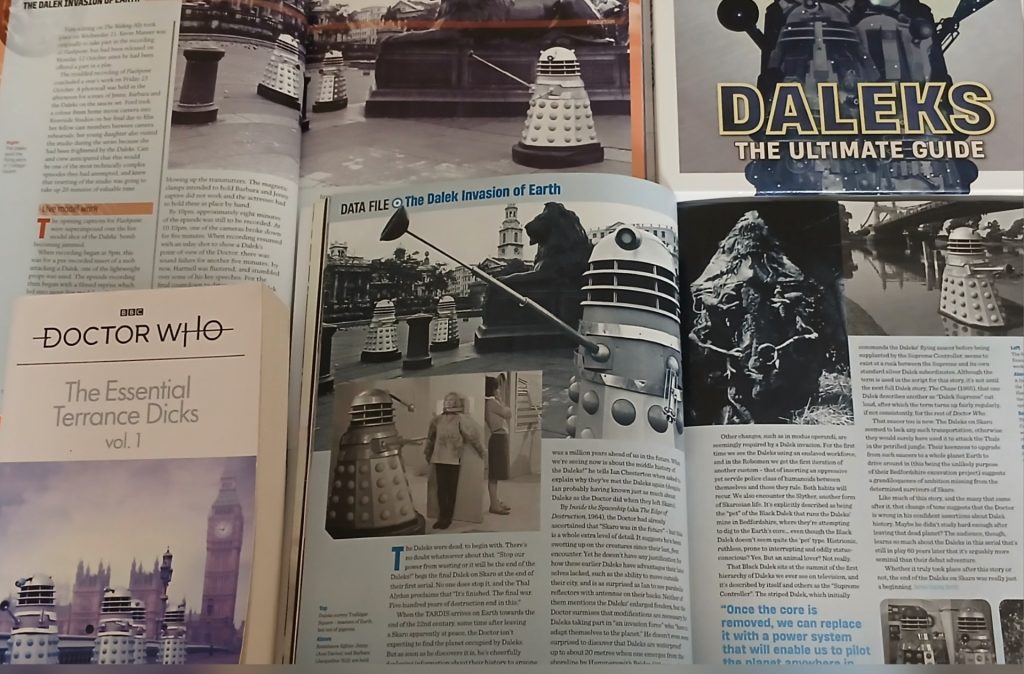
The year is 1964, the date 21st November, and the headline in the Radio Times announces that the Daleks are back in a new Doctor Who adventure. This time, they have invaded Earth and are holding London under occupation.
Three months earlier, in August 1964, Londoners reported sightings of strange, pepper pot–shaped robots trundling past iconic landmarks such as Trafalgar Square, Westminster Bridge, and the Royal Albert Hall. One was even seen emerging from the Thames at Hammersmith Bridge, while another was said to have landed in Sloane Square aboard a flying saucer.
These Daleks — arch enemies of the BBC’s Doctor Who — were being filmed for publicity shots and location scenes for the new serial The Dalek Invasion of Earth, part of the show’s second season. For the first time, Doctor Who had been given a budget for location filming rather than being confined entirely to studios with wobbly sets.
The Daleks’ appearance on London’s streets caused a sensation. Newspapers covered the spectacle, tourists paused to take photographs, and speculation mounted about the new storyline.
📚Have a read:
Creating the Daleks: From Script to Screen
A year earlier, the Daleks had made their television debut in the second Doctor Who serial. Born from the imagination of scriptwriter Terry Nation and designed by Raymond Cusick from Lambeth, their distinctive appearance and shrill “Exterminate!” cry became instantly iconic.
The Daleks’ voices were created by London-based actors David Graham and Peter Hawkins, aided by a voice modulator that had previously served as a doorstop in the BBC sound workshop.
Yet their creation was not without controversy. Sidney Newman, Head of Light Entertainment at the BBC and the original commissioner of Doctor Who, wanted the show to avoid monster and robot clichés, preferring historical adventures. When producer Verity Lambert presented him with Nation’s Dalek script, Newman was furious and initially refused to approve it.
Lambert, however, stood her ground and threatened to resign. Fortunately for Doctor Who, she prevailed. The Daleks proved immensely popular, boosting ratings and saving the series from possible cancellation.
Inventive Design on a Shoestring Budget
Despite their later fame, the BBC originally saw the Daleks as a one-off. Cusick was given a minuscule budget and had to improvise with chicken wire, plywood, a sink plunger, a kitchen whisk, and an old gear stick.
When the first Dalek serial concluded, the BBC gave away the five original props — three to Doctor Barnardo’s children’s home in East London and two to a company specialising in opening shopping centres and fêtes.
When the BBC later responded to public demand for the Daleks’ return, the props were retrieved in poor condition. Repairs were made, and sturdier wheels were added to help the Daleks glide across outdoor terrain during location shoots.

Filming The Dalek Invasion of Earth
In the story, the Doctor and his companions materialise on the banks of the River Thames in an eerily silent London. They soon discover a chilling sign warning, “It is forbidden to dump bodies in the Thames.” In the distance, Battersea Power Station looms, two of its four chimneys destroyed.
As the serial unfolds, the travellers realise they have landed in the 22nd century. The Daleks have unleashed germ warfare that has wiped out two-thirds of Earth’s population, enslaving the survivors.
The script editor, David Whittaker, collaborated closely with Terry Nation, having co-authored The Dalek Book earlier that year. The partnership continued in 1965 with Curse of the Daleks, a live stage play performed at the Wyndham’s Theatre on Charing Cross Road.
Iconic London Locations
The serial’s use of real London locations brought the story vividly to life. Filming took place at several now-famous sites:
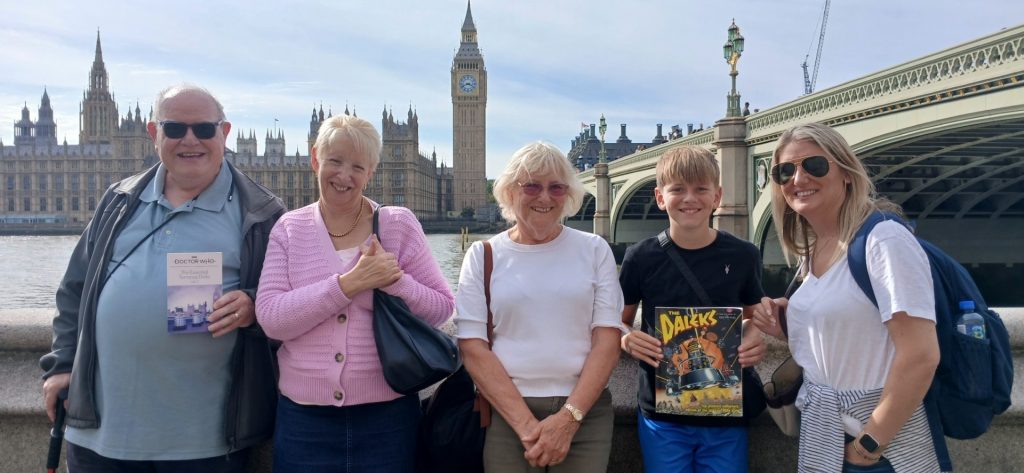
- Westminster Bridge, where Daleks glided ominously across the span in one of the show’s most memorable scenes.
- Trafalgar Square, featuring shots of Daleks amid London’s landmarks.
- The riverside footpath behind St Thomas’ Hospital, where companion Barbara races along pushing the wheelchair-bound resistance leader, narrowly avoiding a Dalek patrol.
- Hammersmith Bridge and Riverside Studios, where the production was based for interior scenes — a significant upgrade from the cramped West London studios of the first series.
A Fond Farewell and Record Viewership
The Dalek Invasion of Earth finale also marked a milestone for the cast. Carol Ann Ford, who had played the Doctor’s granddaughter Susan since the show’s first episode, departed at the end of the series. Her character chooses to remain in the 22nd century to help rebuild humanity.
William Hartnell’s heartfelt farewell speech is believed to reflect a genuine personal goodbye to Ford, as the two had formed a close bond during their time on the show.
The six-part serial aired from 21 November to Boxing Day 1964, each episode ending on a suspenseful cliffhanger. Viewing figures peaked at 12.4 million, prompting the BBC’s Director-General to express his hope for more Dalek adventures — a wish that was certainly fulfilled.
From Television to Film and Beyond
Following the serial’s success, Terrance Dicks novelised the story, and film producer Milton Subotsky adapted it for the big screen as Daleks – Invasion Earth: 2150 A.D., starring Peter Cushing as “Dr. Who”.
The Daleks went on to appear more than any other villains in Doctor Who history, returning in both classic and modern eras — including their 1987 appearance with Sylvester McCoy in Remembrance of the Daleks, filmed around Theed Street and Windmill Walk in Waterloo.
Invasions of Earth became a recurring theme for the series. The Cybermen famously marched on the steps of St Paul’s Cathedral, and robotic Yeti terrorised the London Underground. Modern Doctor Who continues the tradition, with London frequently under threat in festive and anniversary episodes.
Where to See the Daleks Today
For fans wishing to encounter a Dalek up close or rather, face to eyestalk and two original models can be found at The Who Shop in Upton Park. The shop also houses a museum dedicated to the show’s rich history.
🔗 Visit The Who Shop Museum
A Lasting Legacy
The Dalek Invasion of Earth not only cemented the Daleks’ place in British pop culture but also showcased London as a dramatic backdrop for science fiction storytelling. Sixty years later, those haunting images of Daleks crossing Westminster Bridge remain among the most iconic moments in Doctor Who history.
Explore Doctor Who’s London
Step into the world of the Doctor!
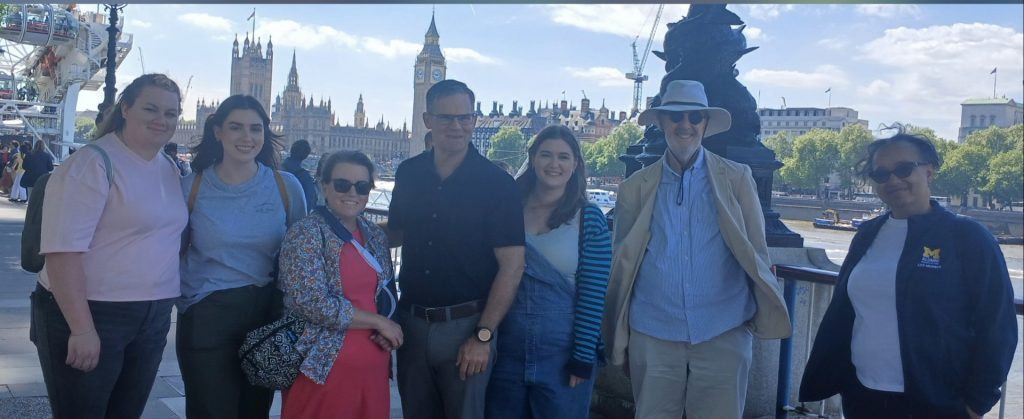
Join our Doctor Who Guided Walk or Private Tour and explore the real London locations featured in The Dalek Invasion of Earth and beyond.