Step into the world of Jane Austen like never before on this episode of the London History Podcast, hosted by qualified London tour guide Hazel Baker. Hazel is joined by Caroline Jane Knight, Jane Austen’s fifth great‑niece and the last of Austen’s family to grow up at Chawton House, where Jane lived nearby at Chawton Cottage.


Host: Hazel Baker
Hazel is an active Londoner, a keen theatre-goer and qualified CIGA London tour guide.
She has won awards for tour guiding and is proud to be involved with some great organisations. She is a freeman of the Worshipful Company of Marketors and am an honorary member of The Leaders Council.
Channel 5’s Walking Wartime Britain(Episode 3) and Yesterday Channel’s The Architecture the Railways Built (Series 3, Episode 7). Het Rampjaar 1672, Afl. 2: Vijand Engeland and Arte.fr Invitation au Voyage, À Chelsea, une femme qui trompe énormément.
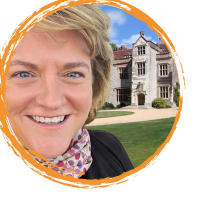
Guest: Caroline Jane Knight
Caroline Jane Knight is Jane Austen’s fifth great‑niece and the last of the family to grow up at Chawton House, the ‘Great House’ near the cottage where Jane wrote many of her famous novels.
From an early age, Caroline was surrounded by Austen family traditions: dining from the same Wedgwood service Jane used, hearing stories passed down through fifteen generations, and spending summers sharing tales with visitors in the Chawton House Tearoom.
When she’s not talking Austen or exploring family history, Caroline enjoys caring for the house and garden, keeping the spirit of Chawton alive for everyone who visits.
Transcript
[00:00:00] Hazel: Welcome to the London History Podcast, brought to you by London Guided Walks. I’m Hazel Baker, qualified London tour guide and host of the show, taking you through the streets, stories, and characters that have shaped this city we love.
Today, we are stepping into the world of one of England’s most beloved authors, but through a very special lens. Our guest is Caroline Jane Knight, Jane Austen’s fifth great-niece and the last of Jane’s family to grow up at Chawton House—the great house on the estate where Jane lived nearby at Chawton Cottage and wrote many of her most famous works.
From childhood, Caroline was immersed in Austen family life, eating from the same Wedgwood service Jane herself dined from and wrote about in 1813. Surrounded by family stories passed down through 15 generations, and spending summers talking to Austen lovers in the Chawton House tea room, Jane Austen was never just a figure on a book cover for Caroline, but part of the fabric of home.
Inspired by Jane’s spirit of independence, Caroline left Chawton to build her own path, spending 25 years in international business and ultimately serving as a global CEO. Today, she dedicates her work to preserving her Austen heritage through her memoir Jane and Me, My Austen Heritage, weekly stories, virtual talks, summer tours at Chawton, and as founder and chair of the Jane Austen Literacy Foundation. She is also Patron of Jane Austen Regency Week.
In this episode, we explore Jane Austen’s connections with London, her childhood in Chawton, and Caroline’s work preserving Austen family memories for Janeites, historians, and future generations.
So, whether you’re listening from a London bus or walking past a Georgian terrace worthy of an Austen heroine, settle in as we bring Jane Austen’s London—then and now—vividly to life.
Caroline, welcome to the London History Podcast. Can you introduce yourself?
[00:03:00] Caroline: Thank you, Hazel. I’m Caroline Jane Knight, Jane’s fifth great-niece. That in itself isn’t unusual—there are about 2,500 people descended from Jane’s brothers—but what makes me lucky is that I grew up in Chawton House, the manor house belonging to Jane’s brother, my fourth great-grandfather. Jane spent the last eight years of her life at Chawton Cottage, part of the estate.
Even as a child, Jane was world-renowned, drawing tens of thousands of visitors a year to Chawton and to our home. I’ve been talking to Jane Austen fans since before I can remember, always in awe of her incredible legacy and the impact she has on people.
[00:04:30] Hazel: It’s interesting—people often think she “just wrote romance.” I remember a contemporary review of Emma saying it was domestic. I thought, well, what else would you expect her to write about?
[00:05:00] Hazel: Part of her cleverness is that she wrote things that on the surface were simple, but for the right reader, her books teach women to think for themselves. She shows women challenging norms in all sorts of ways.
[00:05:15] Caroline: Absolutely. Reading Jane Austen is empowering. People channel Elizabeth Bennet’s bravery, wrapped up in domestic simplicity.
[00:05:30] Hazel: I love the female friendships—women supporting women. I still get secondhand embarrassment reading Emma.
[00:05:45] Caroline: Jane lived with her mother and their friend Martha Lloyd—four women supporting each other. The ladies at Chawton Cottage supported Jane’s writing, taking on extra chores so she could write every day. That closeness with women played out in her work.
[00:07:00] Caroline: Visiting London, I especially love Covent Garden, the theatre district. Jane loved London; she went out a lot, saw famous Shakespearean actors, and observed society. This contrast between bustling city life and village life shaped her writing.
[00:08:00] Hazel: And there’s a green plaque in London for her, for anyone interested in visiting.
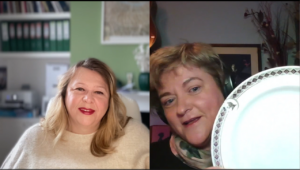
[00:08:15] Caroline: One special London story: in September 1813, Pride and Prejudice had been released, and Jane visited London with her brother Edward, my fourth great-grandfather. They went to the Wedgwood showroom and chose a dinner set for Edward. Jane later wrote to Cassandra, describing “purple lozenges between lines of narrow gold” with the family crest. That dinner service survives today—I even ate from it as a child.

Hazel Baker and Caroline Jane Knight on podcast session
[00:10:00] Caroline: Funny story—I once put a piece of pheasant pie on one of these plates in a microwave. I panicked thinking I’d ruined it, but nothing happened. That plate is now part of the heirlooms I take to events worldwide.
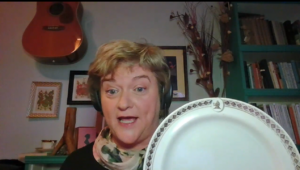
Caroline shares a hilarious story about testing Jane Austen family heirlooms
[00:12:00] Caroline: I also have early 17th-century keys to Chawton House, a signet ring of Sir Richard Knight, and silver commissioned by Jane’s family. These items connect me to Jane’s daily life.
[00:13:00] Hazel: Growing up at Chawton House, how did that rural upbringing shape your view of big cities like London?
[00:13:30] Caroline: Hampshire is close enough to London to experience both country life and the city. Growing up, I only knew what I knew, but family traditions endured. For example, every Christmas we place holly in Sir Richard Knight’s statue to celebrate Christmas despite Puritan bans. This continuity connects me to Jane’s era.
[00:15:30] Hazel: When did Jane Austen first visit London?
[00:15:45] Caroline: Her first visit was in 1796 at age 20, to see her brother Henry. Most visits were to stay with Henry in fashionable areas like Knightsbridge and Covent Garden.
[00:16:00] Caroline: Jane’s publishing career was remarkable. Sense and Sensibility was published on commission, Pride and Prejudice sold the copyright to a publisher, then she returned to the commission model for Mansfield Park and Emma.
[00:18:30] Caroline: A notable London connection: the Prince Regent was a fan of Jane. She visited Carlton House to see his library, and eventually dedicated Emma to him. But she firmly refused a suggested plot about the royal family, writing:
“I could no more write a romance if my life depended upon it… I must keep to my own style and go on in my own way; although I may never succeed in that again, I shall certainly fail at any other.”
[00:22:00] Hazel: That seems like her lifelong mantra: stay true to herself, which was challenging given societal pressures and expectations.
[00:23:00] Caroline: Absolutely. She even refused a marriage proposal that would have secured her future because it wasn’t right for her. That was brave.
[00:25:00] Caroline: She saw Shakespearean plays, notably with Edmund Kean, and even a Harlequin play. She also visited the Royal Academy Spring Exhibition in 1813, searching for portraits that matched her vision of characters like Elizabeth Bennet—a kind of pre-internet character research.
[00:27:00] Caroline: Interestingly, we don’t know exactly what Jane looked like. Only one authenticated portrait by her sister Cassandra exists, but it’s considered an imperfect likeness. This allows each reader to imagine their own Jane, just as they imagine Mr Darcy.
[00:28:30] Caroline: Many people discover Jane during challenging times in their lives. They read Pride and Prejudice, and she becomes like a friend or sister.
[00:30:00] Hazel: That was my experience too—reading Pride and Prejudice hooked me instantly. Jane writes in a way that speaks directly to intelligent women.
[00:31:00] Caroline: Jane valued visualisation in her writing. Her sister Cassandra illustrated her early work, which helped her develop as a writer. Portraits of characters were important in her time to convey personality in the absence of photographs.
[00:33:00] Hazel: If Jane could spend a day in 21st-century London with you, where would you take her?
[00:33:15] Caroline: I’d take her to Covent Garden—the excitement, the street performers, the theatre. I imagine her observing people, laughing, making witty remarks. She’d be amazed by modern technology and city life, but the human nature she wrote about remains unchanged.
[00:37:00] Hazel: And what are you working on currently?
[00:37:15] Caroline: The Jane Austen Literacy Foundation continues to grow, supporting literacy projects worldwide. We’ve just opened North American Friends, a standalone charity in the US, reaching the largest population of Jane Austen fans.
[00:40:00] Hazel: Caroline, it’s been an absolute joy having you on the podcast today. Thank you so much for sharing your insights, family stories, and passion for Jane Austen. It’s not often we get to speak with someone so intimately connected to an author whose work continues to inspire millions worldwide.
[00:40:30] Caroline: Thank you, Hazel. It’s been wonderful to talk about Jane, her world, and the legacy of her family. I always enjoy hearing from people who are discovering her work for the first time, or seeing it anew, and sharing those stories keeps her spirit alive.
[00:41:00] Hazel: Before we close, could you leave our listeners with one final thought about Jane Austen—something that resonates with you personally?
[00:41:15] Caroline: Certainly. Jane taught us that even in a constrained world, it is possible to live with wit, intelligence, and moral courage. She celebrated women’s choices and individuality long before it was common to do so. That’s what makes her timeless.
[00:41:45] Hazel: Beautifully said. And for anyone wanting to explore Jane Austen’s life further, whether at Chawton House, through your book Jane and Me, or via the Jane Austen Literacy Foundation, there are so many ways to connect with her story.
[00:42:15] Caroline: Absolutely. And I encourage everyone to take the time to experience the world she lived in—whether in Chawton, London, or the pages of her novels. There’s so much to discover, and every visit brings a new insight.
[00:42:45] Hazel: Thank you again, Caroline. And to our listeners, thank you for joining us on this journey into Jane Austen’s world. Don’t forget to subscribe to the London History Podcast for more stories, tours, and insights from the streets of London. Until next time, keep exploring, keep questioning, and keep enjoying the history around you.
[00:43:15] Caroline: Goodbye, and happy Austen adventures!
[00:43:30] Hazel: Goodbye everyone!
🔍 Find Caroline Online
-
📘 Facebook: https://www.facebook.com/CarolineJaneKnight/
-
📸 Instagram: https://www.instagram.com/janeaustensniece/
-
📨 Newsletter: https://janeaustensniece.substack.com/
-
🌐 Website: https://www.austenheritage.com