Discover the incredible story of Noor Inayat Khan, an extraordinary woman whose contributions to World War II continue to captivate and inspire.
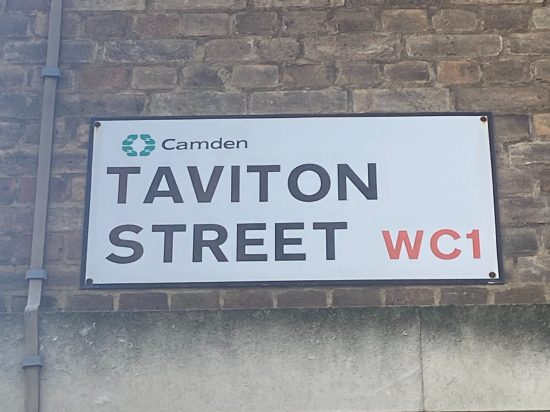
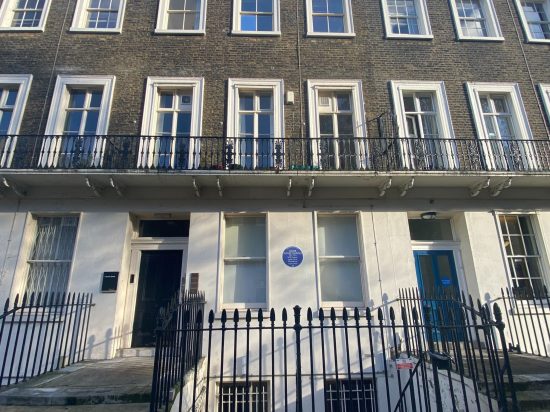
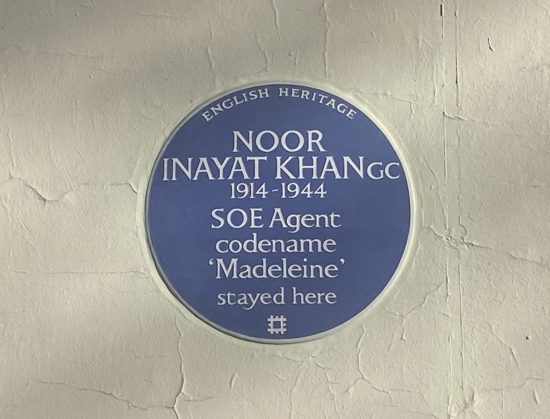
Noor Inayat Khan (also known as Noor-un-Nisa Inayat Khan and Nora Inayat Khan) has fairly recently had a blue plaque unveiled in her honour at her former home in Taviton Street, Bloomsbury, London WC1.
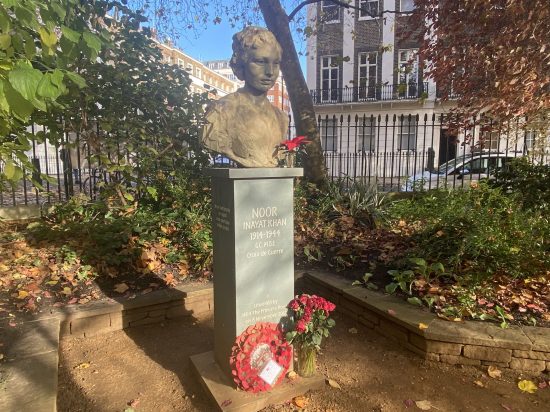
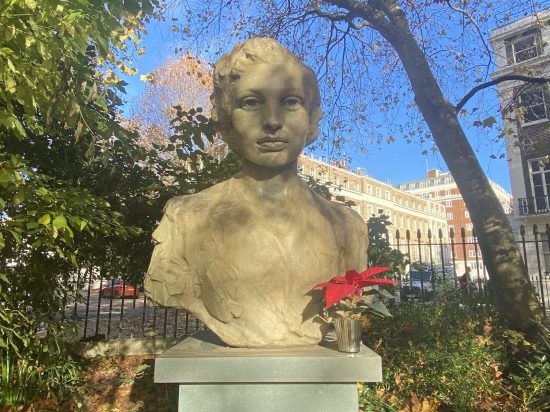
In 2014 (the 100th anniversary of her birth) she was commemorated on a 1st class stamp. In 2012, The Princess Royal (Princess Anne) unveiled a statue to commemorate her in Gordon Square, Bloomsbury, in front of a crowd of dignitaries.
She is named on a memorial in the Dachu (concentration camp) Memorial Hall, as well as at Runnymede (Air Forces Memorial) and St. Paul’s, Wilton Place (First Aid Nursing Yeomanry (F.A.N.Y.) memorial). She was also mentioned in dispatches and posthumously awarded the George Cross and La Croix de Guerre.
Early Life and Diverse Background
Noor Inayat Khan had British, Indian, Russian, French and American links. A Sufi Muslim pacifist who had a passionate belief in fighting fascism. Her biographer Shrabani Basu called her a ‘citizen of the world’ and a ‘bridge builder’.
I was initially inspired to engage in research about her whilst preparing a remembrance walk including ‘The Women of World War II’ memorial in Whitehall. Unveiled in 2005 by Queen Elizabeth II, it is dedicated to the efforts and sacrifices women made including the hundreds of thousands who served in the armed services (the late queen enlisted in the Auxiliary Territorial Service (ATS) as a mechanic and driver, at the time of her death in 2022 she was the last Head of State to serve in World War II).
Some women like Noor Inayat Khan paid the ultimate price for their service. Noor was born in Moscow, Russia, to Indian and American parents (her father met her mother while travelling in the USA.
Through her father she was a descendant of Tipu Sultan (The King of Mysore) who was killed fighting the rule of the British in India. The title of Noor’s biography is ‘Spy Princess: The Life of Noor Inayat Khan’.
The family moved to London in the year of Noor’s birth (1914). In 1920 they moved to France. Noor studied Child Psychology at the Sorbonne University in Paris and then music at the Paris Conservatory. She became a writer of children’s literature and actually read out stories on French radio. Her book ‘Twenty Jataka Tales’ was published in the UK.
Role in World War II
The occupation of France brought the family back to the UK in 1940. Noor was keen to help in the fight against Nazi Germany and its allies. At first she enlisted in The First Aid Yeomanry (FANY) followed by Women’s Auxiliary Airforce (WAAF), their aeroplanes were not armed. She then joined the Special Operations Executive (SOE), Churchill had set it up to ‘set Europe ablaze’. Noor was given a false passport, a gun and a radio transmitter and became the first female radio operator to be sent to Nazi occupied France.
Her secret job was to receive and send information to London about planned sabotage operations and where arms were needed for resistance fighters. She used Morse code and sent her messages hiding in attics with her transmitter. 20 minutes at a time was the maximum to avoid detection.
Challenges and Betrayal
Sadly, she was betrayed by a double agent, captured, kept in chains and tortured by the gestapo, but refused to yield secrets. Eventually she was executed by the SS in the Dachau concentration camp on 13th September 1944. Her final word was the French word “liberte” (meaning liberty) as she faced a firing squad.
She was one of 2.5 million people of Indian heritage who fought Britain in World War II, 87,000 died. It is only recently that their contribution has been recognised along with that of others in the former British Empire (a major memorial called ‘Memorial Gates’ was opened by Queen Elizabeth II in 2002, in Constitution Hill to commemorate those who died). In total 5 million from the former Empire fought with Britain.
Recognition and Legacy
It was not until many years after her death that her contribution was recognised. It has been suggested that she was possibly side-lined due to her father’s links with those fighting for Indian independence.
She is the only woman of Indian heritage to be honoured with a statue in central London, a stamp and a blue plaque.
There was a campaign to have her picture on the new £50 note (which came out in 2020) led by Zehra Zaidi, Ms. Zaidi said ‘Noor’s story is important as it also shows that in our complex patchwork of identities in modern Britain one can be proudly British and proudly
Indian, Asian and Muslim; one can fight for independence but still fight for Britain and its allies; one can be a Sufi Muslim pacifist and still wish to fight fascism’.
Supporters included the then government ministers Nusrat Ghani M.P, Lord Ahmed and Rory Stewart M.P plus Baroness Warsi (former government minister and Conservative party Chair) along with historians Dan Snow, Tom Holland and Kate Williams. If the campaign had been successful, she would be the first person of colour on a banknote.
Comparison to Alan Turing
In the end the World War II code breaker, mathematician and computer pioneer Alan Turing was chosen. (Turing took his own life in 1954. He was a gay man who was found guilty of breaking a deeply homophobic law from 1885 (now revoked) banning men from engaging in same sex relations, rather than go to prison he opted for what amounted to chemical castration, the profound effects on his body made him deeply depressed, hence his suicide).
Relevance Today
Noor’s background and outlook were a direct contrast to the narrow minded nationalism that helped to fuel the causes of World War II. Maybe we need more people like Noor Inayat Khan in our increasingly fractured and divided world.
📍Book Philip’s Winston Churchill & World War II Private Tour and experience London History like never before!