

William Lambarde: The Tudor Scholar Who Shaped Greenwich History
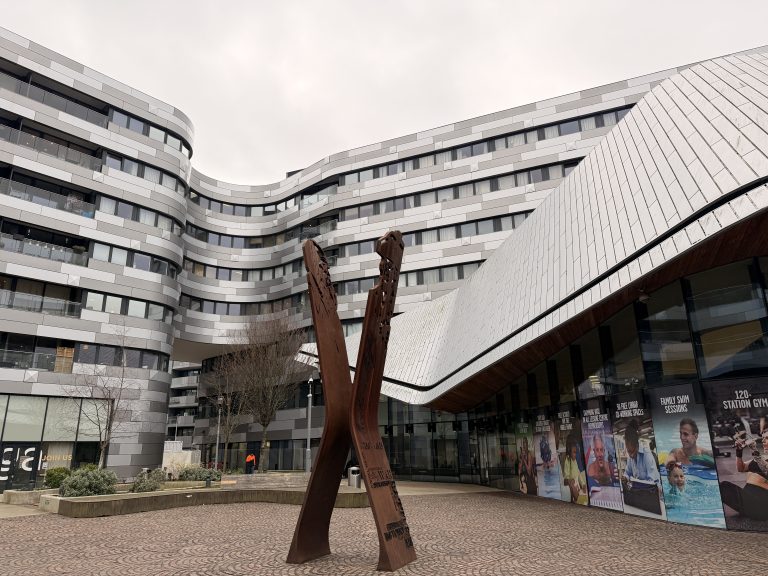
If you are walking through East Greenwich today, perhaps on your way to the Greenwich Centre, you might pass a modern plaza known as Lambarde Square. While the square itself is contemporary—complete with a striking corten steel sculpture—it bears the name of a man who defined the history of the area more than 400 years ago: William Lambarde (1536–1601).
As a central figure in Tudor Greenwich, Lambarde was far more than a local landowner. He was a pioneering historian, a legal reformer, and a philanthropist whose physical legacy can still be seen in the streets of London SE10 today.
Who Was William Lambarde?
Born in London in 1536 into a prosperous merchant family, William Lambarde was the son of John Lambarde, a sheriff and alderman of London. In the early 1550s, his father purchased the Manor of Westcombe in East Greenwich. This estate, which covered the area we now know as Westcombe Park, became William’s beloved home where he would live, work, and eventually die.
Educated at Lincoln’s Inn, Lambarde combined a sharp legal mind with a passion for antiquarian research, becoming one of the most respected scholars of the Elizabethan age.
The Father of Local History
Lambarde’s most enduring contribution to literature was written right here in Greenwich. In 1570, he completed A Perambulation of Kent, which was published in 1576. This was a groundbreaking work; it is recognised as the very first English county in history.
Far from being a dry list of facts, the Perambulation offered a detailed analysis of the “Hilles and dales, Parkes, and forests” of the county, alongside its customs and history. The book was so influential that it inspired other great historians, including John Stow (author of the Survey of London) and William Camden, who admitted that Lambarde had described Kent so perfectly he left “very little for others”.
A Legal Reformer
While historians admire his writing on Kent, Lambarde’s impact on English law was arguably even greater. Drawing on his own experience serving as a magistrate in Kent from 1579, he wrote Eirenarcha: or of the Office of the Justices of Peace (1581).
This manual became the standard handbook for justices of the peace across England and Wales for over forty years, reprinted twelve times before 1620. Lambarde didn’t just record the law; he sought to improve it, proposing rules to streamline the administration of justice for magistrates burdened by “stacks of statutes”.
Tracing Lambarde’s Legacy in Greenwich Today
For those exploring Greenwich on foot, William Lambarde’s influence is still visible in the landscape.
1. Queen Elizabeth College (Greenwich High Road)
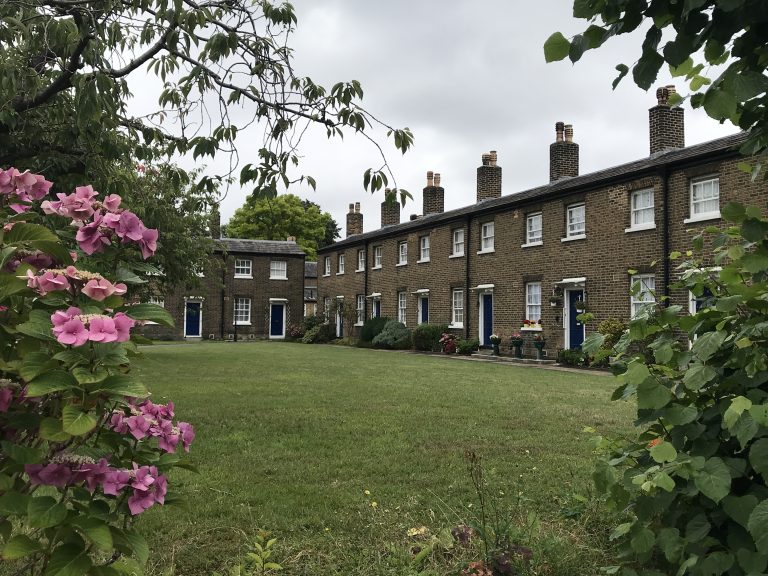
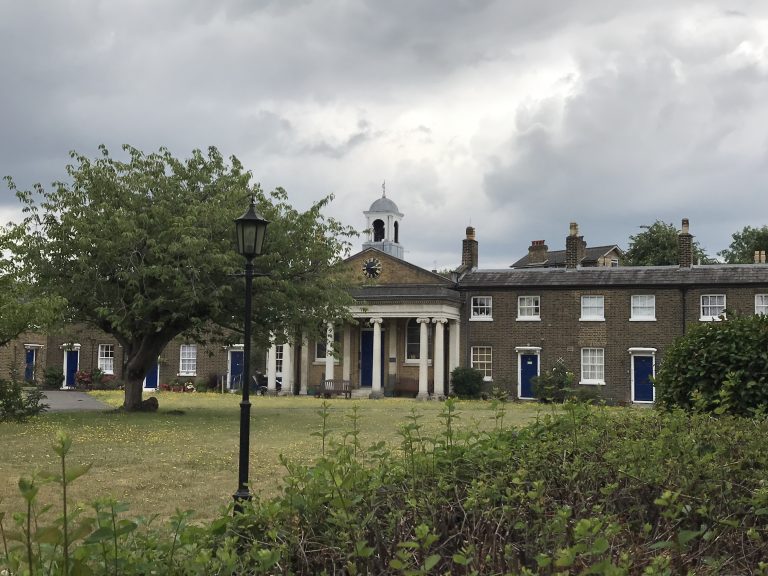
In 1576, the same year he published his history of Kent, Lambarde founded Queen Elizabeth College. Located on Greenwich High Road, this almshouse was established to house twenty elderly poor people, including residents from the parish of Greenwich.
It was one of the first public charities founded after the Reformation and the Dissolution of the Monasteries. While the original Tudor buildings are gone, the site is still occupied by Grade II listed almshouses rebuilt in 1818, which continue to provide housing for the elderly under the administration of the Drapers’ Company today,.
2. Lambarde’s Wall (East Greenwich)
Living near the Thames on the low-lying Westcombe estate presented flood risks. In the 16th century, Lambarde engineered an embankment known as “Lambarde’s Wall” to protect his property. While the physical wall is buried beneath modern development, its path is preserved by a road named Lombard Wall, which runs near the Woolwich Road.
3. St Alfege Church
Inside the magnificent St Alfege Church, designed by Nicholas Hawksmoor, you can find benefaction boards recording Lambarde’s generosity. The panels note that he “Founded and Endowed a College… for 20 poor men and their wives”.
"I am Richard II": A Royal Encounter
Lambarde’s career culminated in a personal appointment by Queen Elizabeth I. In 1601, she made him Keeper of the Records in the Tower of London. On 4 August 1601, Lambarde presented his catalogue of records to the Queen at Greenwich Palace.
During this meeting, the Queen made one of the most famous remarks in Tudor history. Referring to the recent rebellion by the Earl of Essex, she reportedly told Lambarde, “I am Richard II know you not that?” comparing herself to the deposed medieval king.
The honour of this royal audience reportedly overwhelmed Lambarde; he died just fifteen days later at his Westcombe home on 19 August 1601.
Explore More Greenwich History
William Lambarde helped define what it meant to document local history. Today, his name lives on in Lambarde Square, Westcombe Park, and the Queen Elizabeth College almshouses,.
If you are fascinated by the hidden layers of London’s past, join us to explore more:
- Book a Tour: Discover the secrets of the area on a Greenwich walking tour with London Guided Walks.
- Listen: Dive deeper into the stories of the capital by subscribing to the London History Podcast, where we uncover the fascinating tales behind the city’s streets and structures.