
The Secret Square of St James

St James’s Square History: A Hidden Oasis in Central London

When people think of central London squares, Leicester Square, Trafalgar Square, or the grand Bloomsbury squares often come to mind. However, for those seeking specialized London walking tours, one of the city’s most elegant and atmospheric spaces remains far less known.


Just a short walk from Piccadilly, Pall Mall, and Regent Street St James’s lies the peaceful St James’s Square — a leafy oasis in the heart of the West End.


Developed in the 1660s as part of one of London’s earliest planned aristocratic districts, the square has long been associated with power, politics, and prestige. Today, it remains one of the capital’s most refined and historically significant green spaces.

The Evolution of St James’s Square London

St James’s Square was established during the Restoration period under Henry Jermyn, Earl of St Albans. It formed part of an early vision for a fashionable residential district for London’s elite.

Unlike many parts of modern London, St James’s retains its original sense of proportion and exclusivity. As one of the most prominent West End historical sites, the area contains just one parish church and one square, yet its influence on British political and social history has been substantial.

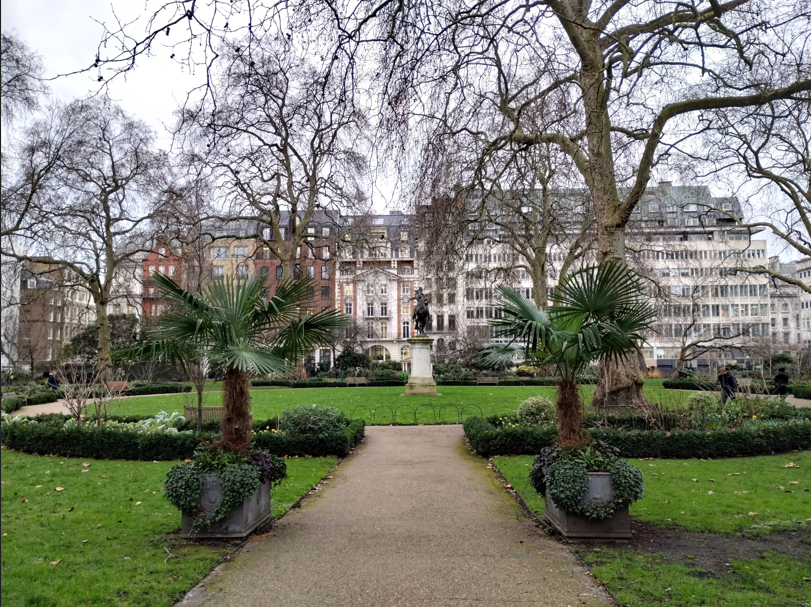
St James's Square gardens | Photo by Jill Dalton

Political Power and Prestigious Former Residents

The square has long been associated with political power and global influence.


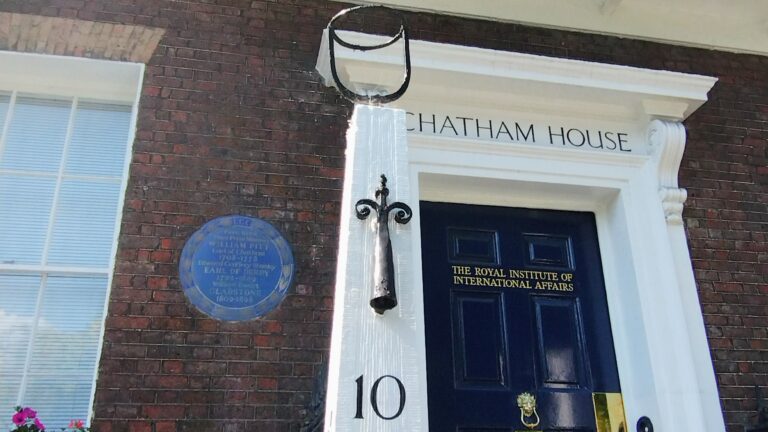
At Nos. 9–10 St James’s Square, now home to the Royal Institute of International Affairs (Chatham House), three British Prime Ministers are linked to its history:

  • William Pitt the Elder (Earl of Chatham)
  • The Earl of Derby
  • William Gladstone

Chatham House remains one of the world’s most influential policy institutes, continuing the square’s legacy as a centre of international thinking and diplomacy.

Chatham House & plaque | Photo by Jill Dalton

Nancy Astor and the Impact of Women in Politics

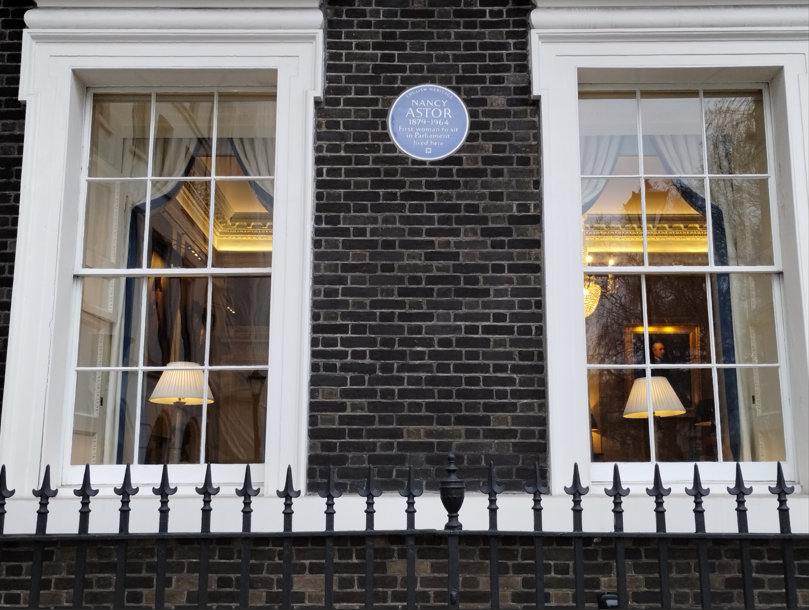
At No. 4 St James’s Square, a blue plaque commemorates Nancy Astor, the first woman to take a seat in the British Parliament after women gained the vote.

An American-born aristocrat by marriage, Astor made history when she was elected to her husband’s former parliamentary seat in Plymouth. Her political career marked a significant shift in British public life.

Today, the building is occupied by the Naval and Military Club, known as the “In and Out Club”, a nickname derived from its former Piccadilly entrance with separate gates for entry and exit.

Nancy Astor plaque | Photo by Jill Dalton

Ada Lovelace: Scientific Innovation at St James’s Square

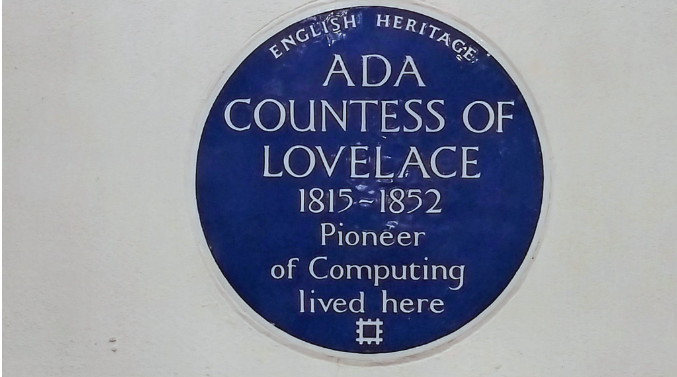
On the opposite side of the square, No. 12 St James’s Square carries a plaque dedicated to Ada Lovelace, Countess of Lovelace.


📚Have a read: Ada Lovelace and Her Vision of Computing


Working with Charles Babbage on his Analytical Engine, she developed early concepts that are now recognised as the foundation of computer programming.


Her intellectual legacy remains extraordinary, particularly given her early death at just 36, the same age as her father, the poet Lord Byron.

🚶‍♂️ Book your private  Scientific Secrets and Literary Legends private tour today and experience London’s remarkable scientific and literary heritage with a qualified guide.

The Tranquil Gardens of St James’s Square

At the centre of the square lies a beautifully maintained private garden, offering a rare moment of calm in central London.

The gardens provide a peaceful setting for a weekday break, although access is limited:

  • Open on weekdays only
  • Closed after 4.30pm
  • Closed at weekends

This exclusivity helps preserve the quiet, residential character of the square.

Royal Landmarks: The Statue of William III

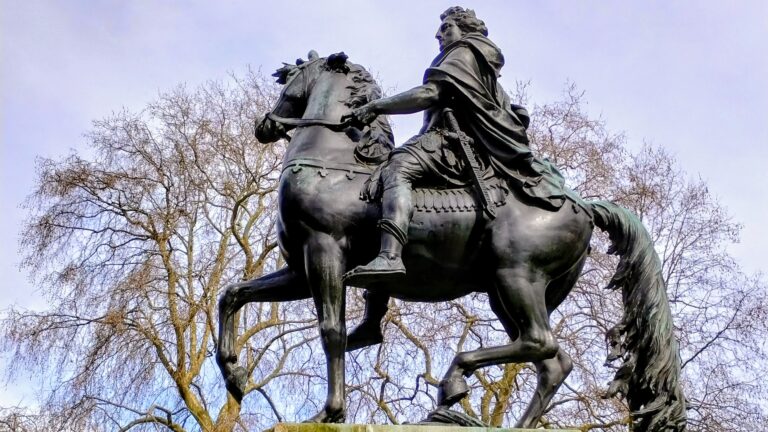
Standing at the heart of the square is an equestrian statue of King William III, inscribed as GVLIELMVS III.


William III ruled jointly with Queen Mary II, a rare example of shared monarchy in British history. After Mary’s early death, William continued to rule alone until 1702.


The statue is also associated with a famous legend: William is said to have died following a fall from his horse after it allegedly tripped on a molehill. The sculpture’s raised hind leg is often interpreted as a subtle reference to this story.

William III statue | Photo by Jill Dalton

Planning Your Visit to St James’s Square

Despite its central location, St James’s Square remains one of London’s most peaceful historic spaces. It offers visitors a unique combination of:

  • Georgian architecture
  • Political history
  • Scientific innovation
  • Royal heritage
  • Quiet garden space in the West End

It is an ideal stop for those exploring beyond London’s main tourist attractions.

Exploring London’s Most Elegant Historical Square

St James’s Square is far more than a green space in central London. It is a place where politics, science, and royal history intersect, all within a beautifully preserved setting.


For those exploring the West End, it offers a rare opportunity to experience London at its most refined and culturally significant.

Discover St James’s Square

To fully understand the stories behind this remarkable area, visit St James’s Square in person or book a private tour with Jill Dalton and discover the hidden histories, extraordinary residents, and fascinating landmarks that shaped this unique part of London’s West Endor book a private Secrets of St James’s Tour.

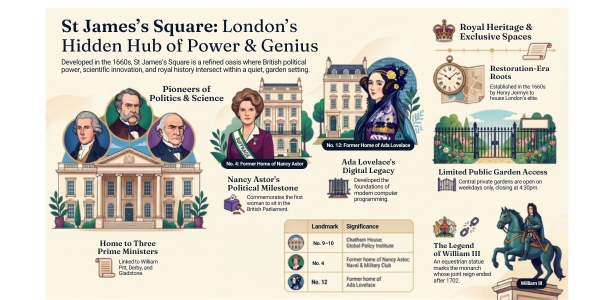
St James's Square | Infographic

Frequently Asked Questions (FAQ)

Is St James’s Square open to the public?

Yes, the central gardens are open to the public on weekdays, though they have restricted hours.


Why is St James’s Square famous?

It is celebrated for its aristocratic history, association with three British Prime Ministers, and as the home of Chatham House.


Can I book a guided tour of St James’s Square?

Yes, you can explore the hidden history of St James’s and other West End landmarks by booking a tour with London Guided Walks.

📚Read more:

🎧Listen to the related podcast:

Facebook
Twitter
LinkedIn

Related Posts

Scroll to Top