Ballet in London has a long and storied history, dating back to the early 1800s. Today, the city is home to some of the world’s most prestigious ballet companies, including The Royal Ballet, English National Ballet, and The Sadler’s Wells Royal Ballet.
For fans of the art form, there is no better place to be than London. Here, they can experience first-hand the beauty and grace of ballet.
Join Hazel Baker as she talks with Jessica Storoschuk about the magic of Ballet in London.
Hazel is an active Londoner, a keen theatre-goer and qualified CIGA London tour guide.
She has won awards for tour guiding and is proud to be involved with some great organisations. She is a freeman of the Worshipful Company of Marketors and am an honorary member of The Leaders Council.
Guest: Jessica Storoschuk is an historian behind the history and culture blog An Historian About Town. She studies the history of monarchy as well as the history of ballet and Christmas. And it is ballet that we are talking about today, specifically in Covent Garden.
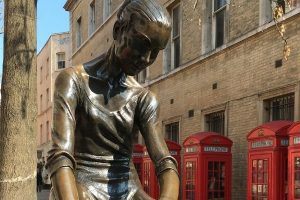
Young Dancer by Enzo Plazzotta. Credit_ Hazel Baker
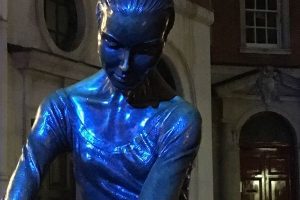
Yound Dancer by Enzo Plazzotta at night. Credit_ Hazel Baker
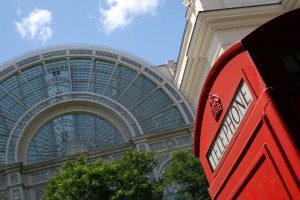
Royal Opera House, Covent Garden by Chris Steer, Getty Images Signature
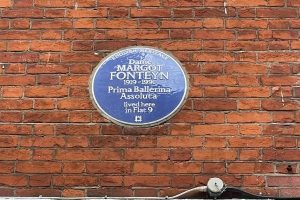
Dame Margot Fonteyn. Credit_ Hazel Baker
Episode 82: Ballet in London show notes:
Hazel Baker: Hello, Jessica!
Jessica: Hello, thank you so much for having me today.
Hazel Baker: And where does your love of ballet come from?
Jessica: I started dancing as a child and I danced all the way through until I went to university. And I did my vocational exams but then I stopped obviously for university and I. Taking classes again with the Royal Winnipeg ballet here.
And as an historian, of course, you want to find out the history of the things you love. So ballet history is a perfect fit for me.
Hazel Baker: First off then what about the general history of ballet and Covent garden? What makes it such a special place?
Jessica: I think that Covent Garden is so important in the history of English ballet, because so much has happened there.
And so many notable figures and English ballet history has been centred there that you can’t ignore it. And I know that a lot of people in general that Covent Garden is very touristy, but if you love ballet, you have to go there. And obviously if people don’t know the world opera house is there.
And in addition to the opera house, you can find nods to ballet all around Covent Garden. You can find Margo Fonteyn’s blue plaque. You can see the young dancer statue. So I think by whether or not people realise it, there’s just so much there.
Hazel Baker: Other than that, it’s a really good point. What I love about Covent Garden is, and I lived there for over five years, is that you see all the young dancers with their hair in buns going for rehearsals and obviously you’ve got Pineapple Studios nearby too. Yes, they do ballet. But of course, lots of funky dance styles too. There are a number of useful shops for ballet dancers and dancers in general in and around Covent Garden too.Can you can hear the music, especially the piano music wafting through onto the streets of Covent Garden. The arts are living and breathing in London, especially in Covent Garden. It’s rather fantastic.
Jessica: It is.
And if you’re walking by the Royal ballet school at the right time, you can also hear class rehearsals happening a little bit. And you just hear, you hear the piano music drifting, and it’s one of those things that I always make sure I don’t have any earphones in, so I can always hear it. And it’s a nice kind of call to that.
Hazel Baker: So you Margot Fonteyn, I live two doors away from her. The plaque anyway, so tell us a little bit about Margot Fonteyn.
Jessica: Dame Margot Fonteyn is often described as the most talented dancer of her generation, but in my opinion, and a lot of people’s opinion, she’s one of the most talented dancers to ever have graced the stage. She had a sense of musicality and a sense of movement that you rarely see in a dancer. And there are some incredibly talented dancers on the Royal opera house stage right now that are fantastic, but Fonteyn just has. A magical quality. I’m an even when you watch recordings of her dancing and they’re now 60, 70, sometimes 80 years old, it’s still incredible to watch.
And she just captivates. And she also was essentially a rock star in Britain for much of her life. And she is popular nowadays. People don’t really know who dancers are, but everyone knew her name and not just in Britain, across the world. She was a fashion icon, people, women wanting to emulate her dancers everywhere.
If you speak to a certain generation of ballet teachers and yours might’ve been also, but they always reference wanting to be Margo Fonteyn because she was the one that everyone looked up to. But she was just an incredible dancer who led a very interesting life off this stage as well.
Hazel Baker: And the London stories?
Jessica: There, there’s some crazy things in Panama and some crazy things in Paris. London seemed to be her kind of, I don’t want to use the word Oasis because I don’t know that her life was ever calm, but London was where she went to dance and to do her work and to settle down into things. And then when she went elsewhere, things went awry.
So I think, although London’s a very exciting place, it almost seemed to be the opposite for her. It was her home base. It was where she knew what to expect.
Hazel Baker: No. Thank you. I think you’ve got a point though also with Fonteyn and I think it’s really quite amazing that she actually retired the same year that I was born and she was 60. So to have such a long career that is extraordinary in the ballet world, even now….
Jessica: We have, as dancers, so much more science behind us. I’m most companies and schools will have several doctors, physiotherapists, athletic therapists, chiropractors, you name it, they’re on staff and they’re to help immediately, but they didn’t have a lot of that.
And she danced for so long. And also, one of the fascinating things about Fonteyn is that her body as a ballet dancer was okay. Looked at her. You wouldn’t have thought that’s the ideal ballet dancer, but she wasn’t in, I would say like the most amazing shape, but she just kept dancing. And nowadays there are some dancers.
Evelyn Hart here in Canada has, will periodically dance. Fifties and early sixties, but it’s a very limited dance. Whereas Margo Fonteyn was still dancing, full ballets and full on point. They were not character roles. She wasn’t the mother and sleeping beauty that is onstage and overseas. She was fully dancing Swan Lake and Giselle and full classical ballets. It was crazy, but I don’t know how she did it. I think it’s honestly, because ballet was her refuge and she didn’t know anything else. And then also her husband needed her to make money. So if you know your husband’s I need money. You keep going as long as you can.
Hazel Baker: True. Good point as a ballet dancer, you don’t just need flexibility and musicality. You also need strength. Not just physical strength, but an inner strength to carry you through the various levels of exhaustion and pain.
Jessica: And part of the reason why I stopped dancing for a while is I have arthritis from ballet.
So I, a hundred percent at 20, was waking up and had to wait and let my feet get their feeling and make sure they were under me okay. So I often when I’m studying Fonteyn, I have no idea how she did it and to do that full time. And not only, she wasn’t only dancing in Covent garden. She toured all the time.
And although they had air travel in everything like still travelling to Australia in the 1960s is still quite a trip and she was still dancing full out and she. I don’t know if I’d call it a mask, but she was always performing. You never saw that pain on her face. And occasionally, if you see a lot of ballet, every once in a while, you will see a dancer get injured on stage and it’s awful and you see it slip for a little bit.
And I don’t blame them at all because we all would, we’re all human, but she never did. It’s incredible. And she had so much turmoil, both in her dance career and off, and she stayed so composed in her dancing. And it’s just incredible.
Hazel Baker: And just a quick reminder to our listeners, that photos of the Fonteyn plaque and indeed some of the ballet sculptures that we have in London are on our show notes. And you can find those at londonguidedwalks.co.uk/podcast and then select episode number 82: Ballet in London.
Why do you think it’s Covent garden where the ballet happened? Because Covent Garden Opera House, from my knowledge of history, which might be different to yours, is that the ballet was used in between acts of the opera. The main piece was the opera itself. And the ballet was just a little bit of an entertainment to, to wake the audience up. So how did it progress from that? An old river dance (referring to the Eurovision riverdance performance for 1994) to the main ballets that we know now.
Jessica: In ballet, in general, in Europe, in the 19th century, it really started to develop into its own art form that stands on its own with full length ballets.
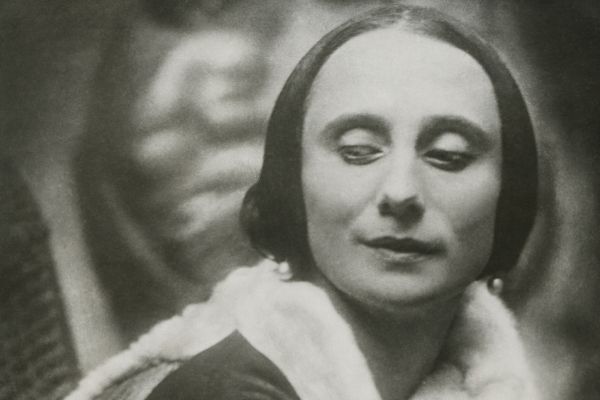
Anna Pavlova Credit_ The Everett Collection
We see it in France, obviously with ballet, but we see it in Russia a lot. And I think one of the big pushes behind ballet establishing itself in Covent Garden is that Ninette de Valois, who is the mother of English ballet, established what would go on to be the Royal Ballet. She was in Serge Diaghilev’s Ballets Russes, and the Ballets Russes travelled all over in the early 20th century, including London and audiences loved them. Cecil Beaton has a great book called Ballet where he discusses his memories of seeing the ballet and Ballet Russes in London. It’s a really interesting book.
But it took hold. So audiences in London really got a feeling for ballet and they’d watched it prior. We see a young future queen Victoria loved going to the ballet as a teenager. So we see it. But in the early 20th century we see a bigger appetite for ballet standing on its own. And then in the 1930s we had the Vic Wells ballet also known as Sadler’s Wells, which then became the Royal Ballet in the 1950s. So it was establishing itself as an art form. I’m sure you know the Opera House in Covent garden was used as a dance hall in the world war II and then after they decided to establish the royal opera there, and then they invited the ballet company to also be residents.
So they knew then that it was, they wanted both art forms. And they do share the stage. To this day, it’s a very balanced schedule between opera and ballet. They fit so well together. But they stood on their own and I think the other big factor that helped establish Covent Garden is that with the Royal Ballet being there in the 1950s, that was the golden age quote unquote for a lot of things, but it was the golden age for ballet.
So Fonteyn, but not only Fonteyn but Scottish ballet dancer Moira Shearer and other dancers, they were all incredibly popular. People knew who they were. So it was a place to go and be seen. Princess Margaret famously loved going to the ballet and would go all the time. I don’t think her majesty is quite so much a fan. Going to the opera and the ballet, because we don’t see her going very often, but prince Charles still goes quite a bit.
And apparently the Duchess of Cambridge will occasionally go with him, but it was a really popular place to go. And the ballet specifically, they did go to the opera. They all enjoyed that, but the ballet was a very happening and cool place to be in the 1950s and sixties. And I wish we would go back to that, but I think that’s what cemented it in Covent garden specifically, as opposed to anywhere else in London.
Hazel Baker: Amazing. Oh yeah. I don’t go to the ballet as often as I should. And I don’t know what is, because I love the ballet, the first ballet I ever saw, I remember, I was nine years old. It was Swan Lake and the white swan runs off and then the black Swan appears on the other side of the stage and it was all very dramatic.
And I remember loving the theatre; the theatrics of it. And it’s all very over the top of very romantic in a way in a softer way than a lot of operas are. But now I don’t know what it is.
I was having a look for some statistics before our chat today actually, and I found some research published by statistic a research department in October, 2021 that said that full percent of UK adults attended ballet performance in 2005 and 2006 and that number is gradually, over the years, decreasing. I don’t know what it is. I enjoy watching ballet online, have watched it virtually, when we were in lockdown, I found that a wonderful way of just escaping. But I think Matthew Bourne has spoiled it for me. The music isn’t live.
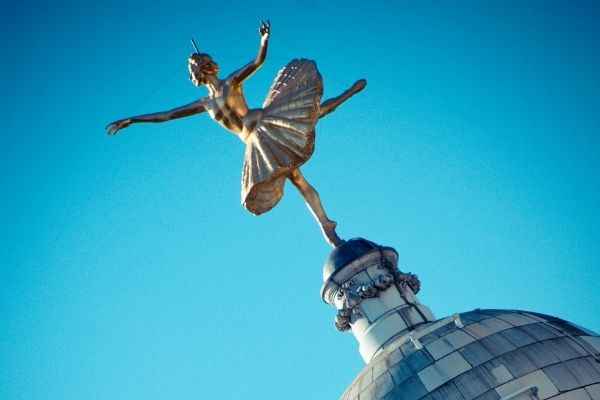
Pavlova Credit_dlionphotography, Getty ImagesJete by Enzo Plazzotta. Credit_ Hazel Baker
Jessica: I appreciate recordings and that they allow ballet companies to do more and to perhaps tour places and go places that they normally wouldn’t be able to. Because again, the golden age of touring is gone, so they don’t bring orchestras with them anymore, which I understand why, but I.
Fully agree. And I’m spoiled. So fun fact, cause I’m from Winnipeg, Canada, we have the Royal Winnipeg ballet here and we actually got our Royal charter from the queen before the Royal ballet did so a little nod to my hometown, but I am very spoiled in that we have a live the symphony orchestra plays with them.
So it is very jarring and occasionally. There will be productions that don’t have an orchestra for whatever reason, because it’s not always appropriate.
To provide the best experiences, we use technologies like cookies to store and/or access device information. Consenting to these technologies will allow us to process data such as browsing behaviour or unique IDs on this site. Not consenting or withdrawing consent, may adversely affect certain features and functions.
Functional
Always active
The technical storage or access is strictly necessary for the legitimate purpose of enabling the use of a specific service explicitly requested by the subscriber or user, or for the sole purpose of carrying out the transmission of a communication over an electronic communications network.
Preferences
The technical storage or access is necessary for the legitimate purpose of storing preferences that are not requested by the subscriber or user.
Statistics
The technical storage or access that is used exclusively for statistical purposes.The technical storage or access that is used exclusively for anonymous statistical purposes. Without a subpoena, voluntary compliance on the part of your Internet Service Provider, or additional records from a third party, information stored or retrieved for this purpose alone cannot usually be used to identify you.
Marketing
The technical storage or access is required to create user profiles to send advertising, or to track the user on a website or across several websites for similar marketing purposes.


 Hazel is an active Londoner, a keen theatre-goer and qualified CIGA London tour guide.