Introduction: Jack London at Edward VII’s Coronation
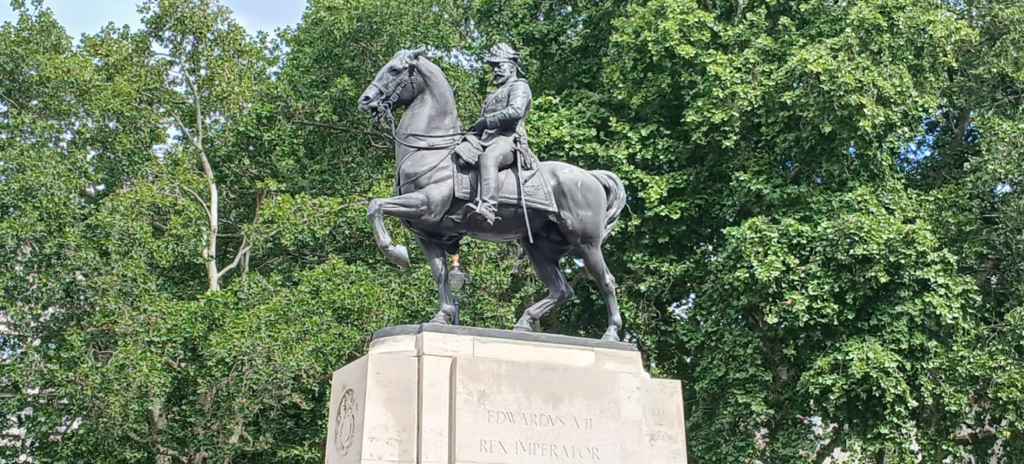
It is 9 August 1902, and Edward VII has just been crowned King at Westminster Abbey.
It has been a long time coming. Almost 60 years old, Edward has waited 18 months since the death of his mother, Queen Victoria, to take the throne. His original Coronation ceremony, planned for six weeks earlier, had to be cancelled when he developed a serious case of appendicitis. Without pioneering surgery, the illness might have proved fatal.
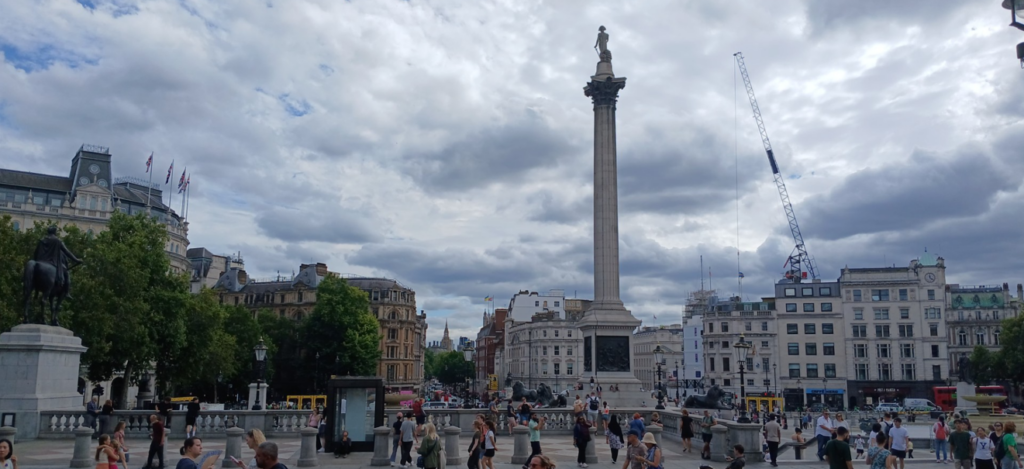
Now, beside his wife, Alexandra of Denmark, he travels in a magnificent golden ceremonial coach through Whitehall towards the Mall and Buckingham Palace. Huge crowds of well-wishers have gathered in Trafalgar Square to celebrate the new King.
🔊Listen to the related Podcast Episode: Episode 114: Buckingham Palace
Among them is a homeless American sailor dressed in grimy, second-hand clothes.
But he is not what he seems.
The man is Jack London, the American author and journalist who would soon become internationally famous for novels including The Call of the Wild and White Fang.
London has not come to the city that bears his name simply to watch the pomp and ceremony surrounding the Coronation of Edward VII. He has come with a very different purpose: to experience the poverty of London at first hand.
His aim is to draw a stark comparison between the privileged lives of the wealthy and the abject poverty endured by the city’s working poor.
The result will be The People of the Abyss, a powerful and unsettling account of London’s destitute and homeless population.
Jack London’s Mission: Into the Poverty of Edwardian London
Investigations into poverty were not new.
In 1890, Salvation Army founder William Booth published In Darkest England and the Way Out, examining the conditions faced by London’s poorest residents. Across the Atlantic, Danish-American social reformer Jacob Riis had published studies documenting life in the slums of New York.
Jack London’s approach, however, was different.
He had no intention of becoming a detached observer. Instead, he disguised himself as a sailor looking for work and prepared to experience the conditions faced by London’s poor himself.
He would live among them, eat the food they ate and experience the exhausting work and uncertainty that shaped their daily lives. He would also document what he saw with the help of a cheap camera.
London was well suited to the role.
At the age of 15, he had been part of a gang that sailed into San Francisco Bay to plunder oyster farms operated by large commercial syndicates. Later, the poacher became a gamekeeper when he joined the California Fish Patrol and helped hunt down former members of his own pirate cohort.
By 17, he had signed on as a crew member aboard the seal-hunting schooner Sophia Sutherland, travelling across the Pacific towards Japan.
His experiences at sea helped him convincingly adopt the identity of a sailor down on his luck.
Jack London’s Investigation Went Beyond the East End
The People of the Abyss is often associated with the poverty of London’s East End, but London’s investigation stretched much further.
His undercover activities took him through parts of the West End and across the River Thames into Lambeth. He even left London for a time, travelling with Bert, an East London cobbler, to Maidstone in Kent.
There, the pair posed as tramps and joined a group of itinerant hop pickers.
London was determined to understand poverty not simply as an outside observer, but by experiencing the uncertainty, hardship and insecurity that accompanied it.
Trafalgar Square on Coronation Day
One of the most striking sections of The People of the Abyss is London’s account of Trafalgar Square on Coronation Day.
The square is packed with people as a huge military parade passes through the streets. London watches the spectacle while making a striking comparison between the well-fed soldiers in gleaming metal breastplates and the thin, impoverished workers he has encountered in the East End.
The contrast could hardly be greater.
The might of the British Empire is on full display.
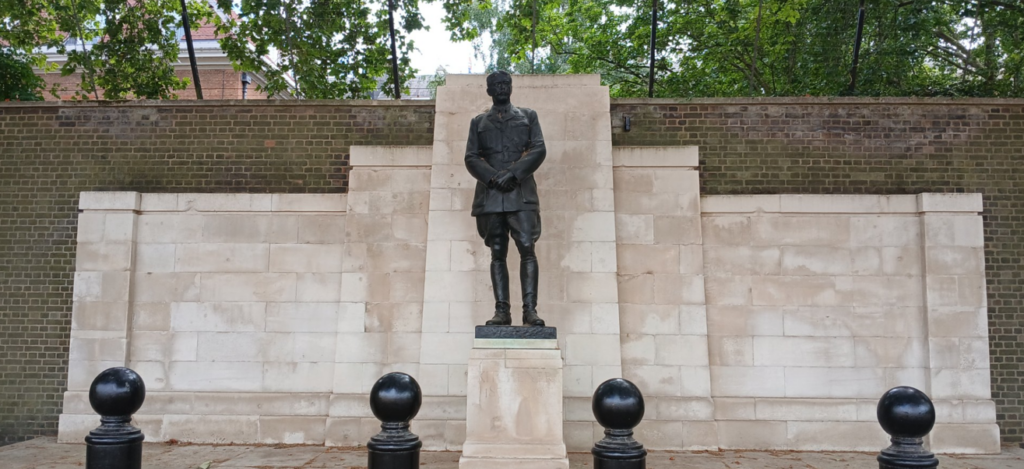
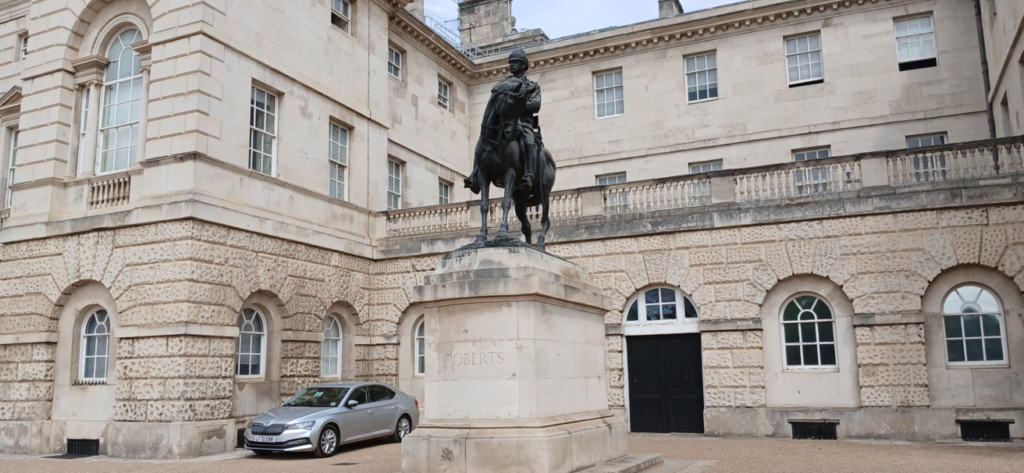
London observes Lord Kitchener of Khartoum, Lord Roberts of India and Admiral Seymour of China, alongside other representatives of the military and political establishment.
The colonial forces are represented too, with uniformed men from across the British Empire.
Yet among the crowds are the very people London has been documenting: poor and disadvantaged Londoners who have come to celebrate their new King.
London is struck by their enthusiasm.
They cheer:
“God save the King.”
The crowds join in with the popular song of the day:
“On Coronation Day, on Coronation Day,
We’ll have a spree, a jamboree,
And shout hip, hip hooray!”
For a city experiencing widespread poverty, the atmosphere is remarkably celebratory.
Celebration, Pubs and Poverty
The pubs surrounding Trafalgar Square are packed.
Men and women celebrate with music, dancing and drinking. In the rain, crowds sing popular music-hall songs including Dolly Gray and You Are the Honeysuckle.
For Jack London, the experience is surreal.
He is witnessing extraordinary public celebration while simultaneously confronting the poverty and deprivation of Edwardian London.
The contrast between the two worlds troubles him.
The grand Coronation represents wealth, imperial power and privilege, while only a short distance away people are struggling to find work, food and somewhere to sleep.
The Homeless on the Thames Embankment
Later that night, London makes his way towards the Embankment.
The crowds leaving the Coronation celebrations are streaming towards Waterloo and Westminster Bridge.
On an ordinary night, the police would move homeless people away from the benches and public spaces. But tonight, with the constabulary occupied elsewhere, the benches are filled with destitute men and women.
Some have children with them.
London speaks to an unemployed docker in his fifties who had spent five years serving in India. Now, he is struggling to compete with younger men for casual work on the docks.
He also meets a 26-year-old woman who had previously worked in a coffee shop from seven in the morning until eleven at night. She earned only five shillings a week, together with meals while working.
After becoming ill, she lost her employment and found herself homeless.
London also encounters a young family: a mother with a small boy asleep on her lap and a father holding a baby in his arms.
The father stares blankly towards the River Thames.
The scene makes a powerful impression on London. He reflects on the desperation facing people who have been pushed to the margins of society.
The reality of these families sleeping on the Embankment seems worlds away from the enormous sums spent on the lavish Coronation celebrations taking place only hours earlier.
Jack London’s Powerful Reflection
Despite being an avowed atheist, London turns to the Book of Job in the Old Testament to express what he has witnessed:
“They go about naked without clothing and being hungered they carry the sheaves.”
He reflects that the words were written thousands of years earlier, yet still describe the suffering he has encountered in the heart of London.
For London, this is the great contradiction of Coronation Day.
Edward VII has been crowned King at the centre of the British Empire, while homeless men, women and children sleep on the benches beside the Thames.
The contrast between royal splendour and human deprivation becomes one of the defining themes of The People of the Abyss.
The People of the Abyss and Its Legacy
Published by Macmillan, The People of the Abyss sold 20,000 copies in the United States during its first print run.
It received a less enthusiastic response in Britain, where copies were reportedly purchased in bulk by commercial lending libraries, including the library operated by newsagent and retailer WH Smith.
Its influence, however, extended far beyond its initial reception.
Decades later, British literary giant George Orwell cited The People of the Abyss as an important influence on his own experiences of poverty, which he later documented in Down and Out in Paris and London.
Jack London’s investigation therefore became part of a wider tradition of writers using first-hand experience to examine poverty, homelessness and social inequality.
Jack London’s London
More than a century after Jack London walked through the streets of London disguised as a sailor, his observations offer a fascinating way to explore the city.
His story takes us from Westminster Abbey and the Coronation procession to Trafalgar Square, the West End, the East End, Lambeth and the Thames Embankment.
It reveals a London of extraordinary contrasts: royal ceremony and homelessness, imperial power and poverty, celebration and desperation.
And it shows how one American writer came to London determined not merely to observe its poorest inhabitants, but to experience something of their lives for himself.
Discover Jack London’s London
Want to follow in Jack London’s footsteps and discover the places connected to his extraordinary investigation of Edwardian London?
Join our Footsteps of Jack London Walk or book a private tour with David Turnbull and explore the London that inspired The People of the Abyss, from the streets and landmarks he encountered to the social conditions that shaped his writing.