George Romney’s blue plaque in Hampstead

Introduction: Hampstead Before It Was London

Hampstead today is one of London’s most beautiful and historic areas, but in the 18th century it was not considered part of the capital at all. Instead, it stood apart as a rural retreat. For a time, it flourished as a spa town, where visitors would ‘take the waters’ for their health or enjoy the entertainments available to day-trippers.

Set high on a hill with far-reaching views, Hampstead attracted a number of notable residents. Among them were artists such as John Constable, alongside figures including George du Maurier, Sir George Gilbert Scott, Ewan Christian, Ridley Scott and Dame Judi Dench. It is within this rich cultural setting that the story of George Romney begins.

Early Life and Artistic Ambition

George Romney was born near Barrow-in-Furness into a family involved in trade. His father was a furniture maker, and like many of his social standing, George’s formal education ended at the age of ten. He joined the family business before beginning an apprenticeship, though it soon became clear that his ambitions lay elsewhere.

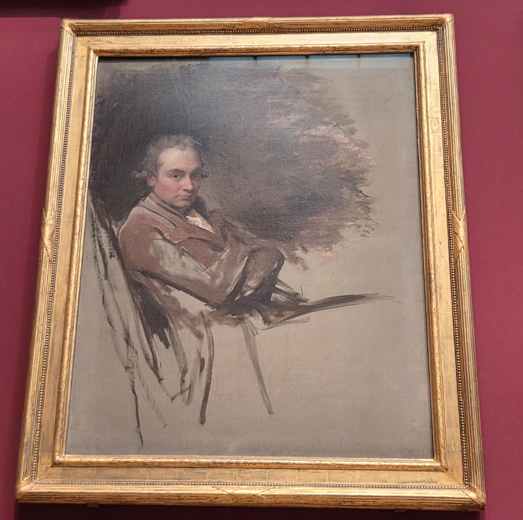
George Romney's self-portrait gifted to his friend and later biographer, the poet William Hayley, in the National Portrait Gallery | Photo by Daniel Hausherr

In the 18th century, painting followed a strict hierarchy. At its peak sat history painting—grand scenes drawn from classical mythology or the Old Testament, often designed to convey moral lessons. Romney aspired to this highest form, despite receiving only limited formal training. What he lacked in teaching, however, he made up for with natural ability and careful study of Old Master works.

London: Opportunity and Setback

At the age of 28, Romney left his family in Lancashire and moved to London, drawn by the promise of success. His early attempts at history painting showed promise, but his progress was hindered by practical challenges and professional rivalry.

A notable setback came when his work depicting the death of General Wolfe was judged. Although initially well received, criticism from Sir Joshua Reynolds led to the prize being downgraded. Reynolds, who would go on to found the Royal Academy of Arts with the support of King George III, represented the artistic establishment from which Romney would remain excluded.

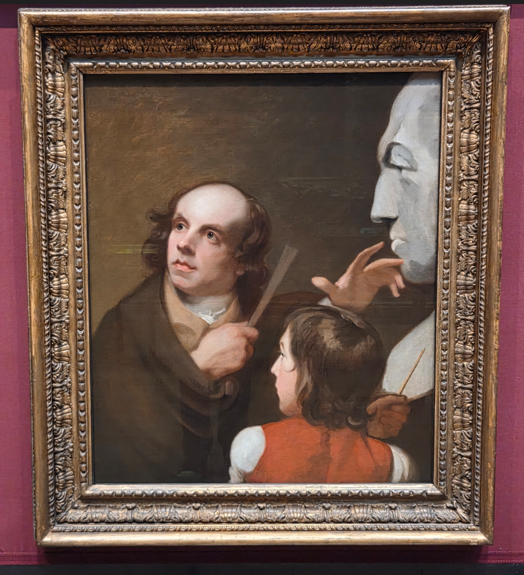
George Romney's portrait of the sculptor John Flaxman and William Hayley's son Thomas in the National Portrait Gallery | Photo by Daniel Hausherr

A Reputation Built on Portraiture

Following a period of study in Rome, Romney established a studio in Cavendish Square, in the developing area of Marylebone. While portrait painting ranked below history painting, it proved to be both commercially viable and artistically rewarding.

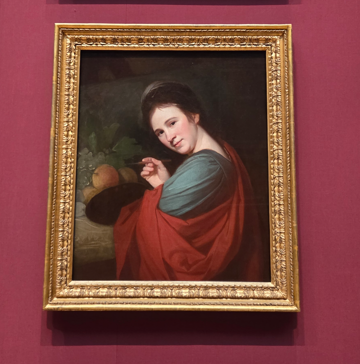
George Romney's portrait of the Royal Academician, Mary Moser in the National Portrait Gallery | Photo by Daniel Hausherr

Unlike many of his contemporaries, Romney worked with minimal assistance. His portraits were largely executed by his own hand, which ensured a high level of quality and helped to build his reputation among clients who could not afford artists such as Reynolds or Thomas Gainsborough.

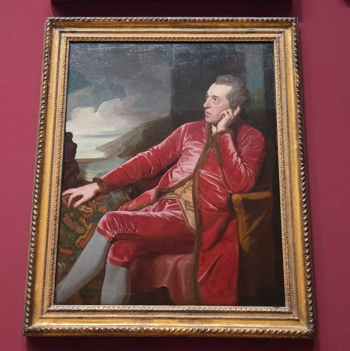
George Romney's portrait of the playwright, Richard Cumberland in the National Portrait Gallery | Photo by Daniel Hausherr

Personal Struggles and Inner Conflict

Despite his growing success, Romney’s personal life was marked by tension and guilt. Having left his wife and children behind, he struggled with the emotional consequences of his choices. His response was to immerse himself in work, often to the detriment of his health.

This cycle of overwork and illness became a defining feature of his later life, reflecting the personal cost of his ambition.

Emma Hamilton: Muse and Influence

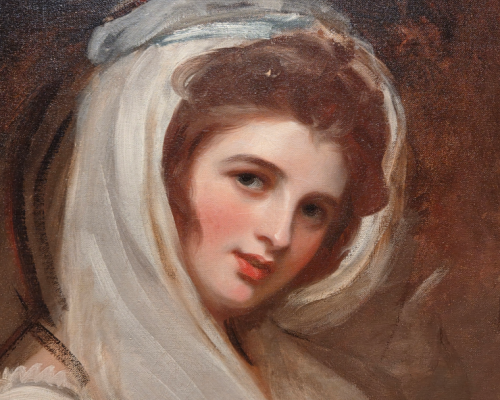
A turning point in Romney’s career came with his introduction to Emma Hart, later known as Lady Emma Hamilton. Her ability to hold expressive poses made her an ideal subject, and she sat for Romney on numerous occasions.

These works became some of his most celebrated, widely reproduced as prints and contributing significantly to his financial success. Their relationship, though complex, was central to his artistic legacy.

Screenshot 2026-03-19 232237
Detail of George Romney's portrait of Emma Hamilton in the National Portrait Gallery | Photo by Daniel Hausherr
Screenshot 2026-03-19 232246
The National Portrait Gallery's display of Lord Admiral Nelson and Emma Hamilton | Photo by Daniel Hausherr

Hampstead and Final Years

By the late 1790s, Romney had achieved considerable success and began planning a house in Hampstead. At the time, the area’s clean air and open views made it an attractive escape from the crowded city.

However, his declining mental health led him to abandon London altogether. He returned to the north of England and to the wife he had left decades earlier. He died in 1802.

Legacy of George Romney

Although often ranked behind Reynolds and Gainsborough during his lifetime, Romney is now recognised as one of the leading portrait painters of his era. His works, particularly those of Emma Hamilton, remain highly regarded.

His connection to Hampstead, marked today by a blue plaque, adds another layer to the area’s rich artistic heritage.

Conclusion: A Story Preserved in Place

Romney’s life is one of ambition, talent and personal conflict. While his time in Hampstead was limited, his story forms part of the wider narrative that makes this area so historically compelling.

Discover Hampstead for Yourself

If you would like to explore more of Hampstead’s artistic and historical stories, join us on our Hampstead Village Walking Tour or book a private tour with Daniel Hausherr

You will discover the people who shaped the area, see notable buildings, and enjoy some of London’s finest views.

👉 Book your place here: Hampstead Village Walk

Facebook
Twitter
LinkedIn

Related Posts

Scroll to Top