In a quiet corner of Westminster, just off the bustling thoroughfares of Victoria Street, stands a memorial that is easy to miss but impossible to forget once seen. The Suffragette Scroll in Christchurch Gardens is not a grand plinth or towering statue, but a subtle, unfurling form that invites passers-by to pause, look closer, and reflect. Designed by celebrated British sculptor Edwin Russell and unveiled in 1970, it remains one of the most evocative public tributes to the fight for women’s suffrage in the UK. It’s a quiet but powerful reminder of those who dared to demand equality.
Edwin Russell: A Life in Sculpture
Edwin Russell (1939–2013) was a sculptor of breadth, imagination, and technical brilliance. Born in Heathfield, Sussex, his artistic training began at Brighton College of Art and Crafts and culminated at the Royal Academy Schools, where he was awarded both the Gold Medal and the prestigious Edward Stott Travelling Scholarship. These early honours marked the beginning of a long and prolific career that would span sacred commissions, civic works, and whimsical installations alike.
Among Russell’s better-known projects are contributions to the statuary at St Paul’s Cathedral and the lively Mad Hatter’s Tea Party sculpture in Warrington. In 1978, his talents were recognised with election as a Fellow of the Royal British Society of Sculptors, and in 1991 he was awarded the Otto Beit Medal, a rare honour given for excellence in sculpture. Russell was not only a master craftsman but also a thoughtful artist whose work often invited public interaction — a quality evident in his creation of the Suffragette Scroll.
The Suffragette Scroll: A Lasting Tribute
Commission and Purpose
The Suffragette Scroll was commissioned by the Suffragette Fellowship, an organisation formed in 1926 by former members of the Women’s Social and Political Union (WSPU). The Fellowship’s mission was to ensure that the contributions of those who had campaigned for women’s votes would not be forgotten. By the time the Scroll was unveiled on 14 July 1970 — chosen to mark Emmeline Pankhurst’s official birthday — the franchise battles of the early twentieth century had passed into history. Yet the fight for women’s rights was far from over. The Scroll was designed not as a relic of a completed struggle, but as a monument to enduring courage and an invitation to continued progress.
Location and Historical Resonance
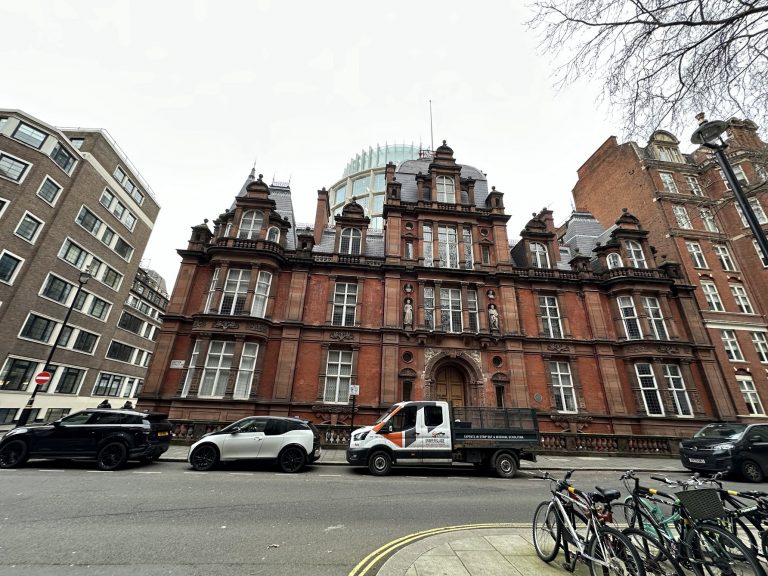
The memorial’s setting is as carefully chosen as its form. Christchurch Gardens lies a few short steps from Caxton Hall, a building central to the suffragette story. Caxton Hall was frequently used as a meeting place for suffragette organisers and campaigners, and served as a launching point for deputations to Parliament — many of which ended in arrest, imprisonment, or violent confrontation. The site is steeped in suffrage history and was selected to honour not just the leaders of the movement, but the many unnamed women (and supportive men) who risked everything for the principle of equality.
Design and Symbolism
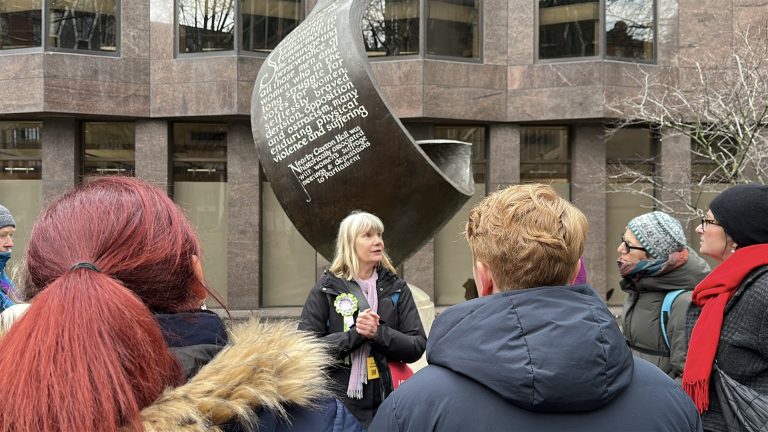
Russell’s design eschews the grandiosity typical of traditional memorials. Instead, the Scroll takes the form of a partially unrolled manuscript, symbolising the petitions, manifestos, letters, and legal appeals that were so central to the suffrage movement. Its elegant curves form a prominent ‘S’, a subtle nod to ‘Suffragette’, but also to the idea of storytelling — the scroll as a document still being written.
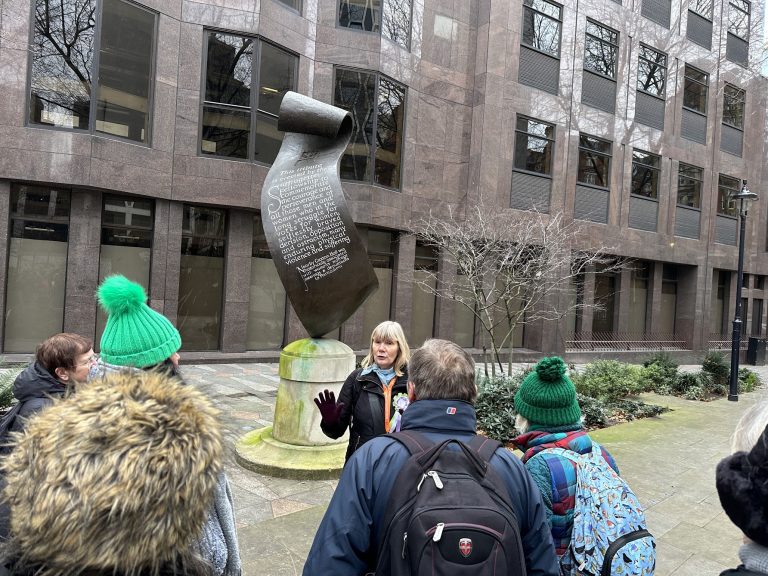
Crafted from fibreglass with a cold-cast bronze finish, the sculpture combines visual weight with technical innovation. At a time when bronze casting was often prohibitively expensive, this technique allowed for a durable, weather-resistant structure that retained the look and patina of traditional bronze. Its curved surfaces invite tactile engagement — visitors often run their hands over the form as they read the text — creating a physical connection between the past and present.
Importantly, the memorial was a collaborative effort. Russell worked alongside his wife, fellow sculptor Lorne McKean, to refine the design. Originally envisioned as a more conventional gravestone shape, it evolved into something far more dynamic and abstract under their combined vision. Though Russell led the project, McKean’s artistic input helped shape the final form.
The Scroll bears a single, powerful inscription:
“This tribute is erected to commemorate the courage and perseverance of all those men and women who in the long struggle for votes for women selflessly braved derision, opposition and ostracism, many enduring physical violence and suffering.”
The wording is striking for its inclusivity. Unlike many monuments that focus solely on figureheads such as the Pankhursts, the Scroll honours the collective — the suffragists and suffragettes, the anonymous activists, and the countless individuals who supported the movement in quieter ways.
Significance and Legacy
The Suffragette Scroll is unique among British memorials. It is understated in scale but profound in impact. Its presence in the landscape is contemplative rather than commanding — an invitation to remember, not to impose. By choosing to honour the many, rather than the few, it shifts the narrative away from heroic exceptionalism and towards collective achievement.
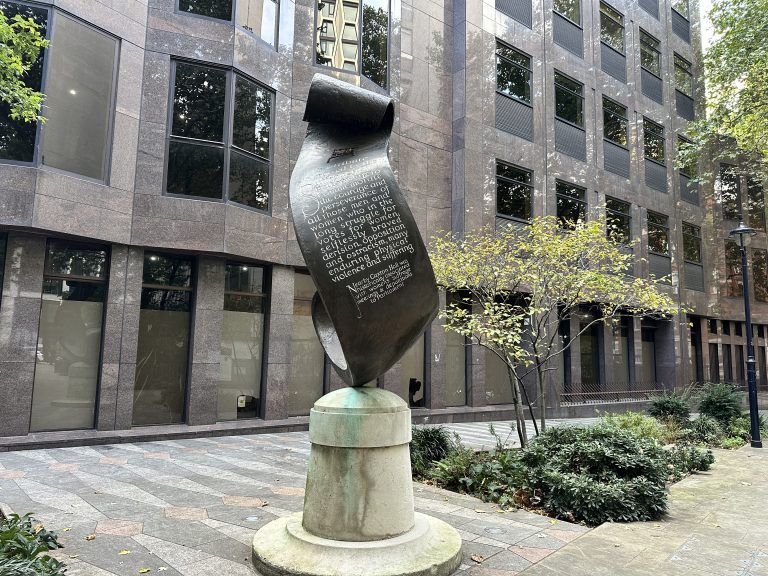
The site continues to play an active role in commemorative events. Each year, on significant suffrage anniversaries or International Women’s Day, individuals and organisations gather at the Scroll to lay flowers, read speeches, and remember the movement’s continuing relevance. In this sense, the memorial is not just historical — it is living history, a space of ongoing dialogue and remembrance.
Experience the History Firsthand
For those moved by the story of the Suffragette Scroll and Edwin Russell’s quiet artistry, there is no better way to engage than by visiting the site in person. Join us on one of our Suffragette Walks through Westminster, where we explore not just this remarkable memorial, but also the wider landscape of political activism and public memory. Learn about the women who gathered at Caxton Hall, marched on Parliament, and changed the course of British democracy.
Book your place on our next Suffragette Walk or arrange a private tour, and walk in the footsteps of those who stood up, spoke out, and shaped the future.
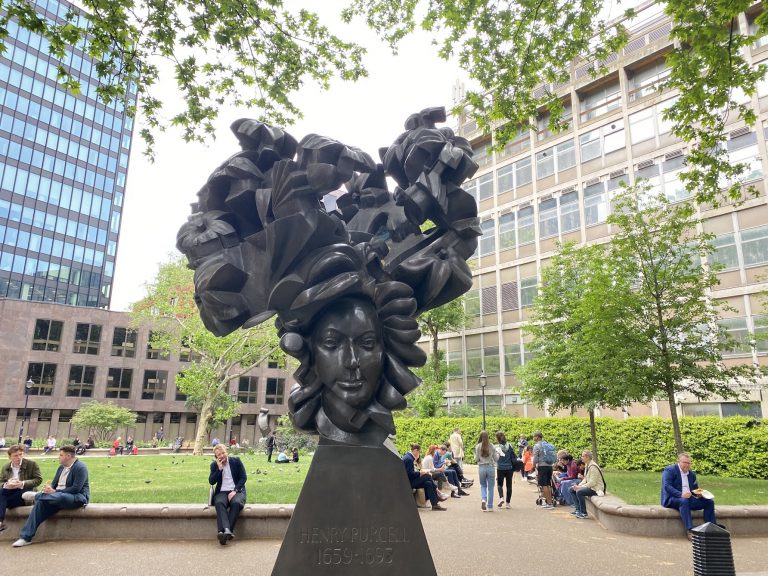
If you’re in the area, keep an eye open for the sculpture to Purcell too!