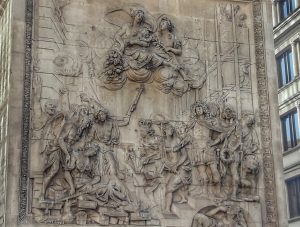
Great Fire of London Monument
The Great Fire of London Monument: A Testament to London’s Resilience London is a city that cherishes its past, and this is evident in the

The Great Fire of London Monument: A Testament to London’s Resilience London is a city that cherishes its past, and this is evident in the
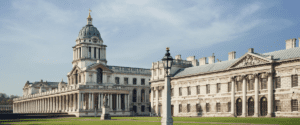
The Royal Naval Hospital Greenwich: London’s Exception to Simplicity Unlike other cities that flaunt architectural grandeur, London exhibits a subtler charm. Yet, The Royal Naval

London’s first coffeehouse was founded in 1652 by the churchyard of St Michael’s, Cornhill. It was not quite the first coffeehouse in England, which had

Lime Street does not have much of historical interest today. It is dominated by two pieces of well-known modern architecture: the Lloyd’s Building, designed by

Nahum Tate is hardly a household name, but he wrote one of our oldest and most popular Christmas carols. Tate was born in Dublin in
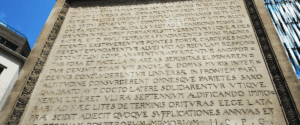
The Monument was built between 1671-1677 to commemorate the Great Fire of London of 1666 which ended up destroying four-fifths of the city. It is
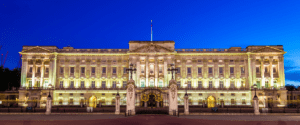
Situated in the heart of the West End of London and surrounded by two royal parks; Green Park and St James’s Park, Buckingham Palace is

Shakespeare’s and John Fletcher’s Henry VIII was originally a script called “All is True”, which was a historical thriller. The play was based on the
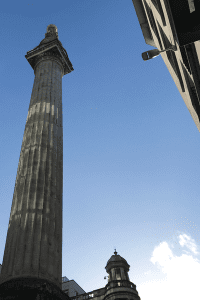
The cataclysmic event of the Great Fire of London in 1666 irrevocably transformed the face of the city, decimating approximately 80% of the urban area.

On fashionable Jermyn Street, close to Piccadilly, is a plaque marking where Sir Isaac Newton lived in London. While living here Sir Isaac Newton was