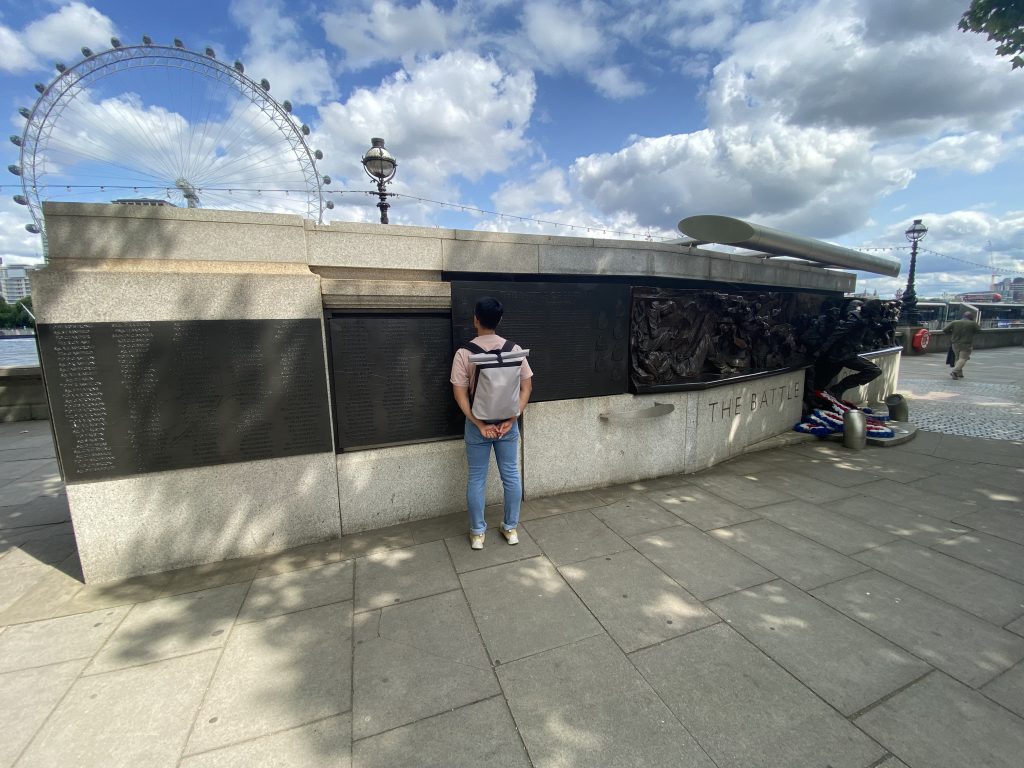
Just a short walk from the Houses of Parliament, on the Victoria Embankment, stands one of London’s most moving wartime memorials. The Battle of Britain Monument does more than honour “the Few” who took to the skies in 1940—it tells a broader, deeper story. It speaks of international solidarity, technological ingenuity, and the resilience of both military personnel and civilians during one of Britain’s darkest and most defining chapters.
Far from being just another wartime statue, the memorial captures in bronze the intensity of a nation under siege. Through lifelike sculptures and evocative scenes, it pays tribute not only to the RAF pilots whose bravery was immortalised by Churchill, but also to the thousands who supported them—on the ground, in factories, in observation posts, and from far-flung corners of the globe. In this blog, we explore the background, significance, and design of this remarkable monument, and why it remains such a powerful site of remembrance.
Historical Context of the Battle of Britain
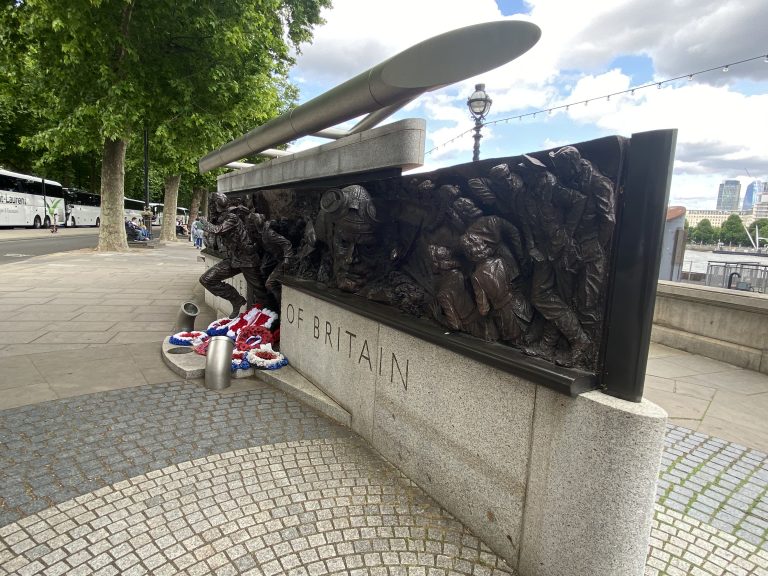
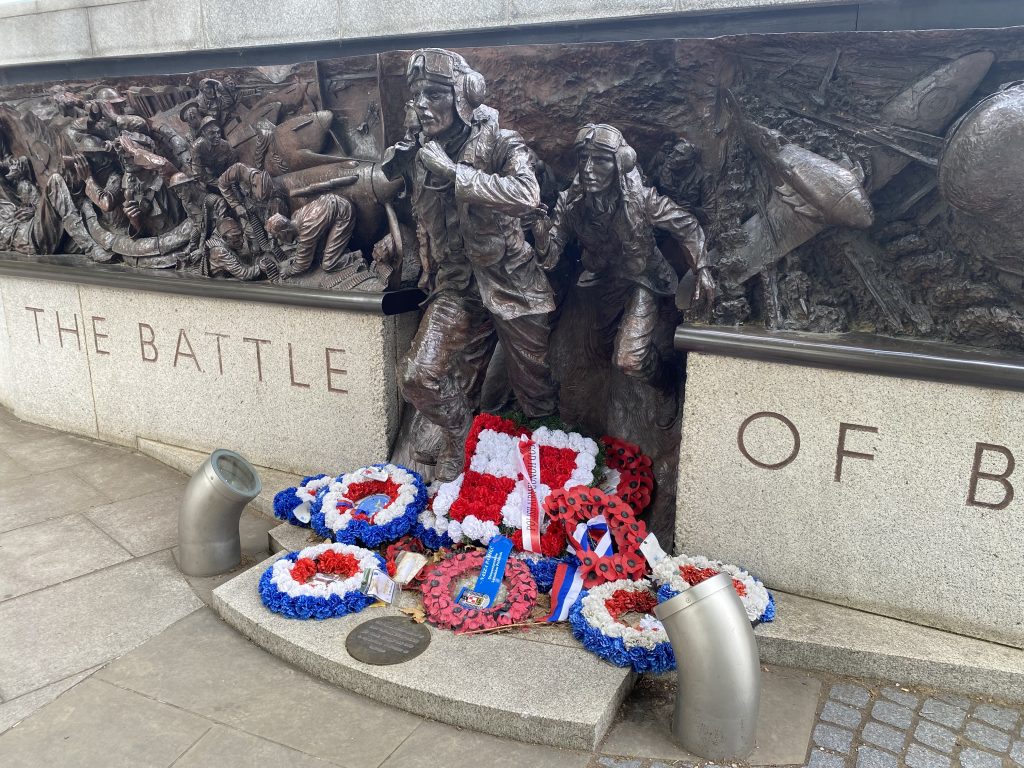
This was unveiled by the now the Charles III and Queen Camilla in September 2005 on the 65th anniversary of the Battle of Britain. The sculptor was Paul Day. It commemorates the Battle of Britain which took place from July to October 1940. After the outbreak of World War II in September 1939 and the rapid success of German forces in western Europe in the first half of 1940, Hitler decided the UK must be invaded and made plans codenamed ‘Operation Sealion’. They needed air superiority by removing the threat from the RAF.
Key Figures and Innovations
The RAF had rapidly expanded in the 1930s however the Luftwaffe was larger. RAF Fighter Command was established in 1936 under the leadership of Sir Hugh Dowding. The Luftwaffe tried to knockout the RAF’s bases in southern England. The RAF had the new invention radar on its side making detection of aircraft easier.
Germany began in July 1940 by attacking coastal targets and British shipping operating in the English Channel. The attacks moved inland on 13th August focussing on air fields. There followed intensive fighting against the German attacks. Airfields were damaged but not knocked out. The Germans overestimated significantly the damage caused.
International Contribution
On 7th September the bombing of London started and there was a lull in attacking airfields until 15th September giving time for the RAF to recover. On 15th September 1940, there was a massive attack by the Luftwaffe successfully repelled by the RAF. This was the most significant day in what became known as the Battle of Britain.
The attacks continued into October but it became clear the Luftwaffe had failed to wreck the UK’s defences. Almost 3000 men took part including from New Zealand, Australia, Canada, Southern Rhodesia (now Zimbabwe), South Africa, Jamaica, Barbados, Belgium, France, Poland and Czechoslovakia. There were some from neutral Ireland and the USA (neutral to December 1941). The Prime Minister Winston Churchill famously said upon victory “Never in the field of human conflict was so much owed to so few” of the bravery of the RAF.
Women’s Role in the War Effort
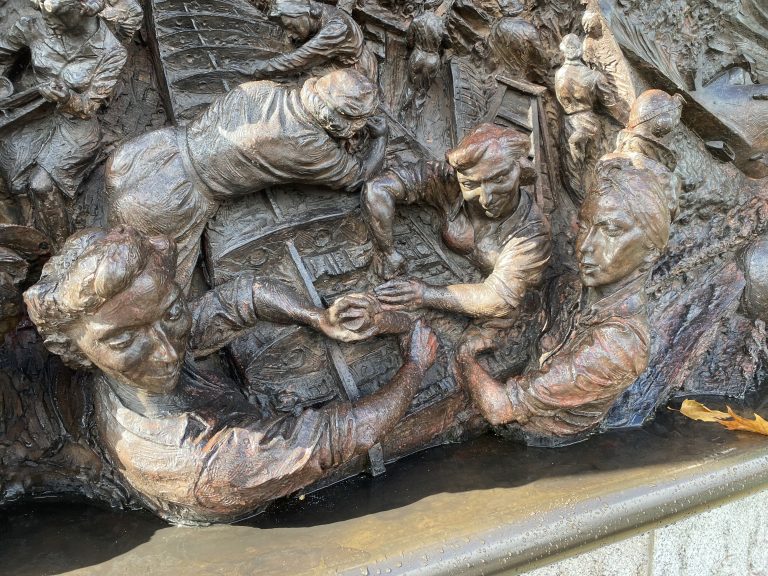
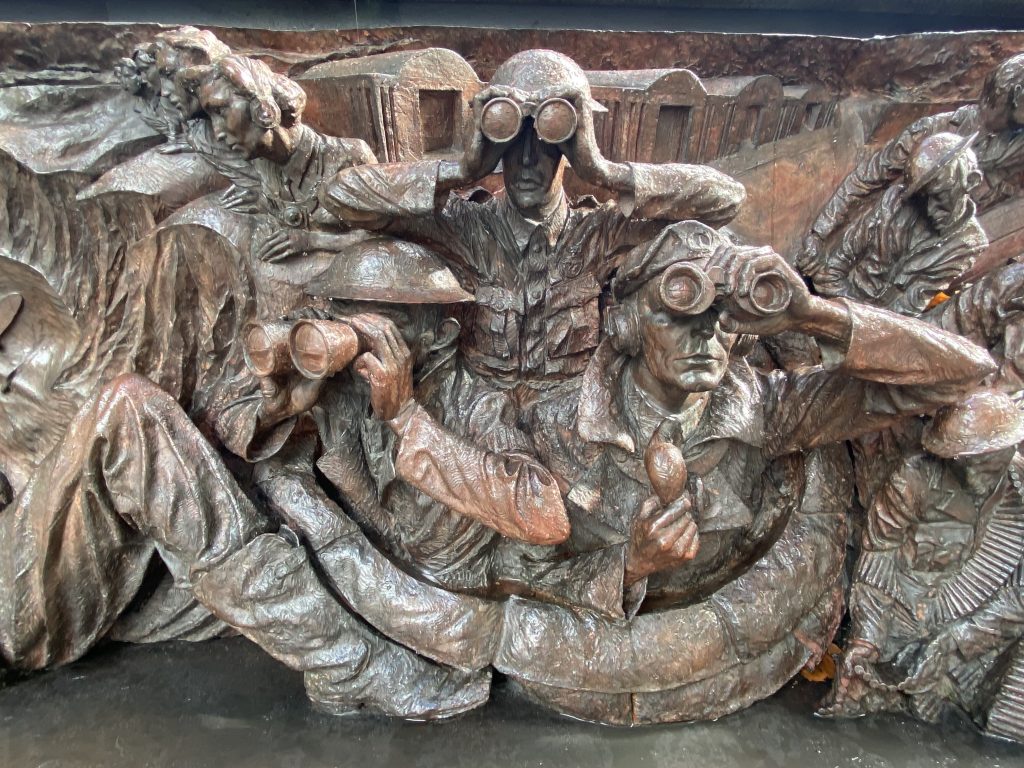
There were also thousands of others involved such as anti aircraft gunners, observation post operatives with binoculars plus radar operators and raid trackers (often from the WAAF, the non combat, Women’s Auxiliary Air Force). The failure of the Luftwaffe to secure air superiority meant that Operation Sealion didn’t happen and the UK was not invaded.
Symbolism and Commemoration
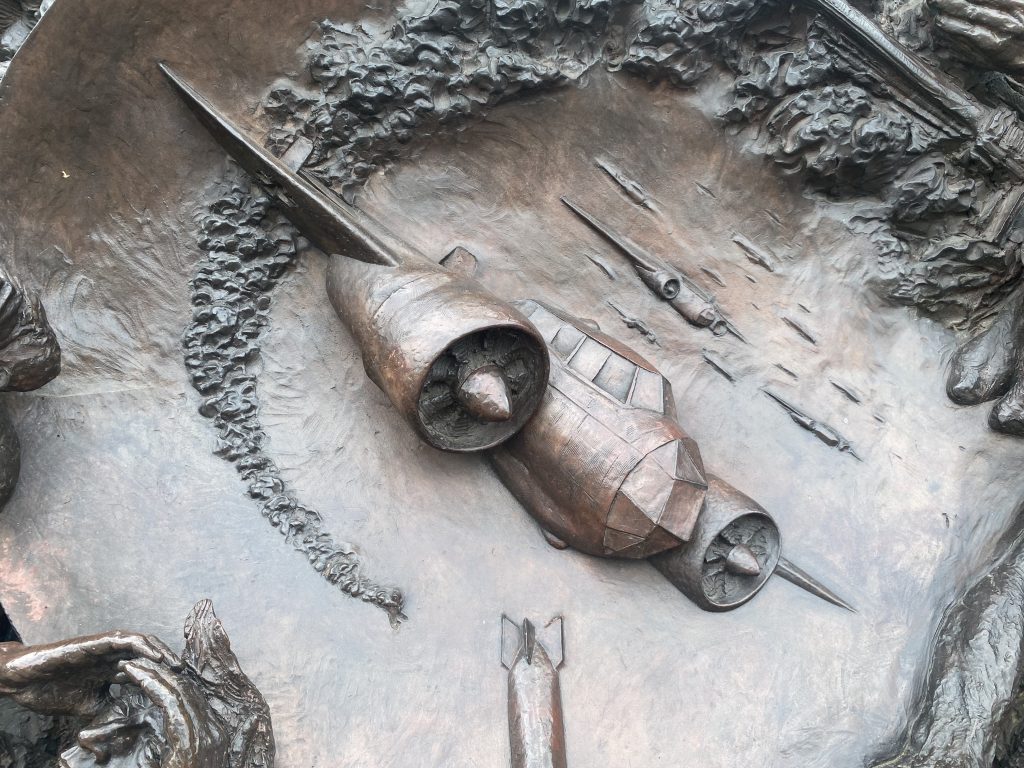
Fighter Plane, Battle of Britain Monument, Photos by Philip Scott
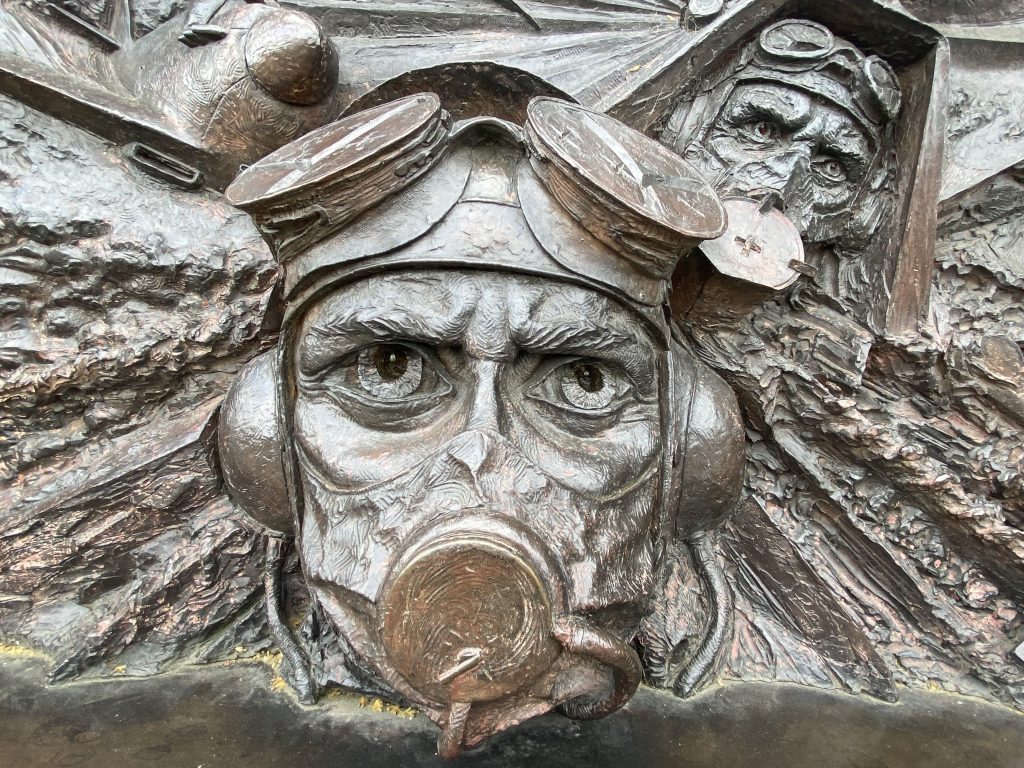
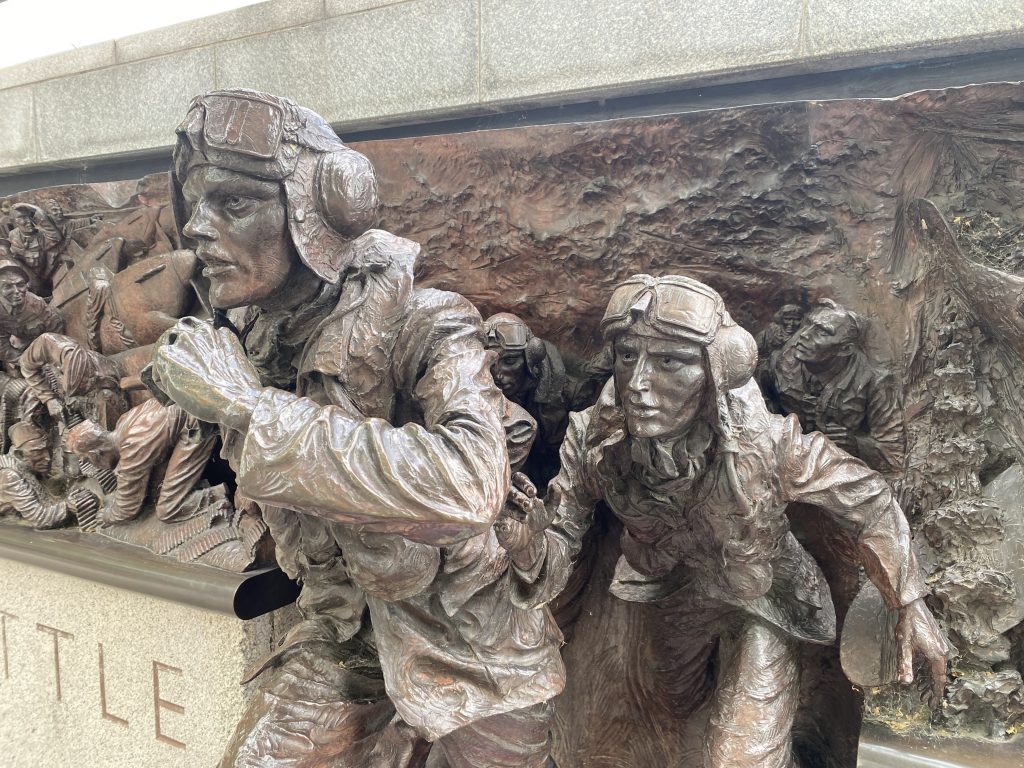
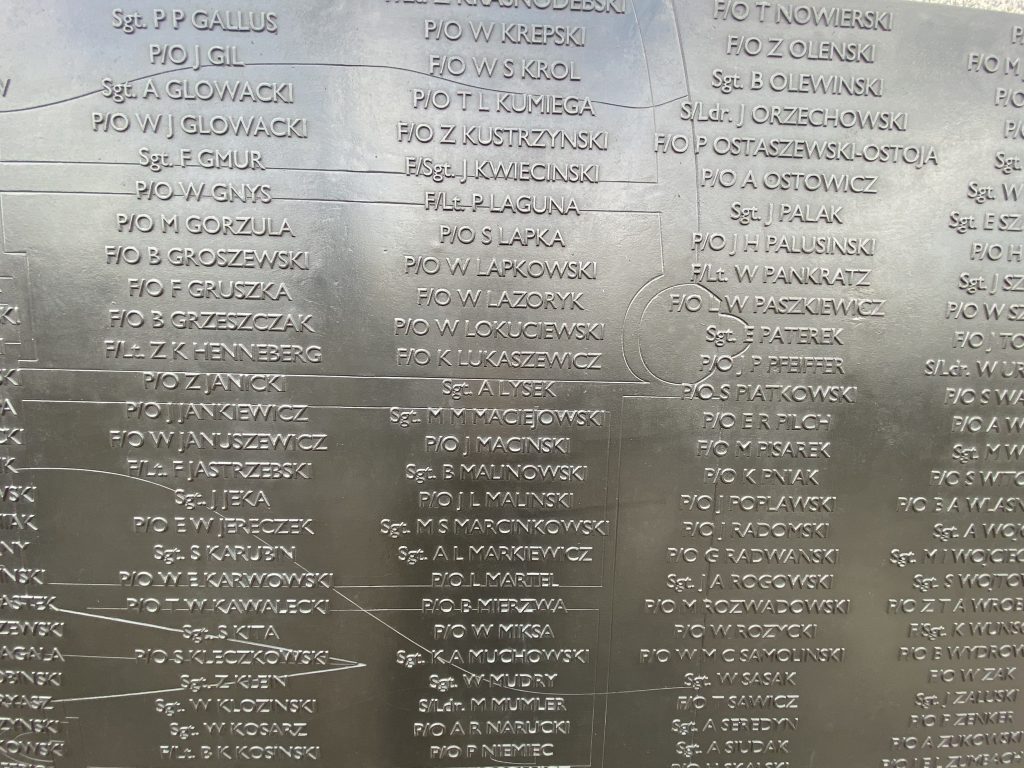
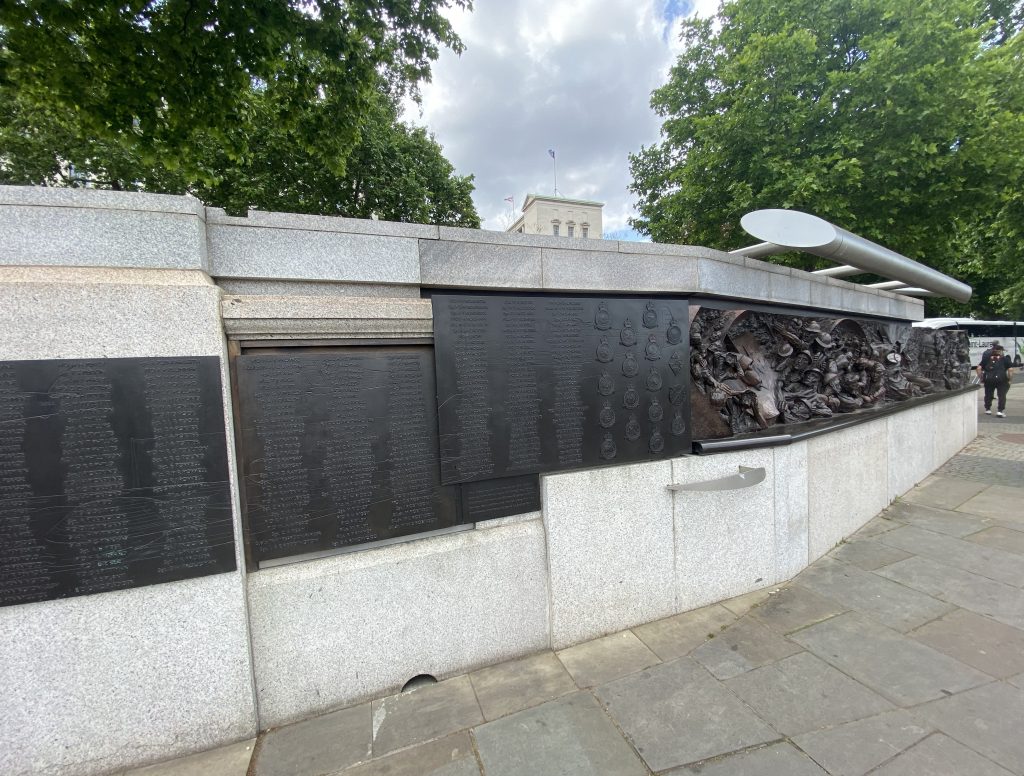
The bombing of London and other cities carried on until May 1941, hopes of a surrender were dashed for Hitler who then turned his attention to invading the USSR. The mass bombing strengthened the resolve of the people to not surrender! The memorial features life size air crew. They are running to get into their aeroplane. This was known as ‘the scramble’. The names of the 2,936 pilots who took part and their countries of origin are on the memorial.
Battle of Britain pilots scramble as part of the monument, Photos by Philip Scott
Not just those who died. Women are on the memorial, some are shown building aircraft for the RAF, this one of the many ways women contributed to the war effort. Apart from joining the non combatant units of the RAF , Royal Navy and the Army millions of women worked in factories replacing men who had gone to war as well as on farms through the Women’s Land Army.
The late queen (Elizabeth II) was in the non combatant unit of the Army, the ATS, Auxiliary Territorial Service. St. Paul’s cathedral is on the memorial, it became a symbol of British defiance as it survived ‘The Blitz’!
Battle of Britain Monument, Photos by Philip Scott
The Battle of Britain Memorial stands not simply as a record of names, but as a dynamic tribute to the spirit, sacrifice and solidarity that underpinned Britain’s survival in 1940. It reminds us that history is never made by individuals alone. Behind every pilot was a mechanic, a radar operator, a mother, a land girl, a munitions worker—people whose contributions, though less often quoted, were every bit as vital.
As you pause by the Embankment and take in the detail of Paul Day’s sculpture—from the scrambling airmen to the quiet resolve etched into every bronze figure—you are standing at a place where stories converge: of courage, innovation, defiance, and community.
For those who wish to explore more, my Churchill and World War II Private Tour offers a deeper dive into this extraordinary period of history. It concludes at this very memorial, where the legacy of ‘the Few’ and the many behind them continues to speak to us today.